Ian_Edwards
Well-Known Member
I'm still trying to get my old Hydronics 10 working, making progress I think.
On starting up using a 701 controller I get error 71, over temperature sensor open circuit.
Using a multimeter, I can confirm that's the is correct.
Purchase a new over temperature sensor on ebay and that checks out at arount 10k ohms at room temperture, decreasing as the temperature increase.
Time to take the old one out.
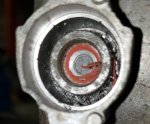
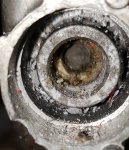
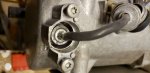
It is corroded in:
.
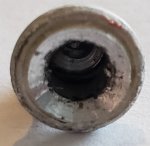
the new one one looks like this:
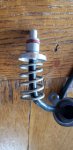
The temperature sensor is located between the combustion chamber and the outer casing, in the water cavity.
It looks like had a dual function, sensing the temperature and a safety relief valve.
The old one is corroded in, or perhaps the O ring is sticking or both, the unit is at least 15 years old, and I don't think that this part has seen the light of day since it was manufactured.
I've tried various penitrating oils and a butane gas torch to heat it up, I was careful with the gas torch, I didn't want to damage the casting, but it got way to hot the touch and the remains of the penitrating oils boiled off.
It's still stuck solid.
I've used a variety of tools to gab the hex crimp on the top of the sensor to try and rock and twist the sensor out. But I need to be careful it is only a aluminium crimp and I don't want to break it off.
Any ideas on how to free it up?
I have Muriatic Acid and Rydlyme at home, would either of these be effective, without destroying the aluminium casting?
On starting up using a 701 controller I get error 71, over temperature sensor open circuit.
Using a multimeter, I can confirm that's the is correct.
Purchase a new over temperature sensor on ebay and that checks out at arount 10k ohms at room temperture, decreasing as the temperature increase.
Time to take the old one out.
It is corroded in:
.
the new one one looks like this:
The temperature sensor is located between the combustion chamber and the outer casing, in the water cavity.
It looks like had a dual function, sensing the temperature and a safety relief valve.
The old one is corroded in, or perhaps the O ring is sticking or both, the unit is at least 15 years old, and I don't think that this part has seen the light of day since it was manufactured.
I've tried various penitrating oils and a butane gas torch to heat it up, I was careful with the gas torch, I didn't want to damage the casting, but it got way to hot the touch and the remains of the penitrating oils boiled off.
It's still stuck solid.
I've used a variety of tools to gab the hex crimp on the top of the sensor to try and rock and twist the sensor out. But I need to be careful it is only a aluminium crimp and I don't want to break it off.
Any ideas on how to free it up?
I have Muriatic Acid and Rydlyme at home, would either of these be effective, without destroying the aluminium casting?