Moisture issue on the wooden gunwale of Blue Angel

BartW

Well-Known Member
Joined
9 Oct 2007
Messages
5,236
Location
Belgium
www.amptec.be
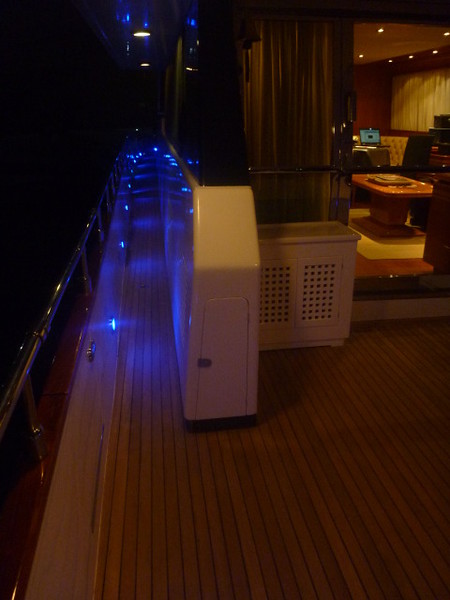
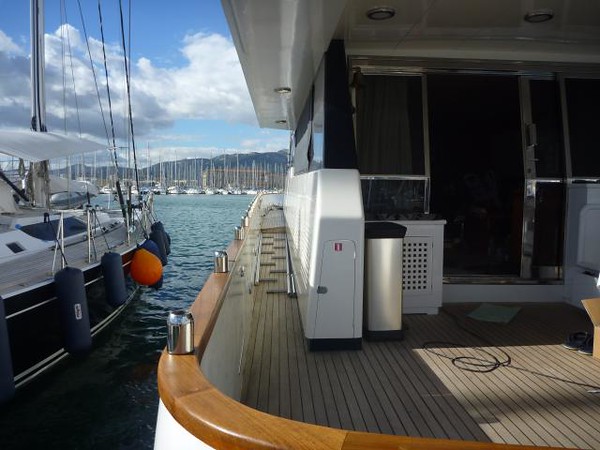
The gunwale of the boat is made from wood (the hull itself is GRP)
This is a known week spot on a C70s, as humidity gets in there due to condensation,
2 years ago we had several patches of bad wood replaced with well threated marineply

i-SWCf3ZB-L.jpg


This plank of marine plywood, is extra protected on the backside against moisture;
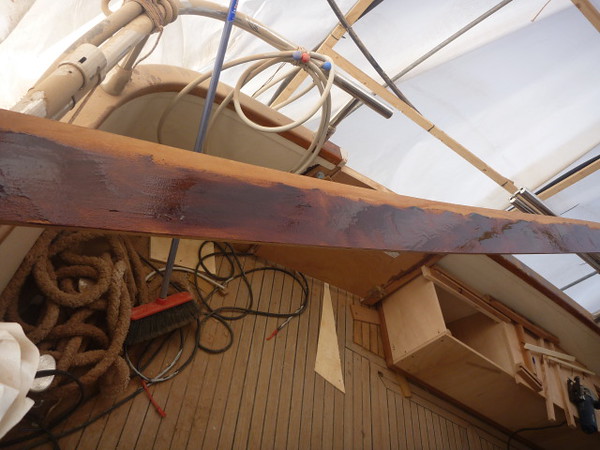
i-BN8rVsm-L.jpg


We fitted deck lights, and had the gunwale completely repainted
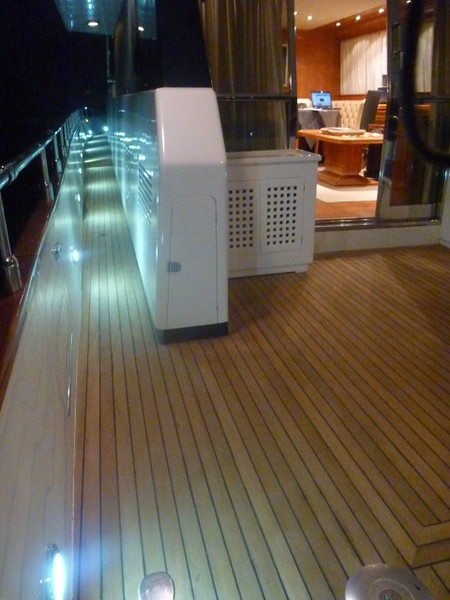
i-r2SfQfH-L.jpg


i-hLqHqbv-L.jpg


Now on a older wood part, the paint starts to become bubled,
this spot is on the bow, angled 45°, so more exposed...
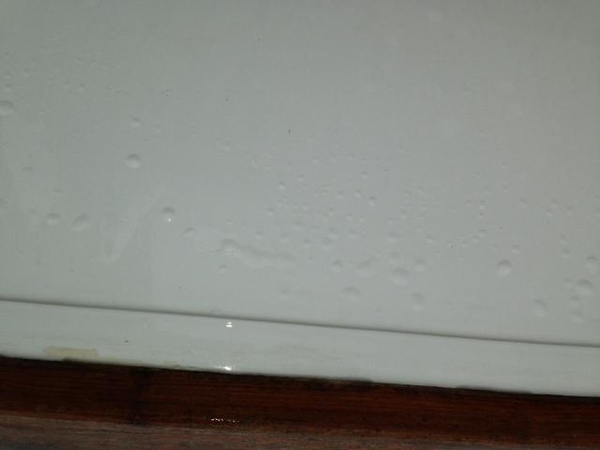
i-3dTfb2K-L.jpg


During winter time I took out the decklights, and put these alum covers to protect for rain, and have fresh air inside
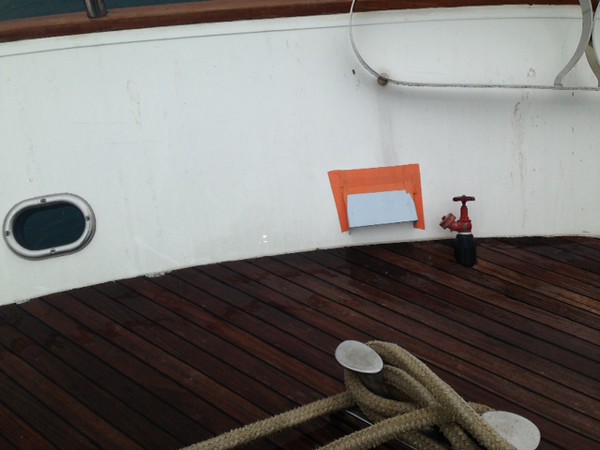
i-MRm6vfJ-L.jpg


This is how it looks under the cover

i-HCzvNCv-L.jpg


the bubbling has stopped, and has become a little less,
Any idea to make a permanent “dehumidifying” solution,
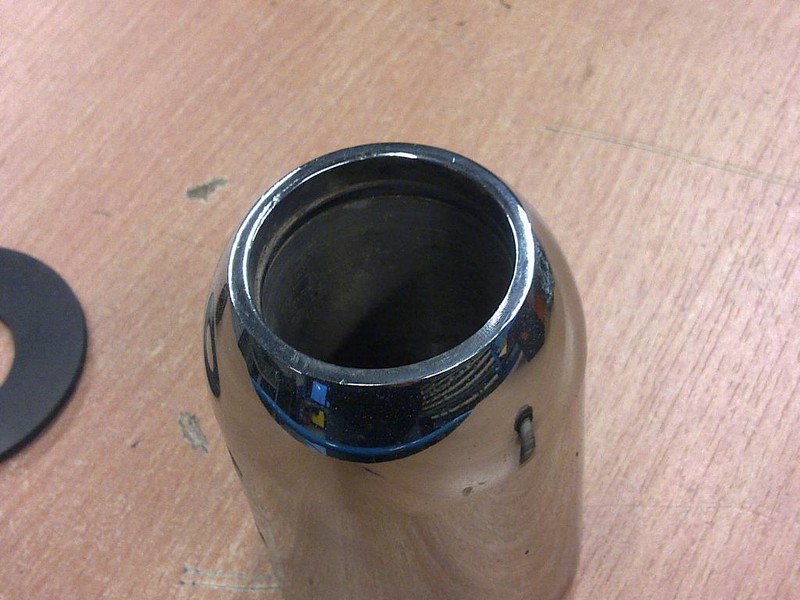
I thought about a vent plate, something like this,
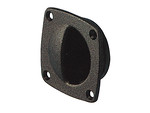
i-NQMs6Zk-L.jpg


or this,

i-q7nnfJ2-L.jpg


or just this:

i-vbMz99V-L.jpg


But the problem is; in heavy sea, green water over the bow, lots of seawater will go inside, and also in the lights (they are not watersealed from the back…)
Any better suggestions ?
thanks for advice.
 
Last edited:
Bart, isn't the long term answer to dry out the timber and then properly reseal it and the lights to stop moisture getting behind it in the first place? Stupid question but given that the bubbling has stopped during winter, how do you know it isn't the summer sun causing it, especially as its in an area which is angled upwards? Also, if it was moisture, wouldn't the bubbling occur at the bottom of the panel first (as the other panels) rather than near the top?
 
Bart
The good news is you know where the water is getting in.

The bad news is, if the paint has bubbled its knackered and will need to be re painted.

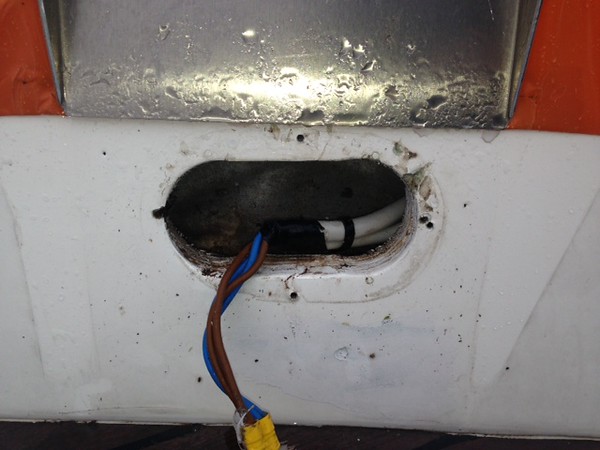
I had the same problem and thought it was from one of my deck lights, it turned out to be a leaking deck seam above the area. You need to find out exactly where it's getting in. I noticed that the cutout isn't sealed in the photo, that alone could be the source of water ingress.

I seal all the wood on Little Ship, especially edges with an epoxy to prevent ingress into the ply.

It's the joys of owning wood (or part wood) boats.

Good luck in finding it and post the pictures of the repair.

Tom.
 
You could fit lots of big hatches BartW. Close them at sea; open them on sunny/windy days to dry the wood. And you'd have good visibility of what's happening inside

488403.jpg
 
Hi Bart

After all you work, what a PITA getting those bubbles... but I like these sorts of problems, gets the creative thinking.

I understand the problem, in my mind there could be 2 cures, the one that you have thought, some sort of water proof vents along the gunwale, Or the other more complex route, a small compressor, low psi so a small unit, attached to nothing more than a aerated hose which is fed along inside the gunwale keeping a flow of air behind the ply and helping to dry out any dampness... the more I thought about this... the harder it becomes,... so back onto the water proof vents..

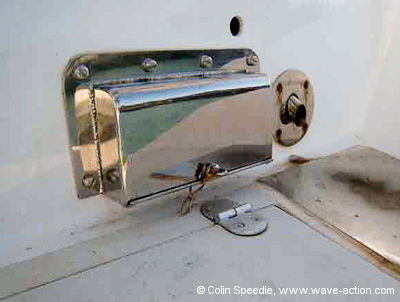
Expensive, but you could get some specificily fabricated, something tidier than this sort of thing, a vent with a closable flap you can lock in place when out to sea...
image-transom-cowl-713601.jpg


or what about these...

http://www.vetusdirect.com/mushroom-vent-model-portos-athos-dartagn/

.. I will keep thinking
 
Thank you all for your suggestions,

@whopper and firefly, they are all variations on my first idea, but not enough appealing,
the compressor is too hightec ;-)

@Deleted User, I don’t believe it has anything to do with sun, as the complete superstructure, new steps and transom are all painted, and no problem with paint bubbles nowhere,
But I’m quite sure it has to do with moisture, as confirmed by the former Canados workers,

@ Tom, The decklights are sealed with a thick very flexible rubber sealing,
so I think that’s the best we can do about that (if we need to be able to open them again for bulb replacement, etc…)
But that better sealing is only there sinds this summer, and the bubbling started the year before, so the source of the moisture we know,
Regarding the repainting, luckily its only a small part with bubbles, approx. L x H 1m x 0,4m,
So that’s not too bad to have this redone.

In the past there also used to be a issue with leaking water via the SS railing mounting studs.
Previous owner tried to seal this with silicone, but we took all the studs apart, and fitted 3 rubber seals (custom made) in each stud.


i-b555QMS-L.jpg


Spot the O-ring in the socket (this is orriginal)

i-xkrt2z7-L.jpg


i-3SqSxPk-L.jpg


But even by doing that we are never 100% sure that no moisture gets inside,

Therefor I like Jfm’s idea,
I’m not so keen on plastic hatches, (I have NONE on BA !)
but if we have the flattest, and cleanest looking model,
and perhaps have it spray painted same white like the wood,
then I really like this solution, and are always’s able te see what’s going on !

like this

488403.jpg


Or this

1960087.jpg


To be checked which one looks the best,
And which one / which size can be used on the slightly curved bow gunwale

thanks!
 
Last edited:
B, did you rule out the idea which we discussed, i.e. to cut the bottom part of all the interior gunwhale panels, leaving a small gap (2 cm or so) between the panels and the deck?
I still think that if done properly, the result could be much nicer than you could fear at first, and from a functional standpoint it would be the mother of all ventilations, with zero add-ons along the very elegant gunwale lines...
 
B, did you rule out the idea which we discussed, i.e. to cut the bottom part of all the interior gunwhale panels, leaving a small gap (2 cm or so) between the panels and the deck?
I still think that if done properly, the result could be much nicer than you could fear at first, and from a functional standpoint it would be the mother of all ventilations, with zero add-ons along the very elegant gunwale lines...

+1
do it properly (and I'm sure you can!) and it will add to the looks of the gunwale. With the right spacer, you can use a fein multitool (or equiv) and finish in less than a day (imho)

plastic hatches are a no no for me on wood, texture is going to be wrong and I'm not so sure that colouring will stay (after painting that is!) identical to the painted ply next to it...

cheers

V.
 
B, did you rule out the idea which we discussed, i.e. to cut the bottom part of all the interior gunwhale panels, leaving a small gap (2 cm or so) between the panels and the deck?
I still think that if done properly, the result could be much nicer than you could fear at first, and from a functional standpoint it would be the mother of all ventilations, with zero add-ons along the very elegant gunwale lines...

yes I did,

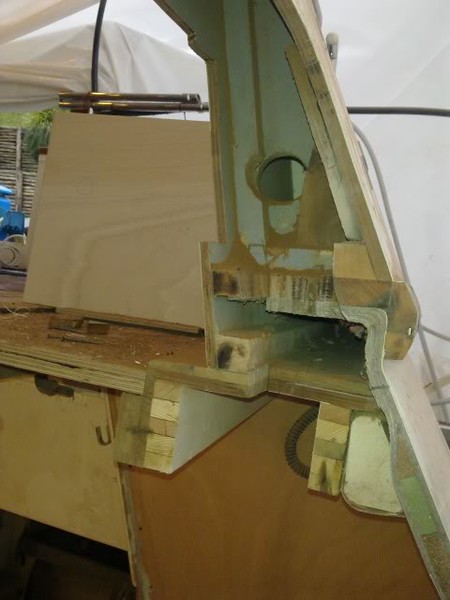
look at this pic, when the gunwhale was open for remake,

i-SWCf3ZB-L.jpg


the after half of the side deck, there it is doable,
and we MUST make that opening, somewhere close to that step, in order to get water from the bow, get out earlyer,
but looking at the pic, you can see there is a horizontal beam, about 13cm above deck level,
which avoids the ventilation of the gunwale section above the horizontal beam

this horizontal beam, is supporting the outside SS rub rail

now in the front half of the side deck,
just one step higher,
the deck surface is just behind this SS Rub rail,
so we cant make a drain opening there, or we would have to drill holes in that fat SS rub rail, and thats not what we can nor want,
I could make the openings just above the horizontal beam / rubrail, but then they don't serve for evacuating deck water
and when I looked in the decklight openings, I noticed also in there are some horizontal separations...

if you get whet I mean....
 
Last edited:
if you get whet I mean....
Mmm... Yep, I think I do.
Btw, looking at that pic, it also seems that the deck planks are not going all the way inside the gunwale thickness, reaching the external panel (as I would have expected).
That also contributes to making this alternative tricky. Shame though, I'm sure it could have solved the problem for good... :nonchalance:
 
looking at that pic, it also seems that the deck planks are not going all the way inside the gunwale thickness, reaching the external panel (as I would have expected).

well actually the deck floor with teak goes all the way inside firm against the GRP hull,
the gunwale is build on top of the teac ! not very visible on the previous pic,


here is a cross section from the transom door, this shows more detail:

i-CrF2VdJ-L.jpg


the gunwale is sitting on top of a layer teac and marine ply deck floor,
the 2 ply planks on the left, are added during the rebuild to close a floor locker opening (teak to be added there)


so its possible to make another water drain opening on the side decks, on the after part


remember:
on the rear side corners, the draining openings, you can see the teak there aswell,
we grinded that teak, and had it threated with flexible rubber, to have better water flow and make it water sealed.
 
Last edited:
here is a cross section from the transom door, this shows more detail
Interesting pic indeed.
Makes me wonder if the square section wooden profile at the bottom of the internal panel has any structural function.
I would hazard a guess that it was placed there simply to better attach/seal the panel bottom to the deck, with no other purpose whatsoever.
If this is true, since time proved that a perfect sealing doesn't exist anyway, I wouldn't rule out a complete removal of that profile (in the context of cutting the bottom part of the internal panels).
The only drawback I can think of - unless that profile serves some another function which I'm now missing - is that the bottom of the internal panels would be firmly attached only in correspondance of the frames, thus being less strong between one frame and another.
But assuming that nobody onboard will ever try to kick the panels to test their strength (which would be a weird exercise anyway, particularly barefoot... :D), that might be a non-issue...
 
Interesting pic indeed.
Makes me wonder if the square section wooden profile at the bottom of the internal panel has any structural function.
I would hazard a guess that it was placed there simply to better attach/seal the panel bottom to the deck, with no other purpose whatsoever.
If this is true, since time proved that a perfect sealing doesn't exist anyway, I wouldn't rule out a complete removal of that profile (in the context of cutting the bottom part of the internal panels).
The only drawback I can think of - unless that profile serves some another function which I'm now missing - is that the bottom of the internal panels would be firmly attached only in correspondance of the frames, thus being less strong between one frame and another.
But assuming that nobody onboard will ever try to kick the panels to test their strength (which would be a weird exercise anyway, particularly barefoot... :D), that might be a non-issue...
But MapisM, as I see it, Bart's problem isn't the square section at the bottom of the internal panel. It is the square section 5 inches above that, and which functions as a "support stringer" for the rubbing strake on the outside of the hull. Bart calls this the "horizontal beam" in his post. You can see a corresponding support stringer piece of wood in the transom door cut section photograph, exactly level with the rubbing strake

If BartW implemented the idea of cutting slots at bottom of internal plywood panels all the way along (which is a nice idea btw) then this support stringer will support the internal panel (even if someone did try to kick it barefoot, LOL!) but the problem is that it blocks the ventilation air flow. I think that to make the whole thing work, Bart would need to remove all the internal plywood panelling then cut away (I mean, castellate) the surface of this support stringer 15mm deep, on/off every 100mm, in order to create ventilation slots 100x 15 all the way along. Then trim off your 30mm or whatever from bottom of all the plywood panelling, then refit the panelling. But that is massive: I don't think Bart wants to remove all the panelling right around the boat, because that is a major job then needs a lot of painting

Fitting hatches above the support stringer is much easier and will allow a nice drying wind plus inspection opportunity into the cavity behind the plywood panelling. But of course the aesthetics aren't great. Compromises compromises eh? And if fitted at a sort of "midpoint" height, the plastic hatches provide no ventilation to the 4 inch high space that runs below the support stringer, which is also not good.

This is a tricky problem. IF aesthetics didn't matter, the opening plastic hatches could be fitted very low, eg their lower edge 30mm above the deck, then they would ventilate the space above AND below the support stringer. But of course aesthetics DO matter. :-)
 
Last edited:
But MapisM, as I see it, Bart's problem isn't the square section at the bottom of the internal panel. It is the square section 5 inches above that, and which functions as a "support stringer" for the rubbing strake on the outside of the hull. Bart calls this the "horizontal beam" in his post. You can see a corresponding support stringer piece of wood in the transom door cut section photograph, exactly level with the rubbing strake

If BartW implemented the idea of cutting slots at bottom of internal plywood panels all the way along (which is a nice idea btw) then this support stringer will support the internal panel (even if someone did try to kick it barefoot, LOL!) but the problem is that it blocks the ventilation air flow. I think that to make the whole thing work, Bart would need to remove all the internal plywood panelling then cut away (I mean, castellate) the surface of this support stringer 15mm deep, on/off every 100mm, in order to create ventilation slots 100x 15 all the way along. Then trim off your 30mm or whatever from bottom of all the plywood panelling, then refit the panelling. But that is massive: I don't think Bart wants to remove all the panelling right around the boat, because that is a major job then needs a lot of painting

Fitting hatches above the support stringer is much easier and will allow a nice drying wind plus inspection opportunity into the cavity behind the plywood panelling. But of course the aesthetics aren't great. Compromises compromises eh? And if fitted at a sort of "midpoint" height, the plastic hatches provide no ventilation to the 4 inch high space that runs below the support stringer, which is also not good.

This is a tricky problem. IF aesthetics didn't matter, the opening plastic hatches could be fitted very low, eg their lower edge 30mm above the deck, then they would ventilate the space above AND below the support stringer. But of course aesthetics DO matter. :-)


Mapism and Jfm, thanks for using your brains on my problem, but before doing too much speculation,
let me clarify and give a few more details

Jfm's observation is correct, but at the moment there is no issue with the airspace below the support stringer,
this is well ventilated via a side deck water draining opening on each side, (almost in the rear corner)
and I would like to make at least two more such openings, on the side deck's close to the step halfway the boat.
so no issue in this zone.

From the side deck step, all along to the bow, there is no space below that stringer, the deck floor is level with that stringer.

at this moment, the bubling problem only occurs on 0.5m2 of the gunwale, close to the bow, where lots of water can come (45° angled, and exposed)

the rear side decks are not much exposed, protection from the FB side overhang, and in winter the cockpit covers being there most of the time.
I have inspected this area through the deck lights, and all is dry !

so regarding these hatches,
perhaps I start with just 2 or 4 pieces, same shape / dimensions like a existing wooden hatch on the boat (square, completely flush, with rounded corners)
on the bow area.
with a router, my friend can fit the flange almost flush !

I have to admid that when I got the boat in 2011, there was also bubled paint in the cockpit area, (the surveyor managed a discount for that)
which I had repaired in Rome in 2012
 
a small compressor, low psi so a small unit, attached to nothing more than a aerated hose which is fed along inside the gunwale keeping a flow of air behind the ply and helping to dry out any dampness... the more I thought about this... the harder it becomes,... so back onto the water proof vents..

Couldn't you connect the compressor to garden irrigation hose then you can put outlets anywhere in the hose that you need them....I did wonder about putting warm air through as well.

Costs more, but airco could also be piped there as it is dehumidified air, it will take the moisture away...and if you have reverse cycle that's perfect. (how much annual budget do you have for this? I'm building up to sending trained monkeys in there with cloths to wipe it down)
 
so regarding these hatches,
perhaps I start with just 2 or 4 pieces, same shape / dimensions like a existing wooden hatch on the boat (square, completely flush, with rounded corners)
on the bow area.
with a router, my friend can fit the flange almost flush !
Ah ok, all understood. Then yes, neatly fitted hatches seems the way to go, imho
 
Bart,

Before you start cutting, here's a different perspective to consider:

We know the problem probably is fresh water as salt actually protects the wood, so would not rot of you had salt water ingress...

We also must assume that as the cavity heats up, then the damp must rise towards the top of the bulwark cavity.

You seem to have a slight overhang of the teak capping on the outside of the railing ... but un-sure of what you have on the inside....

Would you not consider fitting some neatly made SS Closable "Trickle vents" at the top, just under the Teak Capping ? ... inside ... or outside ??

Something like these....

trickle_mirror_lrg.jpg


canopy_mirror_lrg.jpg


..... would provide a opening vent at the top, low maintenance (no painting) and not look too much out of place with the other SS fittings..
 
Top