Methods for sealing wires through deck for above companionway instruments

brb

New Member
Joined
24 Nov 2021
Messages
14
Visit site
I am in the process of installing depth, log, wind, and gps repeater instruments in a console above the companionway on a 32ft yacht. However to do this I will need to feed at least 6 wires of differing dimensions through the deck to the side of the companionway. At present there are a couple of wires from the above sprayhood solar panel, though these just pass through a drilled hole which has been sealed with sealant and has been leaking

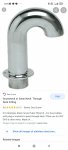
Does anyone have any ideas as to the best way of doing this. I have looked at various side entry cable glands but I would need at least three or 4 which would look messy. A swan neck would probably been too big. The Elvabro stainless steel cable lead through would be the smartest solution, but this too is mainly used at the foot of the mast and again may be too big. Any other suggestions?

Ideally I would like too have a single hole through which I can pass all the wires. The closest thing I have found so far is the Kathrein HDZ 100 Cable Grommet Housing buy now | SVB but I'm not sure how robust this will be.

The cables would be:

Solar panel 12v positive and negative
12v positive and negative supply
depth coax with plug
log coax with plug
wind coax with plug (however I may use a wireless system for this)
GPS repeater NMEA wire

Thanks in advance for any suggestions.

brb
 
I think trying to seal all those differing diameters will be difficult, you can get slotted deck glands that may work, I would split the power and comms into different glands and coax plugs can be a challenge to get through glands when you have a few to feed through
 
The two previous replies are the way to go. Obviously, you have to drill your own holes which I made about 1mm smaller than the cables going through. Rubber stretches when it's drilled, and you want the cables to be tight. I used a wood drill bit, but a Forstner bit would work well if you have one the right size.
 
Last edited:
The two previous replies are the way to go. Obviously, you have to drill your own holes which I made about 1mm smaller than the cables going through. Rubber stretches when it's drilled, and you want the cables to be tight. I used a wood drill bit, but a Forstner bit would work well if you have one the right size.
I also assemble the index glands with a tiny amount of silicone grease on the rubber gland to make it easier to fit.
 
If I was starting from scratch I would use one for a lot of the cables at the mast.
If you are retrofitting one and you have a number of holes near the bottom of the mast, you can weld a s/s plate to the base of the swan neck so the plate covers the holes. This is what I did on our mizzen mast. It's a neat solution
 
Think outside the box

Why not use WiFi and a tablet (in a suitable waterproof case). You then don't need wires through the deck, at all. You can also have access to charts and radar. All those instruments will take up a lot of room (and get in the way) and you don't need them all simultaneously (in fact if you cross large bodies of water you don't need depth and if its close quarters navigation you don't need a compass - you just need to see the rocks).

If its WiFi and a water proof tablet you can also use if for close quarters navigation at the helm - and tablets have other uses, or so I am told by my grandchildren (who hanker after my iPad Pro).

I think now you only need worry about the solar cables - and alone they are easy.

Jonathan
 
Think outside the box

Why not use WiFi and a tablet (in a suitable waterproof case). You then don't need wires through the deck, at all. You can also have access to charts and radar. All those instruments will take up a lot of room (and get in the way) and you don't need them all simultaneously (in fact if you cross large bodies of water you don't need depth and if its close quarters navigation you don't need a compass - you just need to see the rocks).

If its WiFi and a water proof tablet you can also use if for close quarters navigation at the helm - and tablets have other uses, or so I am told by my grandchildren (who hanker after my iPad Pro).

I think now you only need worry about the solar cables - and alone they are easy.

Jonathan
It's a neat idea, and as they are only repeating what presumably is already hard-wired not a bad solution. Potentially slightly more costly I would imagine?.
 
It's a neat idea, and as they are only repeating what presumably is already hard-wired not a bad solution. Potentially slightly more costly I would imagine?.

I think you will be correct - but might be better than the anguish of drilling mhutplie holes in the cabin top (and not getting it wrong) and then feeding the wires neatly to the various master component(s). I'm of the opinion that many people have a tablet, anyway, and as I imply they have other uses.

I'm an advocate of the idea that there are a number of techniques to skin a rabbit - and we tend to get too focussed and miss......


We also use WiFi and are converts - so a bit of bias creeps in.

Jonathan
 
The Elvabro stainless steel cable lead through would be the smartest solution, but this too is mainly used at the foot of the mast and again may be too big. Any other suggestions?

Ideally I would like too have a single hole through which I can pass all the wires. The closest thing I have found so far is the Kathrein HDZ 100 Cable Grommet Housing buy now | SVB but I'm not sure how robust this will be.

I would recommend the Elvabro Cableport (I have one by the mast foot, very sturdy)
Cableport - ELVABRO AB
It is actually smaller in most dimensions compared to the plastic offering from SVB.
Another possibility could be the SureThru, look up Cable through deck fitting on this site:
Mitron Marinteknik: Sure from Sweden
 
The two previous replies are the way to go. Obviously, you have to drill your own holes which I made about 1mm smaller than the cables going through. Rubber stretches when it's drilled, and you want the cables to be tight. I used a wood drill bit, but a Forstner bit would work well if you have one the right size.
It helps to lubricate the drill with water when drilling rubber.
 
I am in the process of installing depth, log, wind, and gps repeater instruments in a console above the companionway on a 32ft yacht. However to do this I will need to feed at least 6 wires of differing dimensions through the deck to the side of the companionway.............


It is often possible to lead the wires into the underside of the console from below, in which case you could fill in the existing holes, which are always likely to be a cause of problems and don't always look great.
 
Many thanks for your helpful replies.

Do you know if the rubber is flexible enough to enable the connectors to be passed through the rubber seal, or will side slits need to be made terminating at the drilled hole?

brb
 
Top