Md21b head off?

pandos

Well-Known Member
Joined
15 Oct 2004
Messages
3,202
Location
Ireland, (Crosshaven)
Visit site
I have an old reliable md21b... A few weeks ago I found additional water I the expansion tank...

The consensus was that there must be a leak in the heat exchanger... This providing the additional volume...

Since then I tightened I up the end caps and motored for about 15 hours..

Yesterday I checked to find oily water in the coolant tank... I guess head gasket... At least...

Boat is in the yard so good time to do something about it...

I really want to be able to rely on the engine for a few years... So I will do a mini rebuild...

Has anyone taken MD21 b apart on the boat?
. My thoughts are take off bits and pieces... Incl gearbox. Pumps starter etc.... take off head and then slip block and sump into saloon... Take off sump check bearings etc...

Anyone ever do this... gaskets seem cheap and the bolts are reused...

Slightly nervous of the marinised parts...

Engine always sounded fine and never overheated so I hope to put in bearing shells and valve stem oil seals...and nothing more....

Hope not to need new rings or cylinder liners... But I guess I won't know until the autopsy is started.

Any pointers appreciated...

Regards Tony..
 
Is the head not supposed to be torqued down every season as per instruction book ?
Well worthgetting crowfoot spanner for it
 
Is the head not supposed to be torqued down every season as per instruction book ?
Well worthgetting crowfoot spanner for it
I have never heard of a head that was torqued down every season...neither did I see this in the users manual....please send link /scan of relevant parts of instruction book... Also I query using torque wrench with a crowfoot spanner?
 
I only say this from experience I do not have relevant written documents it may be in ws manual were you will definitely find special tool crowfoot spanner to avoid having to strip valve gear to access head bolts
 
I would suggest checking the head is flat before completely stripping engine and cost everything before spending on an engine of this vintage
 
I agree with Scottie that once the head is off then have it checked. Unless it is dead flat, and it almost certainly won't be, then get it skimmed. If the bearings, bores etc are OK then skimming alone is probably the best money you can spend.

If you decide to replace the bearing shells, assuming you mean main bearings/big ends, then I would remove the pistons and thoroughly check bores, pistons, rings and small ends as well. Even if everything is good, you might find that it would be worth replacing the rings, assuming that the parts are available.

Richard
 
I'd second Richards advice, definitely get the head checked/skimmed as necessary. As you will have the head and sump off it's a no brainer to take the pistons out, so i'd be thinking of a light hone and new rings, be silly not to. For what they cost, it'd also be silly not to replace the mains and big ends.
 
I had similar oily water in the heat exchanger when the end caps were leaking but on a different engine,the oily water is the exhaust mixing with the heat exchanger fresh water and leaving a oily residue in the heat exchanger .I you have fixed the end caps leak just moniter it and it shouldnt get any worse.
 
I had similar oily water in the heat exchanger when the end caps were leaking but on a different engine,the oily water is the exhaust mixing with the heat exchanger fresh water and leaving a oily residue in the heat exchanger .I you have fixed the end caps leak just moniter it and it shouldnt get any worse.
Surely the exhaust mixes with the cooling water downstream of the heat exchanger? :unsure:

Richard
 
Surely the exhaust mixes with the cooling water downstream of the heat exchanger? :unsure:

Richard
My oily water is in the engine coolant... I used a test for combustion in the coolant circuit little bottle of special liquid with a glass yoke and special bung in the top of the expansion vessel but no indication of combustion gases in the circuit ..

I think at this stage the best thing is to start stripping...and seek out replacements for anything not 100%...

I think scotties reference to retorking is to the need do so once after some hours of running...

I have a workshop manual which is in Swedish....but it has pretty pictures....
 
My oily water is in the engine coolant... I used a test for combustion in the coolant circuit little bottle of special liquid with a glass yoke and special bung in the top of the expansion vessel but no indication of combustion gases in the circuit ..

I think at this stage the best thing is to start stripping...and seek out replacements for anything not 100%...

I think scotties reference to retorking is to the need do so once after some hours of running...

I have a workshop manual which is in Swedish....but it has pretty pictures....
Indeed, However, PeteK was suggesting that if there were a leak across the seals between the raw water and the engine coolant in the heat exchanger, then oil in the raw water could make its way into the engine coolant. However, as per my reply, I do not think that is possible with the usual engine design.

I agree that if you have oil in the engine coolant, then the most likely explanation is a blown head gasket. The presence of water in the sump would be virtually conclusive.

I also agree that regular re-torqueing of head bolts/studs should not be necessary.

Richard
 
I only say this from experience I do not have relevant written documents it may be in ws manual were you will definitely find special tool crowfoot spanner to avoid having to strip valve gear to access head bolts

Out of interest, what experience is this of ?

How do you check torque with a crowfoot spanner ?
 
My oily water is in the engine coolant... I used a test for combustion in the coolant circuit little bottle of special liquid with a glass yoke and special bung in the top of the expansion vessel but no indication of combustion gases in the circuit ..

I think at this stage the best thing is to start stripping...and seek out replacements for anything not 100%...

I think scotties reference to retorking is to the need do so once after some hours of running...

I have a workshop manual which is in Swedish....but it has pretty pictures....
Have a look at the special tools you will see the tool for accessing the head bolts
 
Out of interest, what experience is this of ?

How do you check torque with a crowfoot spanner ?
Best part of 50 years with VP dealer

Not a conventional flat offset one it has profile similar to a G clamp with a male hex section on top and hex ring at the bottom to bypass the valve gear
In practice the head problems were predominantly in the 6 Cyl high output version in planing craft the lower rated governed engine ok
 
Best part of 50 years with VP dealer

Not a conventional flat offset one it has profile similar to a G clamp with a male hex section on top and hex ring at the bottom to bypass the valve gear
In practice the head problems were predominantly in the 6 Cyl high output version in planing craft the lower rated governed engine ok
The shape of the special tool makes some sense now....

But I cannot remember if the md21b bolts are blocked by the valve gear. I'll know soon enough....

Thanks for the replies...
 
Best part of 50 years with VP dealer

Not a conventional flat offset one it has profile similar to a G clamp with a male hex section on top and hex ring at the bottom to bypass the valve gear
In practice the head problems were predominantly in the 6 Cyl high output version in planing craft the lower rated governed engine ok

Ah, yes, i know the type. Same tool i used on one or two awkward car engine. Very rare these days to need to check the head bolt torque, were they diesels or petrols that you needed to do it with ?
 
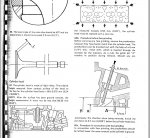
I've got a PDF (although a grainy photocopy) of the VP MD21A workshop manual if you'd like it, Pandos. Example attached.
Same engine, as you'll know, apart from the heat exchanger, manifold and a few ancilliary differences.
Also the Haynes manual for the Peugeot 504 2.1D is worth getting. Same base engine but with timing chain instead of gears.
 

Attachments

  • Capture.JPG
    Capture.JPG
    145.2 KB · Views: 10
I've got a PDF (although a grainy photocopy) of the VP MD21A workshop manual if you'd like it, Pandos. Example attached.
Same engine, as you'll know, apart from the heat exchanger, manifold and a few ancilliary differences.
Also the Haynes manual for the Peugeot 504 2.1D is worth getting. Same base engine but with timing chain instead of gears.
That would be great. I'll pm my email address..

Thanks..
 
Top