MD2020 temperature alarm on tick over?

shaunksb

Well-Known Member
Joined
26 May 2008
Messages
3,285
Location
Staffy Cher
Visit site
Started my Volvo Penta yesterday just on tick over, nipped up to the car for a minute to drop something And when I came back the alarm was sounding and the temperature light was on.

I couldn’t of been 4-6 minutes.

I switched her off and checked down below and the engine wasn’t even warm yet?

Took the coolant cap off, fine.

Plenty of water pumping.

Started it again and gave it some revs (1200), gave it ten minutes and it was fine.

Out for a hour yesterday and two hours motor sailing back down the river today.

I‘m not sure where the overheat sensor is but could it be that because it was just on tick over It wasn’t getting cooled.

Confused?

____________________________
 
Started my Volvo Penta yesterday just on tick over, nipped up to the car for a minute to drop something And when I came back the alarm was sounding and the temperature light was on.

I couldn’t of been 4-6 minutes.

I switched her off and checked down below and the engine wasn’t even warm yet?

Took the coolant cap off, fine.

Plenty of water pumping.

Started it again and gave it some revs (1200), gave it ten minutes and it was fine.

Out for a hour yesterday and two hours motor sailing back down the river today.

I‘m not sure where the overheat sensor is but could it be that because it was just on tick over It wasn’t getting cooled.

Confused?

____________________________
Possibly a silly question but are you sure it wasnt an oil pressure or charging warning rather than water?
 
Possibly a silly question but are you sure it wasnt an oil pressure or charging warning rather than water?

No not a silly question but it was the far LHS which has a picture of a temperature gauge on it and according to the manual it is the temperature light.

I’d changed the oil the day before

___________________
 
I'm new to VP engines having Ive been investgating a related issue with the MD2040 and on mine the temperature switch (alarm) is in the cylinder head and the temperature sensor (gauge) is in the side of the H/E. The following link suggests yours is the same as the sender in the still before you start the video is a 95c temperature switch that will only operate an alarm and/or warning light rather than a gauge

 
Started my Volvo Penta yesterday just on tick over, nipped up to the car for a minute to drop something And when I came back the alarm was sounding and the temperature light was on.

I couldn’t of been 4-6 minutes.

I switched her off and checked down below and the engine wasn’t even warm yet?

Took the coolant cap off, fine.

Plenty of water pumping.

Started it again and gave it some revs (1200), gave it ten minutes and it was fine.

Out for a hour yesterday and two hours motor sailing back down the river today.

I‘m not sure where the overheat sensor is but could it be that because it was just on tick over It wasn’t getting cooled.

Confused?

____________________________
It sound like the kind of intermittent fault usually caused by a poor electrical connection. However, my understanding is that the resistance of the sensor goes down as the temperature goes up and therefore a slightly dodgy connection would presumably cause a high resistance which would be interpreted as a low temperature rather than a raised one.

You could try removing the connector from the sensor just to see what happens. If you get an overheat warning, then a poor connection somewhere is the issue.

Richard
 
Could it be the old problem of the Fault Indicator Lamp Module on the Panel. I was getting ongoing scares with the Oil Pressure Alarm comming on quite regularly at one point on my 2040. I had the oil pressure measured and all was good. Nothing wrong with the Transducer or wiring either that I could find . I'm pretty sure it was the Fault Indicator Lamp module on the starter panel. They have gotten a lot of bad press on the site over the years. Expensive to replace! I cleaned up everything at the Key switch panel, Made sure there was no moisture around it and the problem went away. It returns sometimes for a week or two at the start of the season and goes away again! I believe its the Fault Indicator Lamp Module is very sensitive to any moisture. Someone also mentioned dirty contacts on the relays that are mounted on the engine. Might be worth checking and cleaning these also.
Kinsale 373
 
It sound like the kind of intermittent fault usually caused by a poor electrical connection. However, my understanding is that the resistance of the sensor goes down as the temperature goes up and therefore a slightly dodgy connection would presumably cause a high resistance which would be interpreted as a low temperature rather than a raised one.

You could try removing the connector from the sensor just to see what happens. If you get an overheat warning, then a poor connection somewhere is the issue.

Richard
You are thinking of the sensor for a temperature gauge
The OPs trouble is with the warning light which is activated by a sensor which simply closes like a switch when a certain temperature ( 95C) is reached. The enegine in question as a warning light (and audible alarm) activated in this way. A temperature gauge , which has a separate sensor, is an optional extra ( together with a voltmeter and an oil pressure gauge)

Removing the connection from the sensor will disable the light and audible warning , not activate it.
 
Many years ago I used to get this on start up, it was the alternator ... it needed a blip of revs to "excite" it. Never understood what that meant but it never gave a problem in use.
You could be right .

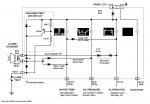
I think the VP electronic module is designed so that at switch on all the warning lights illuminate. In order to illuminate the high temperature warning light with acold engine there is a diode connection to the alternator warning light circuit. This means that when the alternator warning light is on the overheat warning light is also on.

But if this is the explanation the "no charge" warning light would also have been illuminated


This diagram will explain what I mean

VP electronic module.jpg
 
Last edited:
You are thinking of the sensor for a temperature gauge
The OPs trouble is with the warning light which is activated by a sensor which simply closes like a switch when a certain temperature ( 95C) is reached. The enegine in question as a warning light (and audible alarm) activated in this way. A temperature gauge , which has a separate sensor, is an optional extra ( together with a voltmeter and an oil pressure gauge)

Removing the connection from the sensor will disable the light and audible warning , not activate it.
I see. However, my conclusion is the same as yours ..... a poor/open connection to the sensor will cause the opposite result to the one that the OP has observed.

Richard
 
You could be right .

I think the VP electronic module is designed so that at switch on all the warning lights illuminate. In order to illuminate the high temperature warning light with acold engine there is a diode connection to the alternator warning light circuit. This means that when the alternator warning light is on the overheat warning light is also on.

But if this is the explanation the "no charge" warning light would also have been illuminated


This diagram will explain what I mean

View attachment 98791

The OP symptoms sound so much like an alternator failing to excite on tick-over (I actually have this). This would be indicated by re-starting a warm engine with throttle set to minimum and seeing if the alarm came on. If adding revs then causes the alarm to go off, the excite circuit is the cause. I believe this can be cured by adding a resistor to the warning lamp circuit?

BTW, the Moody Owners Association had a design of a home-made replacement for the electronic module on their technical pages when I was last a member.
 
The OP symptoms sound so much like an alternator failing to excite on tick-over (I actually have this). This would be indicated by re-starting a warm engine with throttle set to minimum and seeing if the alarm came on. If adding revs then causes the alarm to go off, the excite circuit is the cause. I believe this can be cured by adding a resistor to the warning lamp circuit?

BTW, the Moody Owners Association had a design of a home-made replacement for the electronic module on their technical pages when I was last a member.
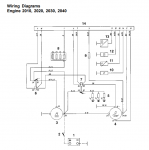
According to the wiring diagrams in the owners manuals all the MD2010/20/30/40 series, except I think the A versions, do infact already heve this resistor. . #9 in the diagram. It is fed from a supply in the panel switched by the ignition switch..

1600256935846.png
 
According to the wiring diagrams in the owners manuals all the MD2010/20/30/40 series, except I think the A versions, do infact already heve this resistor. . #9 in the diagram. It is fed from a supply in the panel switched by the ignition switch..

View attachment 98813

Thanks Vic, I will need to check mine, as my panel has been mucked about with where the PO converted from a button to a keyswitch.
 
I'm new to VP engines having Ive been investgating a related issue with the MD2040 and on mine the temperature switch (alarm) is in the cylinder head and the temperature sensor (gauge) is in the side of the H/E. The following link suggests yours is the same as the sender in the still before you start the video is a 95c temperature switch that will only operate an alarm and/or warning light rather than a gauge

If you end up needing a new temperature switch this is the one but I suspect its a wiring issue as the previous poster suggested

Volvo Penta MD2020 high temperature switch

Thanks for the input guys.

I've just had a lightbulb moment.

Just before I laid the boat up 4 years ago I paid for a co. to service the engine for me.

When we recommisioned a few weeks ago I noticed the oil was overfilled by half a litre and the drivebelt was "slack"

I'm aware I don't want the belt too tight and I didn't have my manual with me to double check so assumed it had been set correctly.

I didn't realise that the freshwater cooling side was driven by the auxilary belt until I saw that video.

Could it be that on tickover the belt is just slack enough not to drive the pump until it gets a few more revs and friction starts it off?

_________________________________
 
Thanks for the input guys. I've just had a lightbulb moment.
Just before I laid the boat up 4 years ago I paid for a co. to service the engine for me.
When we recommisioned a few weeks ago I noticed the oil was overfilled by half a litre and the drivebelt was "slack"


Could it be that on tickover the belt is just slack enough not to drive the pump until it gets a few more revs and friction starts it off?

_________________________________
Very likely and not drive the alternator properly either.

Inspect the belt and if no signs of wear or other distress tighten it properly so that it requires firm thumb pressure in the middle of the longest run to deflect the belt 10mm ( full instructions are in the owners manual)

Keep an eye on it for a while until you are sure ii is not stretching and about to break or simply losing tension. Getting a spare might be a wise move.

Find someone else to service the engine . Or better still learn to do it yourself

in the meantime check as many of the items on the service schedule yourself as you can in case there are other horrors lurking.
 
Thanks for the input guys.

I've just had a lightbulb moment.

Just before I laid the boat up 4 years ago I paid for a co. to service the engine for me.

When we recommisioned a few weeks ago I noticed the oil was overfilled by half a litre and the drivebelt was "slack"

I'm aware I don't want the belt too tight and I didn't have my manual with me to double check so assumed it had been set correctly.

I didn't realise that the freshwater cooling side was driven by the auxilary belt until I saw that video.

Could it be that on tickover the belt is just slack enough not to drive the pump until it gets a few more revs and friction starts it off?

_________________________________

Unlikely. Slack belts usually get worse as the engine speed increases, the pump has to work harder, as does the alternator (depending on battery SOC)
 
Unlikely. Slack belts usually get worse as the engine speed increases, the pump has to work harder, as does the alternator (depending on battery SOC)

I can understand that, the alternator seems to be working fine. I’m just thinking if the alternator and drive shaft are both “gripping” the belt in their V sections the slack could pucker up around the pump pulley?

I don’t know really and now I’m 200 miles away again.

___________________________
 
Very likely and not drive the alternator properly either.

Inspect the belt and if no signs of wear or other distress tighten it properly so that it requires firm thumb pressure in the middle of the longest run to deflect the belt 10mm ( full instructions are in the owners manual)

Keep an eye on it for a while until you are sure ii is not stretching and about to break or simply losing tension. Getting a spare might be a wise move.

Find someone else to service the engine . Or better still learn to do it yourself

in the meantime check as many of the items on the service schedule yourself as you can in case there are other horrors lurking.

I‘ll do all that thanks Vic.

Its 35 years since I changed the oil in an engine but I did it on Saturday and quite enjoyed it.

I was just a bit time precious at the time I laid this up and thought getting a co. in would be a belt and braces option.

The belt looks fine and can’t have more than 15 hours on it.

_________________________
 
Top