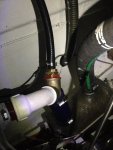
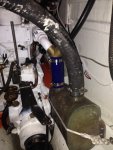
Making a new exhaust riser for MD2B.

The OP is in Turkey.

BTW, I wasn't going to use a Y. There are straight connectors with a, say, 30° input on the side.

Companies making food/pharmaceutical production equipment are a good place to look too, often come in heavier grades of steel than exhaust manufacturers.
The weight of the original elbow would be good to know, the 2 fittings including the fabricated flange, is maximum around 1,5 kgs.
I checked and the original Volvo bend, including flange, is approx 2.5kg.

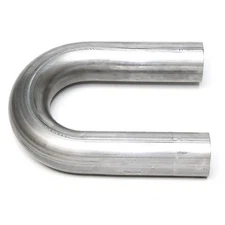
For welding up, the English term is 'mandrel bend' and they are available in 316 from around the same price as cast items. You can buy off the shelf tight 180° turns, eg here (example in 1.5mm 304 only). Thing is, they're so cheap you can afford for them to be disposable.

You can also have ends expanded in either steps or cones to expand/reduce, eg 60mm to 80mm to create the sort of expansion chamber were hot gases meet cold water.

I actually have the contact details of a stainless steel welder/manufacturer in Turkey who makes up really nice exhuast fittings for heaters etc if you can't find one.

Catering manufacturers, the people who do commercial kitchens, all work in stainless steel and would be cheaper than marine, if you can make up what you want.
s-l225.webp
s-l225.webp
 
Last edited:
The OP is in Turkey.

BTW, I wasn't going to use a Y. There are straight connectors with a, say, 30° input on the side.

Companies making food/pharmaceutical production equipment are a good place to look too, often come in heavier grades of steel than exhaust manufacturers.

I checked and the original Volvo bend, including flange, is approx 2.5kg.

For welding up, the English term is 'mandrel bend' and they are available in 316 from around the same price as cast items. You can buy off the shelf tight 180° turns, eg here (example in 1.5mm 304 only). Thing is, they're so cheap you can afford for them to be disposable.

You can also have ends expanded in either steps or cones to expand/reduce, eg 60mm to 80mm to create the sort of expansion chamber were hot gases meet cold water.

I actually have the contact details of a stainless steel welder/manufacturer in Turkey who makes up really nice exhuast fittings for heaters etc if you can't find one.

Catering manufacturers, the people who do commercial kitchens, all work in stainless steel and would be cheaper than marine, if you can make up what you want.
Thanks for the info, I am Greek based in Athens Greece though, not Turkey lol. There are rumors that we don't like each other but this is far from true. I have Turkish friends who can confirm the same about Greeks hehe. Just a parenthesis!
I ll consider welding elbows, maybe next time in the future but i have to get the job done now with the existing plumbing fittings. 30° input on the side is better but discovered it a little bit late, so going with the Y for now!
Tomorrow I am starting laminating the vinyl-ester water lock-lifter! I'll post some pics of the process.
 
Thanks for the info, I am Greek based in Athens Greece though, not Turkey lol.
Did you change your location? I'm sure I read Turkey somewhere in this discussion. Yes, 30° angle has less chance of water blowing back up the system.

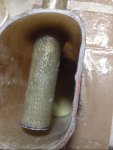
I always wondered about why Volvo elbows have the long water channel running parallel to the exhaust, is it to cool the initial part of the exhaust pipe, eg so as the joint to the rubber, flexible pipe isn't heated up and degrades?

In terms of engine efficiency, all those 90° angles in the welded version above can't be good for flow ... but how much it matters at 8 or 16 or 24 hp I have no idea. Probably not a lot.
 
Did you change your location? I'm sure I read Turkey somewhere in this discussion. Yes, 30° angle has less chance of water blowing back up the system.

I always wondered about why Volvo elbows have the long water channel running parallel to the exhaust, is it to cool the initial part of the exhaust pipe, eg so as the joint to the rubber, flexible pipe isn't heated up and degrades?

In terms of engine efficiency, all those 90° angles in the welded version above can't be good for flow ... but how much it matters at 8 or 16 or 24 hp I have no idea. Probably not a lot.
No always in Greece:)
I think all original elbows are jacketed. Don't know what is the advantage, but not being able to spot an internal failure is a big minus. The fewer angles will provide better flow for sure, but if you have to use them, then bigger diameter fittings will correct this issue.
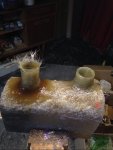
Started laminating the new waterlock today!
waterlock.jpg
 
Turns out to be a very time-consuming procedure to make the water lock, but worths the effort. Very robust and custom made at a shape that will fit e exactly right next to the engine.
waterlock.jpg
waterlock2.jpg
 
Hi everyone!
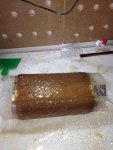
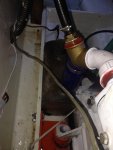
the project is complete and thought to share some pics along with the components, for anyone wanting to make a DIY exhaust elbow and waterlock

The total cost was only 94 euros!
Custom male flange 30€
45 degrees elbow 10€
Y fitting 12€
2 reducers and 1 hose nipple 6€
15cm silicone blue flexible hose- 6€
2kgrs of Vilylester-20€
Combimat and mat -10€

For making the water lifter I used PVC pipes as molds. A large one for making the body, bent with a heat gun to an oval shape, and 2 smaller for making the in and out tubes. Happy with the composite waterlock as vinylester is rated to 90C.
 

Attachments

  • water 3.jpg
    water 3.jpg
    180.7 KB · Views: 14
  • water1.jpg
    water1.jpg
    269.7 KB · Views: 16
  • water2.jpg
    water2.jpg
    225.6 KB · Views: 17
It looks very neat and compact. Have you fired the engine up in anger and seen how it sounds and performs?

I was wondering why there was so little clearance at the end of the input pipe to the trap, and whether this might impede flow, or cause water to back up? I have no idea at how much flow there is at that point.

Two thoughts arise,

a) you have a [perfect?] model to then have made up a stainless steel unit to match, but​
b) I am most concerned that you did not use official, authentic, OEM Volvo Green aerosol paint on your engine (cost £345 per tin, available from your local Volvo Penta stealership).​

Everyone knows the engines will never run properly if they're not painted green.

How does it cope with vibration? You don't seen to have given yourself very much flexibility between the manifold and the trap.

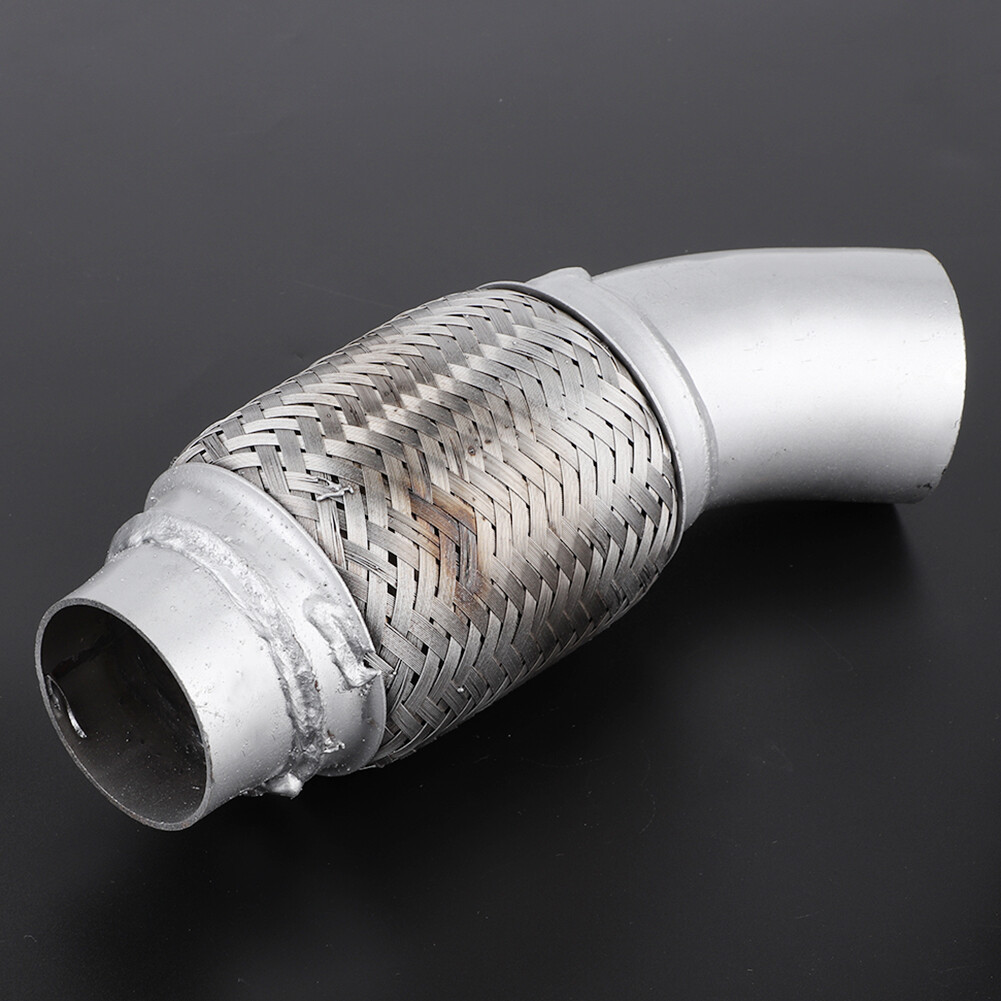
Just as a throwaway comment, there are various flexible metal exhaust pipes, like this

s-l1600.jpg


s-l1600.jpg
 
I guess we are also going to have to wait and see how the temperatures on the pipe goes? Isn't the water also going into the pipe to cool it?

You've got the water and gas mixing right where the plastic hose joins which, if it gets hot, will become flexible and, possibly, risk disconnecting. Another reason to use metal.

I don't know that, I'm just working through potentials.

Open question ...
 
What sort of pipe is it and shouldn't it be the same stuff used for the old exhaust?

(Sorry, still on moderators' detention and unable to re-edit or add to posts)
 
What sort of pipe is it and shouldn't it be the same stuff used for the old exhaust?

(Sorry, still on moderators' detention and unable to re-edit or add to posts)
Hi! I am going to fire up the engine today and will come back with the results:)
The blue silicone hose is there to absorb the vibration of the engine. It is a soft elastic hose rated for 200C so i think it's going to be ok, as it is right in the mixing Y.
I will attach a temperature sensor on the silicone hose with a sounding alarm for monitoring.
 
Here is a video of the first run! These revs ( around 800-900) cause the biggest vibration, however, it's all absorbed by the blue soft hose. The sensor attached to the blue hose showed a max temp of 38C when the thermostat opened and hot water got out. Otherwise, it's around 32-33C. Naturally, this temp will increase during summer and with the engine box closed, but hopefully will stay within a safe maximum level.
 
Top