
Gary Fox
N/A
I have sent you a message Akestor

Used to be known as a parsons silencer and usually installed with flexible metallic pipe subject to rusting under the laggingI recently had to rebuild my high rise mixer. Mine is very heavy and it is bolted to the underside of the cockpit floor.
The right hand pipe is the dry exhaust inlet which is connected to the engine manifold by 1 metre of stainless corrugated pipe and lagged.
The unit and exhaust outlet is above the waterline so a syphon break on the seawater injection is not needed.
My engine is well below the waterline and a water silencer box cannot be placed below the manifold outlet so this system works well to stop the sea going the wrong way into the exhaust and filling the engine.


Not understanding completely your installation by the pic, but would like to ask how high above the water line is the higher dry part from the sea level and from your exit fittingI recently had to rebuild my high rise mixer. Mine is very heavy and it is bolted to the underside of the cockpit floor.
The right hand pipe is the dry exhaust inlet which is connected to the engine manifold by 1 metre of stainless corrugated pipe and lagged.
The unit and exhaust outlet is above the waterline so a syphon break on the seawater injection is not needed.
My engine is well below the waterline and a water silencer box cannot be placed below the manifold outlet so this system works well to stop the sea going the wrong way into the exhaust and filling the engine.
Old custom stainless steel elbow leaks from failed welding and the same does the small lifter. This is a project i d like to do for a long time and now it's the time. I decided to use plumbing fittings to make a new riser, as I found that some people have done this successfully. The riser goes up and then down where the water is injected in the bronze Y. I will also make a new lifter from vinyl-ester resin.
Nuts for locking the fittings at the desired position are available - not installed yet on the pics, it's just a test installation.
Any ideas for supporting the riser in place? Even the new flange from where the riser starts is heavy-duty, I guess a custom "arm" that will give the riser extra support may be needed.
Also, I am not sure whether it's best to attach the lifter on the engine so they all vibrate together ( riser and lifter), or install it on the hull and connect it with the riser with a flexible silicone hose for absorbing the vibration.
Have run out of inspiration so any ideas are welcome!
View attachment 103175View attachment 103176View attachment 103177

So far the setup was like this -no high rise on the elbow just the water hose. An exhaust riser can make a more safe system, but indeed hard to make it with plumbing fittings. Rappey confirmed he had to weld them anyway.. Should probably stick to the original elbow shape using 2-3 fittings only, making it much lighter and stable than assembling the whole thing.You don't need a high rise in the exhaust you only need a high rise in the water injection pipe as shown in this vetus picture.
It is sometimes not possible to achieve the 'min 30 cm' or to get it sufficiently downwards sloping because of position of engine/shape of hull. That is when an exhaust high riser might be called for.You don't need a high rise in the exhaust you only need a high rise in the water injection pipe as shown in this vetus picture.
In my old current installation which now replaces, the muffler is stainless steel and was sitting under the elbow. I assume they give a minimum the 30 cm length to protect the plastic muffler from melting.It is sometimes not possible to achieve the 'min 30 cm' or to get it sufficiently downwards sloping because of position of engine/shape of hull. That is when an exhaust high riser might be called for.
Possible, but I doubt anything in the exhaust system would melt as long as the cooling water gets through.In my old current installation which now replaces, the muffler is stainless steel and was sitting under the elbow. I assume they give a minimum the 30 cm length to protect the plastic muffler from melting.
As long as the water gets throughPossible, but I doubt anything in the exhaust system would melt as long as the cooling water gets through.
On my Beta engine, which has a high riser BTW, I monitored the temperature of the elbow right after the injection point (before putting an alarm sensor there). It never got above 40 degrees C.

Indeed a high riser is good but needs a good welder for doing it from exhaust pipe which is much lighter. Today, only used 2 fittings, the 45 angle curve, and the Y mixer. Underneath there is room for a six-liter water lifter. On the pic it's shown a plastic tube bent with the heat gun, that might use as a mold for making the fiberglass lifter. Still don't know how I am going to lock in desired place the fittings. I have nuts for locking them, but they do not leave enough threads for properly tightening them then...The advantage of the high rise exhaust is that salt water is kept away from the exhaust manifold. The problem with the arrangement will be the threaded joints. The threads do "wear" and corrode wit time due to the vibration. It looks good to me, just keep an eye on it every lay-up.

The full length of the hose to the stern is 3.5 meters ,45mm ID, approximately a volume of 5,5 liters, so a 4-liter lifter is good enough! The scrap plastic hose will use for mold happens to be 6 liters but i might cut it shorter. How have you install/ support the lifter in place? i mean for not moving around by boat roll and pitch,Do you need 6L? My Centaur's MD11C has been happy with a 4.3L Vetus waterlock for 20 years.
I don't want to show it a photo of your engine. It will think all old Volvos should look that clean.
That look good to me and similar to how I set mine upIndeed a high riser is good but needs a good welder for doing it from exhaust pipe which is much lighter. Today, only used 2 fittings, the 45 angle curve, and the Y mixer. Underneath there is room for a six-liter water lifter. On the pic it's shown a plastic tube bent with the heat gun, that might use as a mold for making the fiberglass lifter. Still don't know how I am going to lock in desired place the fittings. I have nuts for locking them, but they do not leave enough threads for properly tightening them then...
View attachment 103329
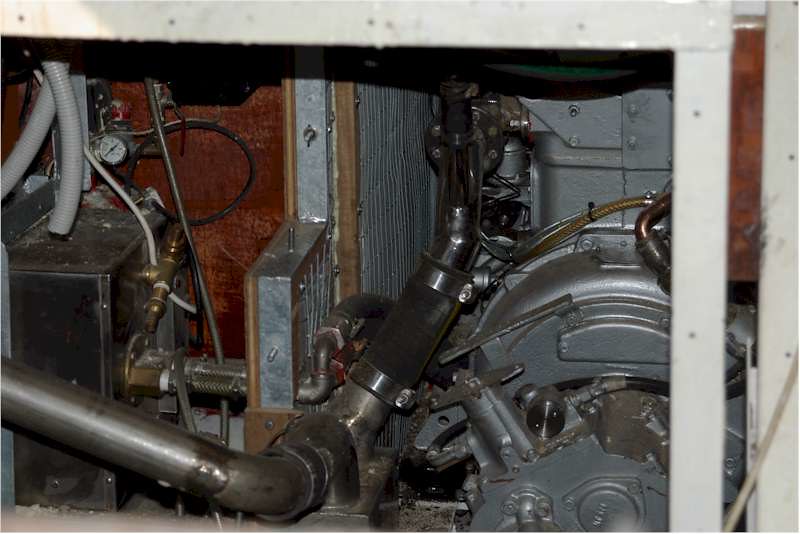

I can weld stainless so I made mine from stainless weld bends
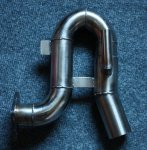

I made up a riser for my MD21B from 1.5mm wall 304 bends and tubing (316 at and beyond the water injection point) from Ebay/China -parts cost <£15.
The photo is a spare as I made 2 expecting the first to perforate after a season or two or fail, but the original is 5+ years old now.
View attachment 103342
