Lubricating Morse cables

superheat6k

Well-Known Member
Joined
10 Jan 2012
Messages
6,798
Location
South Coast
Visit site
Does anyone have any tips or know of devices to help get some oil into my morse cables without having to dismantle the dual throttle assembly please ?

These cables are several metres long from the flybridge down to the engines and are becoming increasingly stiff, so I want to get more than just a few drops into them. There is no room to make a polythene or plasticine funnel without substantial dismantling of the complete assembly to release the individual cables.

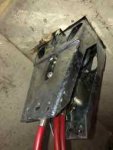
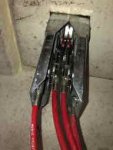
Edit after photos inserted ...

The whole assembly can be lifted out of the recess hole, but getting to the cable ends where the small gap is is the real challenge. I was trying to avoid dismantling to free the cable ends.

I do have a motorcycle cable oiler, which is akin to the ashtray mounted on the handlebars anyway ! This is way to small for these morse cables.

So I oil my bike's clutch and speedo cables with a simple piece of polythene formed into a funnel around the end once disconnected, held in place by some insulating tape. The oil can then take several hours to slowly dribble into the cable, which is the similar affect I want to achieve here.

Thanks.
IMG_3144.jpgIMG_3150.jpg
 
Last edited:
Get a big syringe filled with oil and attach to one end of the cable with a piece of rubber/plastic tube clamped to the outer with worn clamps and squrt the oil doen the cable with the syringe.

Do hung my shorter ones from a second floor and used a tundish in the same way as I did not have a big syringe.
 
New Motorcycle Hydraulic Clutch Throttle Brake Cable Lubricator Oiler Tool | eBay
Basically clamps around the cable and a screw-down piston forces oil into the cable.
Well, that is the theory.
The reality is often than the oil comes out of a split in the plastic cover after travelling a few inches along the cable.
Might be worth a try, if it fits around the outer of the morse cable which is fatter than most bike cables?

But if you use it from the bottom and force oil up the cable, all the water rust and crud that's causing the stiffness is going into the morse lever mech..
I think the cables heve to come out of the lever box, which probably needs a clean and a bit of lube itself.
 
New Motorcycle Hydraulic Clutch Throttle Brake Cable Lubricator Oiler Tool | eBay
Basically clamps around the cable and a screw-down piston forces oil into the cable.
Well, that is the theory.
The reality is often than the oil comes out of a split in the plastic cover after travelling a few inches along the cable.
Might be worth a try, if it fits around the outer of the morse cable which is fatter than most bike cables?

But if you use it from the bottom and force oil up the cable, all the water rust and crud that's causing the stiffness is going into the morse lever mech..
I think the cables heve to come out of the lever box, which probably needs a clean and a bit of lube itself.

I lookd at one of those when I did my engine control cables.

The problem I found was the longer inner extension on the push pull cable made it difficult to connect to the engine cane outer.

A motorcycle clutch cable is only a pull cable so has a very different end arrangement.
 
New Motorcycle Hydraulic Clutch Throttle Brake Cable Lubricator Oiler Tool | eBay
Basically clamps around the cable and a screw-down piston forces oil into the cable.
Well, that is the theory.
The reality is often than the oil comes out of a split in the plastic cover after travelling a few inches along the cable.
Might be worth a try, if it fits around the outer of the morse cable which is fatter than most bike cables?

But if you use it from the bottom and force oil up the cable, all the water rust and crud that's causing the stiffness is going into the morse lever mech..
I think the cables heve to come out of the lever box, which probably needs a clean and a bit of lube itself.
Do you know what diameter cable the end fitting can accomodate - I would likely have to modify it anyway because the free moving end of the cable sticks out a fair distance, and it offer no real advantage over the polythene funnel method apart from if the pump mechanism can still be used it would be swifter.
 
Do you know what diameter cable the end fitting can accomodate - I would likely have to modify it anyway because the free moving end of the cable sticks out a fair distance, and it offer no real advantage over the polythene funnel method apart from if the pump mechanism can still be used it would be swifter.
I think the one I have is very old, so dimensions might not be the same on a new one.
The bit that goes around the outer is two slotted washers and a rubber tap washer with a slit in it, so not rocket science to mod for bigger cables.
I think it would take about an 8mm outer.
Must admit I haven't used it in ages, only got one bike with a clutch cable, everything else is hydraulic. I can't immediately locate it.

When I did my RIB cables, I hung them from the ceiilng for a week, a lot of rusty oil came out as new oil went in.
 
Do you know what diameter cable the end fitting can accomodate - I would likely have to modify it anyway because the free moving end of the cable sticks out a fair distance, and it offer no real advantage over the polythene funnel method apart from if the pump mechanism can still be used it would be swifter.

This is a picture of the instructions that came with mine. As you can probably tell by the old telephone number, I've had it for at least 30 years and its served me well over that time. It says that "adjuster fittings up to 3/4 inch diameter can be left in-situ"

Cable%20Oiler%20Instructions.jpg
 
This is a picture of the instructions that came with mine. As you can probably tell by the old telephone number, I've had it for at least 30 years and its served me well over that time. It says that "adjuster fittings up to 3/4 inch diameter can be left in-situ"

Cable%20Oiler%20Instructions.jpg
Blimey, I can't find the instructions for something I bought last month!
 
I suspect that most engineers are burdened with this character defect ?
I suspect most engineers are burdened with having every piece of information buried under every piece of junk that they kept just in case they found a use for it.
 
I suspect most engineers are burdened with having every piece of information buried under every piece of junk that they kept just in case they found a use for it.

Don't agree about the destructions never keep them

But every piece of junk I agree with as when you do throw something away you always need it in a weeks time

Also when you cannot find something you know you have somewhere and cannot and by it again, you find it the very next day.
 
Does anyone have any tips or know of devices to help get some oil into my morse cables without having to dismantle the dual throttle assembly please ?

Morse cables are not intended to be lubricated in service - they're greased for life; if they get stiff they need replacing. Also, the inner cable has a plastic sheath which may swell if the wrong type of oil is applied.
 
There are 'Morse Cables' and 'Morse-type cables'.
I lubed the stiff cables on my RIB and they worked perfectly for a few years, then I sold the boat.
 
This is a picture of the instructions that came with mine. As you can probably tell by the old telephone number, I've had it for at least 30 years and its served me well over that time. It says that "adjuster fittings up to 3/4 inch diameter can be left in-situ"

Cable%20Oiler%20Instructions.jpg


I have one of them in my toolbox at work, again used on motorbikes 30 yrs ago, great bit of kit.
Kind of suspect alloy body not long enough to get the end of the morse inside it?
 
Last edited:
Top