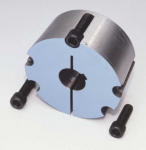
Lost keyway - 4” R&D coupling/30mm shaft - do I need it?!

dankilb

Well-Known Member
Joined
23 Jan 2008
Messages
1,538
Visit site
We launch on Tues after a 2 year refit and, while trying to re-install the shaft coupling this afternoon, I somehow lost the keyway… (one minute there - next it was gone and nowhere to be found!)

It’s an R&D style split clamp shaft coupling. I notice they’re now sold without any keyway.

Do I need one?

I could of course remove the coupling after launch, but would rather not (no cutlass bearing - only a lip seal - so it all goes a bit floppy when disconnected!).

Or I could try and scrounge one (know a few people locally who might have or could fabricate something) - but bearing in mind the bank hol, is it worth the hassle?

Its disappearance has caused a bit of last minute panic - so TIA for any reassurance!
 
Not needed.

Infact better without in case prop strikes something.

Blob of paint placed such tgat if it slips you csn see.
Phew! Okay, that’s a relief…

The coupling also has a threaded hole for a grub screw (with an accompanying indent in the shaft). I thought of beefing this up (tapping from 1/4unf to M8) to compensate for the lack of key… but it sounds like that might also be creating a potential liability, in that case??

It’s certainly telling the new design seems ‘clamp only’.
 
So the keyway will only help stop the shaft spinning in the coupling won't it? It won't stop the shaft from pulling out, so I'd say providing your shaft diameter is in good nick and hasn't worn down, it'll be alright.
 
We launch on Tues after a 2 year refit and, while trying to re-install the shaft coupling this afternoon, I somehow lost the keyway… (one minute there - next it was gone and nowhere to be found!)

It’s an R&D style split clamp shaft coupling. I notice they’re now sold without any keyway.

Do I need one?

I could of course remove the coupling after launch, but would rather not (no cutlass bearing - only a lip seal - so it all goes a bit floppy when disconnected!).

Or I could try and scrounge one (know a few people locally who might have or could fabricate something) - but bearing in mind the bank hol, is it worth the hassle?

Its disappearance has caused a bit of last minute panic - so TIA for any reassurance!
Agree with others. For a clamp coupling as long as everything was clean, you used the correct bolts (tensile strength) and you torqued as specified then you are good to go. No need for the grub screw.

Www.solocoastalsailing.co.uk
 
Thanks all. Great advice and reassurance - especially after a long day/weeks/months/years(!) in the boatyard.

This all makes sense to me now ??

As an aside, the shaft itself is not long for this world (pitted, very very slightly untrue, and too short for the new engine/rope cutter so already extended with a ‘bobbin’ coupling. I just need it not to embarrass us while we motor out of the lift bay and to our new berth!
 
So the keyway will only help stop the shaft spinning in the coupling won't it? It won't stop the shaft from pulling out, so I'd say providing your shaft diameter is in good nick and hasn't worn down, it'll be alright.
…strange one isn’t it?! Surely if your coupling was so loose it was only able to turn the prop via a (brass?) keyway, you’d rather know something was amiss (by it no longer turning the prop!) before the whole lot tries to make its escape?!
 
For the avoidance of doubt and possible confusion, a key fits in a keyway. I suggest that it's the key that is missing. I wonder if indeed there ever was one. They are not needed with a clamped coupling.
 
For the avoidance of doubt and possible confusion, a key fits in a keyway. I suggest that it's the key that is missing. I wonder if indeed there ever was one. They are not needed with a clamped coupling.
I was wondering how you loose something that is missing in the first place?
 
Keys can and are used for torque transmission. It is dependent upon the initial design and the type of key in question. If the original was brass/ bronze then it may if sophisticated have been designed to shear at a given load / overload ! I'd also suggest that the grub screw is possibly there to prevent axial movement and maybe you should think about dimpling the shaft accordingly. A chat with a local engineer may be useful.
 
Although in this particular application I cant see why, keys are usually there only for timing purposes and not for torque transfer.
Keys certainly are used for torque transfer. I used to have to calculate shaft sizes and key dimensions for torque transfer in industrial plant. In those days we fitted 2 x Grub screws minimum. One onto the key to stop it fretting and the other at 90 degrees to stop the shaft fretting. The grub screws are NOT for torque transmission and upsizing is a seriously bad idea. The coupling may rotate and cause it to gauge a track around the shaft. At that point removing the coupling can be challenging.
Of course like many things in engineering, these days things are easier: just look up manufacturers tables and select appropriate size clamp coupling.. No calculation , no keyway machining in shaft and coupling, no drilling and tapping grub screws, no fettling of key for perfect fit..
 
I was wondering how you loose something that is missing in the first place?
Indeed! My mistake…

The keyway is definitely still there. The key itself has done a runner (it certainly had one before - as that’s how I aligned the coupling to the grub screw indent etc.
 
Keys certainly are used for torque transfer. I used to have to calculate shaft sizes and key dimensions for torque transfer in industrial plant. In those days we fitted 2 x Grub screws minimum. One onto the key to stop it fretting and the other at 90 degrees to stop the shaft fretting. The grub screws are NOT for torque transmission and upsizing is a seriously bad idea. The coupling may rotate and cause it to gauge a track around the shaft. At that point removing the coupling can be challenging.
Of course like many things in engineering, these days things are easier: just look up manufacturers tables and select appropriate size clamp coupling.. No calculation , no keyway machining in shaft and coupling, no drilling and tapping grub screws, no fettling of key for perfect fit..
Fascinating - and good advice about not beefing up the grub screw.

I will leave both key/keyway and grub screw out of the equation, tighten to torque, and maybe add a hose clamp on the shaft initially in case it does try to escape (the clamp jams in the seal, etc.).

Interestingly the previous installer had plenty of grease in the thing ? - so presumably had trust in the key (which wasn’t the length of the keyway, like the replacements I saw from Norris/R@D - more like an inch or 3/4” long).

Thanks all. Learning, reassurance and potential disaster aversion in the space of a mere 12 hours!

Better get out of bed and fit the thing, eh?!
 
Keys certainly are used for torque transfer. I used to have to calculate shaft sizes and key dimensions for torque transfer in industrial plant. In those days we fitted 2 x Grub screws minimum. One onto the key to stop it fretting and the other at 90 degrees to stop the shaft fretting. The grub screws are NOT for torque transmission and upsizing is a seriously bad idea. The coupling may rotate and cause it to gauge a track around the shaft. At that point removing the coupling can be challenging.
Of course like many things in engineering, these days things are easier: just look up manufacturers tables and select appropriate size clamp coupling.. No calculation , no keyway machining in shaft and coupling, no drilling and tapping grub screws, no fettling of key for perfect fit..

Were those couplings split?
 
No. Though hydraulic couplings are not split and still 'grip' the shaft . But this is all by the by and not relevant to the OP. The key may or may not be required in his situation and he would do well to chat to the coupling manufacturers, the boat builders / designer or failing that a trusted local engineer who can get sight of the installation and give an opinion rather than a bunch of strangers of unknown background no matter how well intentioned.
 
Last edited:
No. Though hydraulic couplings are not split and still 'grip' the shaft . But this is all by the by and not relevant to the OP. The key may or may not be required in his situation and he would do well to chat to the coupling manufacturers, the boat builders / designer or failing that a trusted local engineer who can get sight of the installation and give an opinion rather than a bunch of strangers of unknown background no matter how well intentioned.
Personally, I wouldn't fit a key with a clamp-on coupling, but for the OP's peace of mind, half an hour with a hacksaw and a file would seem a better alternative than speaking to coupling manufacturers, boat builders / designers, or local engineers. Sometimes, particularly working or boating "off piste" you have to rely on your own decisions.
 
Top