Loss of Compass fluid.

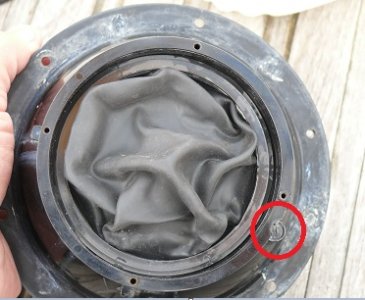
It is not hard to do. On my Plastimo binnacle compasses, You first have to remove the bellows to replace most of the oil, but for final filling after refitting the bellows there is a small screw on the underside covered over with some kind of sealant (or melted plastic?) but easy to find. I had to drill or scrape away the sealant and remove the screw to complete the fill with no air bubble. You should replace the O ring under the screw, and re-seal. I wrote an article for PBO on this some years ago. To refill I used Johnson's baby oil. (The unscented variety). The type of syringe used to refill ink jet printer cartridges is very good for putting the oil in through the small hole.

Article was PBO 569, January 2014
 
Just realised you asked for an outlet / repair person, so all I wrote below may be useless to you, sorry.

I should take time to read.

I have completed this repair multiple times DIY with excellent long lasting results with ease and satisfaction and long lasting results.


Best practice imo is take leaking compass, extract some fluid, and see if it mixes with baby oil, or alcohol (I think there is another fluid to check, but memory fails).

Alcohol used a lot in compasses that expect cold conditions (aircraft e.g.)

If fluid mixes with alcohol, add alcohol , if mixes with oil, use baby oil, ensure no bubbles remain, screw tight and seal, (note temperature that you perform this repair at and ensure expansion ‘bellows’ function.

I used to use ice to cool compass when repairing and expect bellows / check function.

Tools needed: small drill bit (preferably in a miniature handle), syringes, test tubes, various fluids, containers for ice etc, stable platform, good sealants.

Easy and satisfying job if of DIY /PBO nature.

I saved many compasses (often bought 2nd hand) in this manner, and made them as good as new, even swung them.

I may have missed some details in my haste to reply. Ask again if verification required.
 
Last edited:
It is not hard to do. On my Plastimo binnacle compasses, You first have to remove the bellows to replace most of the oil, but for final filling after refitting the bellows there is a small screw on the underside covered over with some kind of sealant (or melted plastic?) but easy to find. I had to drill or scrape away the sealant and remove the screw to complete the fill with no air bubble. You should replace the O ring under the screw, and re-seal. I wrote an article for PBO on this some years ago. To refill I used Johnson's baby oil. (The unscented variety). The type of syringe used to refill ink jet printer cartridges is very good for putting the oil in through the small hole.

Article was PBO 569, January 2014
If you wrote the article, did you give rights / cpoyright to the publisher?

If not, you could if you wished and had time / desire to re- publish here?

I expect you gave rights to magazine though?

ALSO, whilst I may have had to repair bellows, I never had to remove or replace them; simply repair and then use the filling screw (once found : uncovered).

I too used printer ink syringe and ‘needle’.

A satisfying job imho.
 
I had to do mine a few times as it kept on emptying until I discovered there was a tiny crack in the screw thread, after having repaired the crack and filled a last time the compass is still perfect :)
Plastimo Olympic compasses use Isopar M, can be replaced with white odourless kerosene; if you have the older model with a black/white rose the liquid has some sort of dye (mine is bluish), to keep the colour it s better to remove and filter the whole existing liquid, reuse it and top up with fresh liquid (which will be transparent).
This is the drained old liquid, part of the green/blue dye seemed to be separated from emulsion, but actually the liquid itself was coloured; also quite a number of tiny debris from the rose paint, as the compass was moved they all went floating like Christmas cristal snow balls, all filtered and removed. More recent models simply have a red rose with transparent liquid.
compass liquid.jpg

The filling screw is located here (picture)

compass.jpg
before filling, put everything in the fridge (compass+replacement fluid) for a few hours. When filling, keep the screw in the topmost position, then insert additional liquid to well expand the membrane. Insert the filling screw and twist it a little bit: while gently oscillating the compass with the screw on top, push the membrane to help air come out, when you only see liquid squirting out tighten the screw. It is of course important not to leave the membrane overfilled and bulging. You might have to repeat the procedure one two times. Not really different from priming a CAV filter with all the mess it involves :D
Once you put the compass in the upright position, if there is a remaining small air bubble (say a few mm diameter) try and leave it there it will most likely disappear as compass and fluid reach ambient temperature.
 
Top