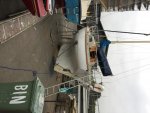
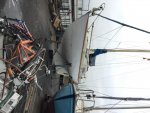
Long keel yachts.

Don't discount wood, a well restored and maintained one is a joy to own. I think that wood and long keel go together we'll because the weight distribution helps with the sea-kindliness movement.
 
Budget ????

Hi, sorry for the delay answering, I'm in Rodney bay for a few days and the wi-fi is not good.
Many thanks for the answers so far.
This is just the first thoughts, I can't even start looking until after I get back from this trip in June. As this will be a toy to go off in by myself, I won't be spending to much on her but of course if I fall in love with something I could be tempted to open the wallet a bit further!
I'm not too bothered about problems reversing, I don't spend much time in marinas, I can't afford them!
Allan
 
Bowman 26 - longkeeler with standing headroom at 6'1"

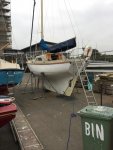
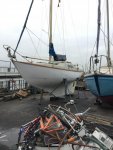
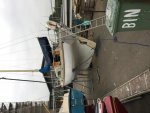
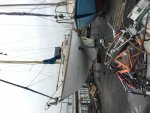
2016-10-29 10.17.02.jpg

2016-10-29 13.18.14.jpg
 

Attachments

  • image.jpg
    image.jpg
    92.3 KB · Views: 5
  • 2016-10-29 13.18.14.jpg
    2016-10-29 13.18.14.jpg
    93.5 KB · Views: 5
  • 2016-10-29 10.17.02.jpg
    2016-10-29 10.17.02.jpg
    92.5 KB · Views: 5
  • 2016-10-29 13.18.14.jpg
    2016-10-29 13.18.14.jpg
    93.6 KB · Views: 6
Last edited:
If you haven't owned a long keeler before they have prop walk . Always go bows to in a marina, when leaving tie a warp from an amdiships cleat to a cleat by the stern, run the engine at 800 revs until water is flowing over the rudder and then release the cleat and the boat will go straight back. We had one and they don't surf, don't turn up to wind in a gust and if a strong gust comes throught they will heel but start going back up before the gust goes, we never had the toerail in the water. The most common long keeler we saw when long distance sailing was a Vancouver. Good luck.

Too many generalisations in there that have nothing specifically to do with a long keel.
An awful lot of boats have prop walk, irrespective of keel type. The trick is to learn how to use it.
I have certainly surfed in a long keeler - most exhilarating.
They do turn to wind in gusts - if they are set up to have a little weather helm. The thing to realise is that you have to sail different boat designs in different ways - people bang on about modern designs saying they round up/broach too easily - but sailed correctly they don't - you may need to reduce sail earlier but the benefit of that is that they tend to be faster in low wind.
An awful lot of long keel boats sail at their best when the toerail is just at the level of the water so getting the toerail in the water is a regular occurrence - my previous boat, a fairly racy design with a fin and skeg configuration, it was virtually impossible to get the toerail in the water.

For the OP ... depending on your budget a Halcyon 27 would be good for you ... one of the best looking FB derivatives, very seaworthy and decent accommodation. They also seem to be very cheap. Because they are derived from a wooden design and have lots of wood trim they are IMO a beautiful boat.
 
Another happy former Vega owner here.
They are a modernised take on the folkboat derivative, with a comparatively long waterline and a shorter chord keel than most, giving lower wetted area. They are also fairly light so do well despite having a modest rig, which keeps rigging and sails costs down.

The accomodation is not fancy but works very well for two medium or small sized people. Cavernous cockpit locker space.

They are not without their flaws, as a visit to the owners association website will show. The heads is within the forecabin (you need to be very good friends), and is also a very narrow compartment; the forecabin berths are on the short side (but the saloon ones are huge), there is no dedicated nav station (less important these days?), she carries a bit of weight in the helm as there is no balanced area on the rudder. Construction wise, windows can leak, the coachroof can deform if the rigging is too tight, and the cabinet work can get a bit creaky in heavy weather.

I never found ours as bad in astern as I was led to believe. Just get a bit of speed up and she'll be fine. And she is so light that you can screech into a berth and snub her a halt. This was admittedly a very unhelpful habit to have learned when I moved to my current boat which weighs six tonnes...
 
>They do turn to wind in gusts - if they are set up to have a little weather helm.

We had a Hydrovane so the sails had to be balanced to a neutral helm so no turning into wind.

>people bang on about modern designs saying they round up/broach too easily - but sailed correctly they don't - you may need to reduce sail earlier but the benefit of that is that they tend to be faster in low wind.

Jane and I sailed AWB's ranging from 32feet to 50 feet chartering two or three times a year for over 10 years turning into wind in strong gusts was quite common but we never broached because we preferred to sail offwind, beam reaching or upwind. Long distance sailing we did thousands of miles downwind but we had a Twistle rig and reefed mizzen so no broaching or anything else. It's possible the reason we never got the toerail in was because our boat was a long keel cutaway forefoot heavy displacement 38 foot steel ketch and as I said the boat would start to heel then start to stand up in strong guusts.
 
Top