Lofrans winch service

MagicalArmchair

Well-Known Member
Joined
11 Jan 2013
Messages
1,540
Location
Kings Hill, Chatham Marina
Visit site
My Cayman 88 1000W windlass has seen no TLC since I purchased the boat over two years ago. I'd love to give it a service - it has worked faultlessly over these two years so deserves it!

xR3Azadl.jpg


I presume I need to top up the below with gear oil until it comes out of the hole?

swH9FM7l.jpg


And then is it a case of taking off the gypsy and greasing the shaft up? (not the clutch cone that I am guessing is inside here!)

1DFK22ol.jpg


Some other elements that concern me is the corrosion of the base seen here, and I see in the post Lofrans winch body corrosion. Mudisox had a similar issue with the base, so it might be a "take it off" job... I might then give it the full once over on the bench at home in that case...

efHWpO5l.jpg


And the electrical contacts on the plug for the controls. Could I put Tef Gel on those contacts? How would I remove that corrosion? Replace that plug?:

g68YkKol.jpg
 
I was able to strip both sides and service them by cleaning and re greasing the cones about every 2 years, when I also had to remove the foot switches to de-corrode the washer that made the contacts inside the rubberbellows.
I was aware of the corrosion of the bottom base, but didn't really know what to do until an unfair load came on the winch[ my fault], and the rearmost bolts pulled through, needing some action.
Hence my need to remove the whole thing and do something about it.
Hopefully the tin of duralac and the tubes of JB Weld arrive today, and I can get on with it. I will photograph and send it here when finished.
One thing to note however, is the bitter end of your chain is shackled to the strong point whereas it should have a rope tail to be enable it to be cut it, should the winch/or one's inefficiently, run all the chain out.
 
Download the user manual here lofrans.com/library As you will see, not much required. However suggest you remove it clean the bottom etc as suggested in the other thread. Don't like that plug in control. On my 37 I moved that inside the forecabin with the lead coming though the forehatch and then got a radio remote. On my 33 I had a radio remote from the beginning and the handset for the plug in one was still in its packet when I sold the boat.
 
Download the user manual here lofrans.com/library As you will see, not much required. However suggest you remove it clean the bottom etc as suggested in the other thread. Don't like that plug in control. On my 37 I moved that inside the forecabin with the lead coming though the forehatch and then got a radio remote. On my 33 I had a radio remote from the beginning and the handset for the plug in one was still in its packet when I sold the boat.

Thanks.

LBCoLQtl.png


Presumably don't grease the clutch cone though!

nm7L7Pnl.png
 
And clean and grease the shaft.

Generalising - common windlass failures are an absence of servicing - amazing

Most windlass need to have the gear box oil checked and if necessary replenished and the shaft cleaned a greased - the rest is generally keeping it clean. Corrosion is a common issue and is no t mentioned in any servicing instruction I have seen. :(

Jonathan
 
And clean and grease the shaft.

Generalising - common windlass failures are an absence of servicing - amazing

Most windlass need to have the gear box oil checked and if necessary replenished and the shaft cleaned a greased - the rest is generally keeping it clean. Corrosion is a common issue and is no t mentioned in any servicing instruction I have seen. :(

Jonathan
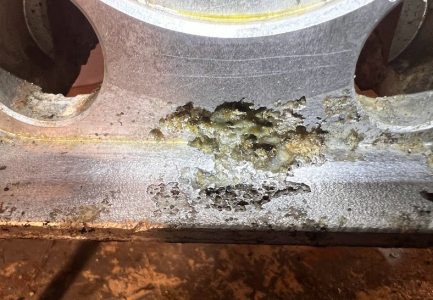
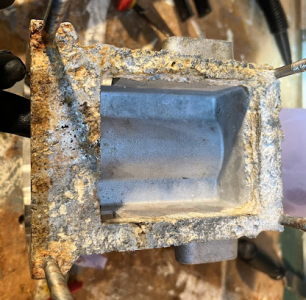
I just finished installing a new Cayman 88 on Tigger. The old one had failed this summer. I was planning to overhaul it, replace some of the corroded aluminium casing and change the brushes. When I took it home and opened it up the engine was quite literally falling apart from corrosion. Evidently water had gotten in, and the aluminium pieces had "gone to mush" (loads of Al salts - I can post the horror pics here on request!).

Funnily enough the oil looked really in a good state: it had not been replaced since new (no, I am not proud of this - I only found out relatively recently that it should have been done!).

Anyhow, I have improved the connections to the main cables (which look OK, still nice and bright copper). I hope that the new one will last the 26 years that the old one did... it will then take me beyond my ownership lifetime, I think.

Thanks to all of you who contributed with advice about how to join the cables (crimped terminals, bolted together).

One thing I really do not understand: why does Lofrans not suggest/use chromate paste (Duralac) where all the steel bolts are screwed into Al threads in highly exposed salty water environment? It seems a recipe for catastrophic electrolytic corrosion (which happened in the original). I have added some myself now to all the new ones.
 
One thing I really do not understand: why does Lofrans not suggest/use chromate paste (Duralac) where all the steel bolts are screwed into Al threads in highly exposed salty water environment? It seems a recipe for catastrophic electrolytic corrosion (which happened in the original). I have added some myself now to all the new ones.

One of those mysteries, like the Marie Celeste.

Its not only Lofrans.

Why they mix aluminium castings and stainless studs or bolts is a mystery (well its not a mystery its economics) but the new windlass arrives ready to instal - except the nuts and bolts (that hold it together) are not Duralac coated and normally you really would not need to dismantle a new and expensive bit of kit. They grease the shaft, fill the gear box with oil - but don't go the next step - bizarre.

Why don't they coat the bolts when they assemble it in the first place. It would cost nothing to add a recommendation to the manual (and even include a small tube of Duralac).

Failure by design.


However, and it does not excuse the practice, I would recommend that anyone buy and installing a new windlass does take it apart (and then reassemble). The suggesting is an annual service - better to learn how its assembled (and how easy or difficult it is to disassemble) on the kitchen table than hanging upside down in a tiny locker - trying to work out how it was fitted. You can then add Duralac to the virgin bolts..

Jonathan
 
One of those mysteries, like the Marie Celeste.

Its not only Lofrans.

Why they mix aluminium castings and stainless studs or bolts is a mystery (well its not a mystery its economics) but the new windlass arrives ready to instal - except the nuts and bolts (that hold it together) are not Duralac coated and normally you really would not need to dismantle a new and expensive bit of kit. They grease the shaft, fill the gear box with oil - but don't go the next step - bizarre.

Why don't they coat the bolts when they assemble it in the first place. It would cost nothing to add a recommendation to the manual (and even include a small tube of Duralac).

Failure by design.


However, and it does not excuse the practice, I would recommend that anyone buy and installing a new windlass does take it apart (and then reassemble). The suggesting is an annual service - better to learn how its assembled (and how easy or difficult it is to disassemble) on the kitchen table than hanging upside down in a tiny locker - trying to work out how it was fitted. You can then add Duralac to the virgin bolts..

Jonathan
Unlike the Marie, though, it is actually a really well engineered bit of kit. So much thought went into it, and they work remarkably well, all things considered.
 
Unlike the Marie, though, it is actually a really well engineered bit of kit. So much thought went into it, and they work remarkably well, all things considered.
Considering the environment in which they work and the common practice of no servicing they are a marvel of engineering and resilience. Pity they are let down by an absence of the use of the word, Duralac.

Jonathan
 
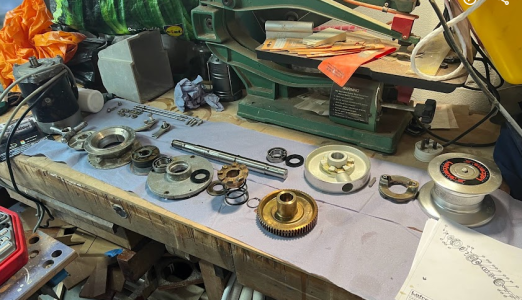
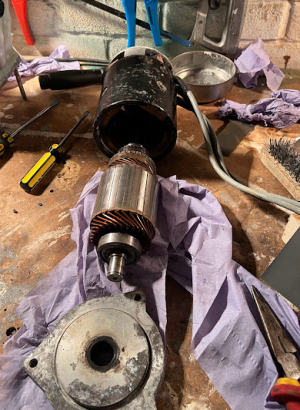
Stripping and rebuilding the windlass and patching the alarming missing bits of aluminium was a joy in the end.

These windlasses are a pleasure to work on and are so very clever. A great winter job if there ever was one!

Since stripping, rebuilding and putting back on, it has been stronger than ever and as good as new.

1740144030982.png
1740144214199.png

1740144252154.png

1740144156688.png
 
Top