Life raft do you carry one

Do the French have a right to fine you for having no life raft or flares ?

:)
If you are a French boat or based in France, I guess so, iirc they are more concerned with out of date gear.
But a visiting boat would need to be compliant with its home legislation, assuming it's the eu we are talking about.

But in my experience they are only concerned with where you come from, where you're going and passports; never been asked about safety gear by anyone other than Falmouth coast guard, (who always ask when you check in before a channel crossing).
 
:)
If you are a French boat or based in France, I guess so, iirc they are more concerned with out of date gear.
But a visiting boat would need to be compliant with its home legislation, assuming it's the eu we are talking about.

But in my experience they are only concerned with where you come from, where you're going and passports; never been asked about safety gear by anyone other than Falmouth coast guard, (who always ask when you check in before a channel crossing).

I sailed my boat to France every summer for 16 years and I now I keep her there permanently; although she remains on the British registry. In all that time, no French official has ever shown the slightest interest in our comings and goings, or asked to see any paperwork or inspect any equipment.

Long may it remain so! :encouragement:
 
I sailed my boat to France every summer for 16 years and I now I keep her there permanently; although she remains on the British registry. In all that time, no French official has ever shown the slightest interest in our comings and goings, or asked to see any paperwork or inspect any equipment.

Long may it remain so! :encouragement:

I have. My boats have been French registered, winter boating is usually the best time to be stopped because you're usually the only boat around. Been asked for papers and safety gear, no big deal
 
I sailed my boat to France every summer for 16 years and I now I keep her there permanently; although she remains on the British registry. In all that time, no French official has ever shown the slightest interest in our comings and goings, or asked to see any paperwork or inspect any equipment.

Long may it remain so! :encouragement:

We've only had a sniff at a couple of Brittany marinas over the last few years, our friends got boarded off Cap Ferret last summer while we were standing off, but they skipped us. The Spanish Atlantic coast was a little more active, boarded once and three marinas we had customs walk ons last year.

Very pleasant, like I said, just wanting passports and boats docs. The Spanish boarding party wanted to see my licence and qualifications, I told him that was not a requirement in the UK and he just shrugged and went on his way.

I don't think that the sailors get so much attention, from what I've gathered speaking to friends. It's all a bit silly really, in these times when a tx AIS is a couple of pennies, why on earth we can't just render everything visible for coastal protection agencies in beyond me.
 
Do the French have a right to fine you for having no life raft or flares ?

No, if you are UK registered.

There is also little evidence that they do actually take any interest in out of date equipment apart from a little flurry about 5 years ago when the new rules for French boats were introduced. The legal status is unclear and I believe the current situation is that the law does not cover visiting boats. The RYA covered the issue in detail when it first came up, but all has been quiet since.
 
Still wondering what exactly a sat phone brings to the party ?
You have Pan pan VHF ----DSC and other Nav aids .---eventually a mayday

It's for travelling outside of VHF range.

An EPIRB will do the basics of getting an alert out, but it cannot include any information about your situation, doesn't provide any confirmation that your signal has been received and is being acted on, and is all-or-nothing in the sense that as soon as you fire it off it's a mayday with ships being diverted to your position prepared to take you off and abandon the boat.

Being able to talk to Falmouth as the situation unfolds gives a lot more flexibility, especially if the problem isn't as binary as "the boat suddenly sank and now we're in the liferaft".

Pete
 
It's for travelling outside of VHF range.

An EPIRB will do the basics of getting an alert out, but it cannot include any information about your situation, doesn't provide any confirmation that your signal has been received and is being acted on, and is all-or-nothing in the sense that as soon as you fire it off it's a mayday with ships being diverted to your position prepared to take you off and abandon the boat.

Being able to talk to Falmouth as the situation unfolds gives a lot more flexibility, especially if the problem isn't as binary as "the boat suddenly sank and now we're in the liferaft".

Pete
+1

I should say, a few years ago I was traveling back to Falmouth from Brest on our motorboat, nursing a suspected PE, which was confirmed and treated successfully. For a medical emergency, out of radio range, a Sat phone would have been a real boon for my very worried wife. This was the main driver for me getting one.
 
No, if you are UK registered.

There is also little evidence that they do actually take any interest in out of date equipment apart from a little flurry about 5 years ago when the new rules for French boats were introduced. The legal status is unclear and I believe the current situation is that the law does not cover visiting boats. The RYA covered the issue in detail when it first came up, but all has been quiet since.

If you are resident in France then your boat must comply with French regulations irrespective of where it is registered. This measure was brought in a few years ago to counter the measures that people were taking to get Belgian registration to get round French regulations.
 
I know many people simply err on the side of 'why not' have a life raft and it might save your life but I suspect in many cases the money could be spent elsewhere to reduce the risk to life more effectively.

The way I look on it a life raft is needed only if you need to abandon ship. This is a rare phenomenon but the consequences could be very high. Why would you need to abandon ship? Either it sinks or it goes on fire. Most of the evidence appears that the former is unlikely and perhaps more likely is abandoning a ship for fear of sinking and ending up in a less safe life raft. In the latter you just need to get off ASAP and liferaft or dinghy are probably equally good alternatives depending on which one you can launch quickest.

I think a lot of a life rafts job is to give the impression of safety when in fact it is probably a poor solution in most cases and dangerous in many. I suspect if we took the two problems and simply reduced the risk of either happening then the cost benefit profile of a liferaft would almost always be negative. Fit anti tumescent wiring, fire alarms, auto extinguishers, gas safety devices, flooding alarms, wooden bungs etc first. Make the risk minimal and then carry epirb, vhf etc. After all that you need to decide if a liferaft increases or decreases your risk for the waters you sail in and the people you sail with. A dinghy generally doesn't do everything that a liferaft does but towing an inflated one does suffice for many of the requirements when in coastal waters and rescue is near at hand.
 
I know many people simply err on the side of 'why not' have a life raft and it might save your life but I suspect in many cases the money could be spent elsewhere to reduce the risk to life more effectively.

The way I look on it a life raft is needed only if you need to abandon ship. This is a rare phenomenon but the consequences could be very high. Why would you need to abandon ship? Either it sinks or it goes on fire. Most of the evidence appears that the former is unlikely and perhaps more likely is abandoning a ship for fear of sinking and ending up in a less safe life raft. In the latter you just need to get off ASAP and liferaft or dinghy are probably equally good alternatives depending on which one you can launch quickest.

I think a lot of a life rafts job is to give the impression of safety when in fact it is probably a poor solution in most cases and dangerous in many. I suspect if we took the two problems and simply reduced the risk of either happening then the cost benefit profile of a liferaft would almost always be negative. Fit anti tumescent wiring, fire alarms, auto extinguishers, gas safety devices, flooding alarms, wooden bungs etc first. Make the risk minimal and then carry epirb, vhf etc. After all that you need to decide if a liferaft increases or decreases your risk for the waters you sail in and the people you sail with. A dinghy generally doesn't do everything that a liferaft does but towing an inflated one does suffice for many of the requirements when in coastal waters and rescue is near at hand.
p

If you read this and take a step back. It makes a lot of sense
 
We have an old liferaft that was serviced (probably for the last time) last year.
However, we also carry a big tender/RIB.
The RIB would definitely be the first thing off if the boat in the event of a disaster.
The liferaft is a bit easier to deploy and would go with us as a backup.
Our long passages are usually just over 100 miles so I always make sure that the RIB is full of fuel before we leave.
I also have a large can of extra fuel which could also be loaded onto the RIB quickly.
Assuming sensible sea conditions, this means that the RIB is able to reach safety itself.
And, as I say, the liferaft is always a backup.

I too, don't like dangerous pyrotechnics on board so I've equipped the grab bag with a couple of LED safety devices.

One of these:-
An LED handheld flare
ocean_safety_odeo_laser_led_flare_1.jpg


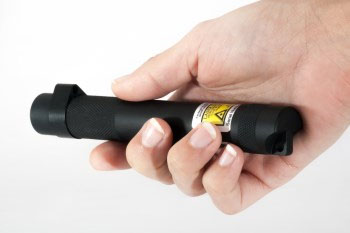
and one of these:-
A laser rescue flare
pasted%20image%20350x2332.jpg

here is a link to the laser device
http://www.rescue-flares.co.uk/index.html

We do also carry a few pyrotechnic flares - a few parachute and the the people who recently packed the liferaft insisted on including a set.
But I am looking to exclude pyrotechnics in the future.
IMO, they are almost more dangerous than an actual disaster at sea.
 
Last edited:
But I am looking to exclude pyrotechnics in the future.
IMO, they are almost more dangerous than an actual disaster at sea.

Good post. I agree with you re-pyrotechnics. I removed them from our boat 5 years ago. Explosives more likely to cause harm to 'leisure' users than help. Two boat fires over here a few years ago. One by a child who set off a flare inside a vessel, the other by an adult in medical urgency situation who didn't fully understand which way to point it - it set his vessel on fire.
 
I think with pyrotechnics you need to do a similar risk analysis. With modern equipment and reasonable backups it is highly unlikely in most cruising situations that a pyrotechnical solution would be a good one. Then, if it was a reasonable solution I suspect that the aforementioned alternatives would be almost as effective without the risk. This may be different if you are crossing an ocean. Every possible 'safety' device is not always the best solution as many actually increase the risks in given circumstances. A liferaft and pyrotechnics seem the most likely to fall into this category I.e. Carry them at your peril rather than the normal thinking 'why not carry them'!
 
I think with pyrotechnics you need to do a similar risk analysis. With modern equipment and reasonable backups it is highly unlikely in most cruising situations that a pyrotechnical solution would be a good one. Then, if it was a reasonable solution I suspect that the aforementioned alternatives would be almost as effective without the risk. This may be different if you are crossing an ocean. Every possible 'safety' device is not always the best solution as many actually increase the risks in given circumstances. A liferaft and pyrotechnics seem the most likely to fall into this category I.e. Carry them at your peril rather than the normal thinking 'why not carry them'!

Makes sense. Our tender which is a small rib should suffice as a means of escape in most scenarios, BUT the life raft is the backup in the event time prevents us deploying the tender (eg: rapid fire, catastrophic hull failure after hitting hazard).

Be it a tender or life raft the old Chinese proverb applies: "Never climb down into a life raft, always climb across or up into it". More folk have been lost by abandoning a vessel too early.
 
We have an old liferaft that was serviced (probably for the last time) last year.
However, we also carry a big tender/RIB.
The RIB would definitely be the first thing off if the boat in the event of a disaster.
The liferaft is a bit easier to deploy and would go with us as a backup.
Our long passages are usually just over 100 miles so I always make sure that the RIB is full of fuel before we leave.
I also have a large can of extra fuel which could also be loaded onto the RIB quickly.
Assuming sensible sea conditions, this means that the RIB is able to reach safety itself.
And, as I say, the liferaft is always a backup.

I too, don't like dangerous pyrotechnics on board so I've equipped the grab bag with a couple of LED safety devices.

One of these:-
An LED handheld flare
ocean_safety_odeo_laser_led_flare_1.jpg


and one of these:-
A laser rescue flare
pasted%20image%20350x2332.jpg

here is a link to the laser device
http://www.rescue-flares.co.uk/index.html

We do also carry a few pyrotechnic flares - a few parachute and the the people who recently packed the liferaft insisted on including a set.
But I am looking to exclude pyrotechnics in the future.
IMO, they are almost more dangerous than an actual disaster at sea.

I've done a bit or research on these as I am contemplating a crossing from the Shetlands to Norway.

As far as I can deduce they will work well if rescue boats/ helis are out looking for you, but are no substitute for parachute flares to alert other vessels to your emergency.
 
+1

I should say, a few years ago I was traveling back to Falmouth from Brest on our motorboat, nursing a suspected PE, which was confirmed and treated successfully. For a medical emergency, out of radio range, a Sat phone would have been a real boon for my very worried wife. This was the main driver for me getting one.

Nigel, thanks for the pointer to the Satsleeve - mine arrived today. Looking forward to testing it from somewhere suitably inhospitable! :D
 
Top