Learning French

No, Basque is a language isolate with no obvious related languages. I don't think it is even Indo-European, like all other European languages. Breton is related to Gaelic, though, and that might be what you are thinking of.

There are a lot of similarities in the language of the Ainu an Aryan-looking tribe which migrated across Asia to N. Japan about 7000 years ago. There are about 17000 remaining today concentrated on Hokkaido.

http://www.bibliotecapleyades.net/ciencia/ciencia_basques10.htm
 
speaking French

Seeing as we intend to spend the summer cruising Brittany, I'm wondering about 'topping up' my schoolboy French. Is it necessary and if so, how to go about it.

I've looked at the Rosetta Stone courses but they are a bit more than I thought to pay.
Hi my wife and I both come from the Channel Islands and our family history is that weare of Breton stock. As we have been living in Brittany (Morlaix) for the past 13 years we have returned to our native Breton tongue. We are told by the locals that we speak with a slight british accent but that it is charmant ( charming) We meet many visitors from the UK in Brittany in the summer as we can be found all round the coast cruising from port to port. The best advice to you is TRY,TRY and then TRY again dont worry about the accent or the grammer as its realy not important the very fact that you try the locals will try to meet you half way. If that doesn't work look for the local bar gt in a couple of drinks and try again, as you drink more you will get better. We hope you enjoy your stayon our coast and meet many interesting folks and make many new friends. Keep an eye out for us we are called Feelsgood 32ft and dark green come and say hello and have a drink and perhaps learn a little french. Fair winds and calm seas to you.
 
There are a lot of similarities in the language of the Ainu an Aryan-looking tribe which migrated across Asia to N. Japan about 7000 years ago. There are about 17000 remaining today concentrated on Hokkaido.

http://www.bibliotecapleyades.net/ciencia/ciencia_basques10.htm

Last year I read a very interesting free e-book from Gutenberg entitled 'Alone with the hairy Ainu' by Arnold Henry Savage Landor.

http://www.gutenberg.org/ebooks/37873?msg=welcome_stranger

In it he describes how he spent a long time, alone and defenceless, amongst a savage and dangerous group of uneducated people with strange beliefs.
 
I once heard a funny communication between a French marina and a British boat asking for a berth


boat: avez vous une place pour moi s'il vous plait

marina: I am desolated, no places, only places to couple

now this is hilarious: I am desolated is the literal translation of "je suis desolé", meaning I am very sorry, and "only places to couple" is literal for "seulement des places à couple", which means rafting, so basically "we do not have free berths but you can raft with someone else"

The British boat replied: "Well ok then, we are married" :D

Funny :)
 
Only works if you have some common linguistic basis. Fine in Europe - English has enough in common with other western European languages to make it possible to work outwards, so to speak, from common words. And if you have a bit of French, Latin or Greek, that helps. But it doesn't work at all if there is no commonality.

This is from experience; my wife is from Hong Kong, and her family communicate in Cantonese. While we are in Hong Kong, I am immersed in Cantonese all day, except when they remember to speak English for my benefit! Because there are no shared roots, I can't pick up meanings, and have learnt very little Cantonese. I am sure that if I spent the same amount of time immersed in (say) Spanish, I'd be able to hold a simple conversation by now. It isn't because I don't listen - I very early on picked out some grammatical points of Cantonese, such as emphasis by repetition.

It's worth remembering that ALL European languages (except perhaps Basque) have a common root, and are descended from a common grammatical and conceptual basis. Languages like Cantonese not only have a completely different vocabulary, but the grammatical and conceptual construction is different in subtle ways. It is interesting that my wife - who speaks fluent English - often struggles to translate Cantonese for me, because the underlying conceptual basis is different. It is perhaps symptomatic of the different conceptual basis that Hong Kong people seem unable to give clear and simple directions; the European "go straight, then take the third on the left and the first of the right" simply doesn't seem to work in Cantonese, and giving directions is much less direct.

I tend to agree with the above EXCEPT that Suomi is, IMHO, far more difficult to pick up than Basque and is another non Indo-European tongue.
But, Spanish/Italian/Catalan/French/Portuguese are all so similar that one vocab will virtually do for all.
Thank God all written instructions in Finland is also repeated in Swedish, which is easy to understand.
 
I tend to agree with the above EXCEPT that Suomi is, IMHO, far more difficult to pick up than Basque and is another non Indo-European tongue.
But, Spanish/Italian/Catalan/French/Portuguese are all so similar that one vocab will virtually do for all.
Thank God all written instructions in Finland is also repeated in Swedish, which is easy to understand.

You could perhaps add Romanian to your list; it's a latin language. I went on a few business trips there and I found that I could get the gist of a conversation or a newspaper article.

I used to work in an international consultancy and our consultants, who had relatively easily mastered Russian, found Hungarian beyond them.
 
what about English lessons...

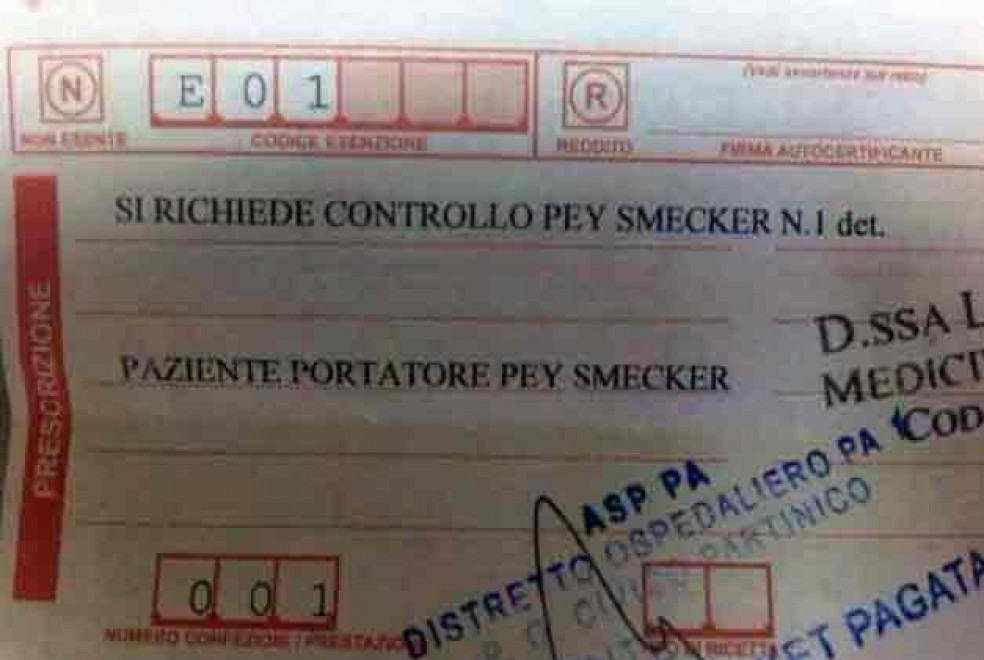
what about learning some English... this photograph appeared yesterday on Italian newspapers

it's a medical prescription, written by a "doctor" for her patient with a heart condition

223920424-e79718fb-2c66-4044-b13d-f24a33a7dd51.jpg
 
Sorry John,

she (the doctor) has prescribed a check of the patient "pacemaker", which in Italian is pacemaker, by the way possibly one of the most standard international words, even the French have not attempted translating it :D

"I require a check of the Pey Smecker"
"Patient having a Pey Smecker"

"Pey Smecker" is not even phonetics, the person surely knew the sound of the word and decided let's try to figure out how this could be written in English.
Now that may happen with people not having a command of a foreign language, which is absolutely normal; the sad thing is that doctor has studied at least until 25-26year old to become a GP, then possibly a couple more years to get some sort of specialization; in terms of formal education she must belong to the upper 1% of the total population.
How can she write like that a very common medical term, which is widely understood by almost anyone, let alone doctors who may have come across it hundred of times ?

Imagine someone having a PhD in "winemaking" :D writing down "a bottle of chum pain"
 
Sorry John,

she (the doctor) has prescribed a check of the patient "pacemaker", which in Italian is pacemaker, by the way possibly one of the most standard international words, even the French have not attempted translating it :D

"I require a check of the Pey Smecker"
"Patient having a Pey Smecker"

"Pey Smecker" is not even phonetics, the person surely knew the sound of the word and decided let's try to figure out how this could be written in English.
Now that may happen with people not having a command of a foreign language, which is absolutely normal; the sad thing is that doctor has studied at least until 25-26year old to become a GP, then possibly a couple more years to get some sort of specialization; in terms of formal education she must belong to the upper 1% of the total population.
How can she write like that a very common medical term, which is widely understood by almost anyone, let alone doctors who may have come across it hundred of times ?

Imagine someone having a PhD in "winemaking" :D writing down "a bottle of chum pain"

Silly me!
 
Top