LadyInBed
Well-Known Member
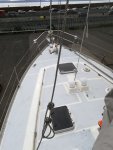
As my Treadmaster was looking decidedly shabby after at least 25 years service I decided to replace it with Kiwigrip.
The Treadmaster was stuck down using what looks like two part epoxy and getting it off was a challenge, I had to use a knife blade on a multitool (resharpened at least twice) and a belt sander with a 60 grit belt which left the gelcoat nicely roughed up but any divots in the gelcoat needed filling as they showed when the Kiwigrip was applied.
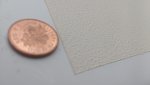
When applying the Kiwigrip on a test board I found that the end result using the roller they recommend and sell along with the Kiwigrip was much too course / spiky and I felt that dirt (bird shit) trapped between the spikes would be difficult to get rid of, but using a cheap sponge mini roller left what I think was a lovely finish. Also using the course roller was a long process, the Kiwigrip had to be ladled on then spread and the thickness of the Kiwigrip in the 'troughs' after rolling was hard to judge and I found it to be very thin in places. If you want the heavy spiky finish I would recommend that you put one or two coats on using a sponge roller first to get a base thickness.
Getting rid of the Treadmaster and glue took the most time and I found that all the dark grey glue had to go as even with two coats of Kiwigrip the dark patches showed through - I had chosen to use Cream Kewigrip, maybe a darker colour would have been easier!
When I masked up the areas I opted to use pointy corners as masking 'round' corners was very time consuming. I found that I had to mask several areas at a time as
applying the Kiwigrip using the sponge roller was a quick and easy job. I loaded the roller direct from the tin by rolling it across the surface of the thick Kiwigrip. A roller full was only enough to cover about a square foot.
I ended up applying three coats, as having masked up four areas at a time, I could do a coat on each area then because the day was warm and the coat fairly thin, by the time I'd finished the fourth area the first was touch dry so I could go round and redo each area to get the three coats.
There was no problem removing the masking, it lifted and left a clean edge behind.
I don't think it will last 25 years, but it will be a lot easier to redo or touch up.
The Treadmaster was stuck down using what looks like two part epoxy and getting it off was a challenge, I had to use a knife blade on a multitool (resharpened at least twice) and a belt sander with a 60 grit belt which left the gelcoat nicely roughed up but any divots in the gelcoat needed filling as they showed when the Kiwigrip was applied.
When applying the Kiwigrip on a test board I found that the end result using the roller they recommend and sell along with the Kiwigrip was much too course / spiky and I felt that dirt (bird shit) trapped between the spikes would be difficult to get rid of, but using a cheap sponge mini roller left what I think was a lovely finish. Also using the course roller was a long process, the Kiwigrip had to be ladled on then spread and the thickness of the Kiwigrip in the 'troughs' after rolling was hard to judge and I found it to be very thin in places. If you want the heavy spiky finish I would recommend that you put one or two coats on using a sponge roller first to get a base thickness.
Getting rid of the Treadmaster and glue took the most time and I found that all the dark grey glue had to go as even with two coats of Kiwigrip the dark patches showed through - I had chosen to use Cream Kewigrip, maybe a darker colour would have been easier!
When I masked up the areas I opted to use pointy corners as masking 'round' corners was very time consuming. I found that I had to mask several areas at a time as
applying the Kiwigrip using the sponge roller was a quick and easy job. I loaded the roller direct from the tin by rolling it across the surface of the thick Kiwigrip. A roller full was only enough to cover about a square foot.
I ended up applying three coats, as having masked up four areas at a time, I could do a coat on each area then because the day was warm and the coat fairly thin, by the time I'd finished the fourth area the first was touch dry so I could go round and redo each area to get the three coats.
There was no problem removing the masking, it lifted and left a clean edge behind.
I don't think it will last 25 years, but it will be a lot easier to redo or touch up.