
pvb
Well-Known Member
I think it would depend on the design/construction. Having 8(?) tonne supported on a fin keel would be asking too much.
More rubbish!

I think it would depend on the design/construction. Having 8(?) tonne supported on a fin keel would be asking too much.
The Moquini. Lots to learn.
The Moquini.
The DIT reported that visual inspection and wall thickness testing showed, in the area of the keel, that the yacht did not conform to design specification and "the workmanship is appallingly substandard"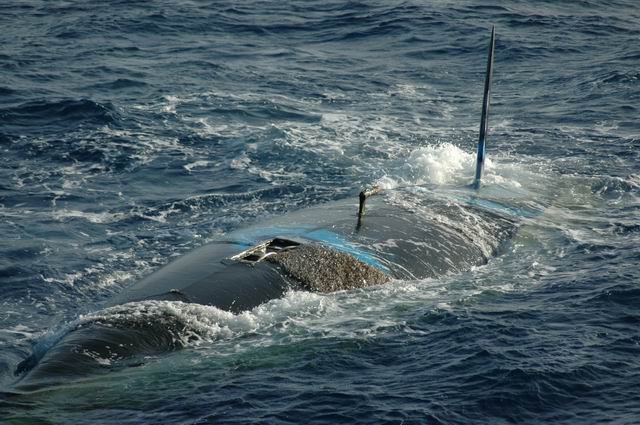

Does your boat have a bolt on keel and what is her draft.
The easiest way to transport a boat with a bolt on keel is to fit the keel after transport. No only doe this reduce the height ot eh boat during road transport, it makes routing easy as you are less restricted by low bridges.

More rubbish!
Tell that to the loved ones of those who lost their lives when the keel fell off.
2 of my close friends lost loved ones in the moquini loss.
No, that's not a fair equation where it's also been shown that many of those might only be sailed a few fair days a year.

I know a guy who runs a second hand tyre shop ...... but accountability has not been good in South Africa of late.
Which boat? Which kind of keel?
I know a guy who runs a second hand tyre shop ...


Could it be that many boats don't have keel issues as they never go anywhere unless it's a nice day?
The above is all speculation as obtaining any figures is next to impossible


I think the ‘properly maintained‘ bit is the key. How many have hit something and never bothered to drop the keel and check for damage? I suspect that there are many that don't bother to do this that possibly get future problems or possibly just damage that goes unseen.or could it be that they are perfectly safe when well built and properly maintained.
I'm sure they are perfectly safe when maintained but that does gloss over all the boats that have had "maintenance" on the keels due to issues and therefore excludes them from the overall picture.could it be that they are perfectly safe when well built and properly maintained.
Coopec said it was his last post, several posts ago.Why should Coopec agree you you its his own opinion and you are free to disagree but do not have the right to require any one to change their opinion.
There are some that say modern catamarans are not suitable for Ocean crossing yet plenty do. It all about personal choice.
The issue with keels falling off is that like a airplane crash is a dramatic event that should ho happen so needs attending to like the cause of a airplane crash
What are the weaknesses that long keel boats have?Coopec said it was his last post, several posts ago.
The reason this is an issue, as I said, is this poorly-judged rumour has potential to affect the value of our boats. The facts don't come close to supporting the sweeping statement made; it's appropriate to accept that or provide more significant evidence.
The fact is that boats are over-engineered. It's like some saying "you have to have a keel-stepped mast; keel-stepped is stronger". Well, yes, the mast is supported in a different way, but a deck-stepped mast may have different rigging and spreaders to get to exactly the same strength.
Long keel boats have other weaknesses; older boats have other weaknesses, all boats have pros and cons. Since he's unable to prove his assertions about production boats, coopec doesn't have to agree with us, but what he should do is...what he said he would do, and pipe down.
Reversing them for a start ;-)What are the weaknesses that long keel boats have?
Reversing them for a start ;-)
This is like cars you would not by a Ferrari to go off road or a 4x4 Landrover for a track day .

Going astern with twin, long and fin keelsMy previous boat was a full length keel and I had no issue revering. The issue I had was turning in a tight space which I had to do as my mooring had a narrow gap between my finger and the one opposite. Buy directional stability can be an advantage in some sea condition.
The truth is that all designs whatever that are have pros and cons as you very quickly learn as an Engineering Designer. The trick is to take advantages of the pros and mitigate the negative points of the cons. (design for the purpose intended) racing boats or cruising boats a racer/cruising boat will have compromises as the design must have comprises due to the different requirements. In the same way a different materials have pros and cons and a purchaser must decide which waiting he places on which material or design for the purchasers desired use.
This is like cars you would not by a Ferrari to go off road or a 4x4 Landrover for a track day .