Keel corrosion

ajames

New Member
Joined
8 Dec 2018
Messages
12
Location
Plymouth
Visit site
Hi,

I've been a member of the forums for a few months but this is my first post.

So after hauling out my yacht I discovered the bottom of the keel has corroded a fair bit. I believe its a lead keel that appears to be sheaved in steel with an epoxy layer on top and through bolted to the hull. Being relatively new to boat ownership I was hoping maybe someone would have some advice on how serious of a problem this is and the best course of action to remedy this?

Photos attached below (hopefully)

Ash

EBzoI26eemAWPRoG1aV2-NtiftaY5QZwHevKF14za8K5UmrYlM-Ff5MHQVSJcp2vo7wpemvkFhPI8l5fx2xenNiUgegU96kkdQxTbm8G8_tkWAW6QXo7YLVFdz6hOa7xpvQpkHl2_SwhMSfBlooVG9doZQPNKI_ItpE-l1YkjL0zHeEv4W9N7XlrqiYfgi7Iy73vg2V934x6Ol6iOOofZBAShSKGmIodZ0MF45HGN6vFY0LiDLlnLKKHWqYR1C5tFtvJphzKHSoZTtrWb5NJIYHc9S6DZIWyvNzOtQ1_pwVmzZZWCZXW-x0ewZhAoMm0mOuACvssQex-NbhmSgfA6-Hv4DgAMAw7jjOC4JqSDjWwZVInJ3wuSkQJP-wpH2nbvvjl3flMWszOt6F-HF-vzp2IMNem-rIlOk--LKrljIUE_F_0CPg4D-V8t9GxI-hI5V5Auo9UNon9LYGwnXXolVToj7cizAvrt3IGr3N_oOPlr3xIw1jzHwdPTneJk-rlS3-oomSj0nDRRf5oSsEHhUlU3jRpegVD5zF4EmnkoFn8ftNd7ao5bUR1FnFWV0S0Yxfz8E20v3QGymkPUnMwsRXBg_NbB4etyUa9untNsvLDQrgG0xYtKlfJe1wsuqhIyrNhiViU1faoMdgMBcr4cBd6WVZbwyF6tFpL4vt8j8LT9YrNh-96rHIEHXNqexojiWzqfWfg-_SApHoySgS8dNdIcw=w1130-h848-no
qz2q_VH3JCRKCrxeNyB8vNrwfWnnSIyAspPelAG9HgKy0Kxl9kQ8RZphofTBRScKzYJIUQxexOpnWPvocLwmZIs_E96P-4dIDw3e0RAwxHcSJbPi44hQZUbUHbfq5h22Q4NN-4zh4yjeD25LEYz1qFcl69EB7OGo1hZgNakQS6zf3ZG9y_JtK74shfuDbLlRJkYsKlj4rkZDkqwuvdGvZV-Ix-HfI4eEKQKLJDY9sOMRM1xVPi8ywoVeVBNx5URDfIiU6F3cpBJDURI6_0H8zPniKpmJbh8AeYBvEffu-786GRtM1YLatW9Xf22BlMpdmOD-lEfxzEVzvm-qcL1RmJ7c-TrELkhXG2PQH1NTiF8FwJqxaPGel_kXDg_NA8TFTMhr7-GMdOjymANJY4AX8XyufZ_8-Zu0Ns5Bij4UmCvZF47kDMIjAE9ZR6OcKbGw1urdArXPPbY7--4xURCqPdKznOtuOH9n2Agrm8sPC0H_XkHh3K4hIgyAGEyyoLmVUMKFr1aPZw3-TQ8FWht7iWtmt5H0iZCbe4wfiUNysREVNjKbfpjtEUZAUWxPRcAIKn8g-s91g8LYz0hu2G1L0WfysdgPsRYSIG1UEkuev6L9T7t_U_cQXbzhRFP6f4Q9S1ClxnssknU7DTl1OA8XXrNzqYZcTdnzYfMTuyeJtuGRaXUQlpLRynEJ7adUSdk_tWafQ1jVfZnQZB_WsKQwTjvU3w=w1130-h848-no
 
Welcome to the forum.

It's hard to see exactly what's going on from the photos. To be honest it doesn't look much like iron nor much like lead to me, but I'm probably mis-interpreting it. What make of boat is it? There may be other posters who have the same model.

I've an iron-lead keel (iron with a lead bulb on the bottom). Paint flakes readily off the lead - not so bad since I striped it all off and used etch primer, but not perfect since either. However under the paint the lead is pretty pristine, so doesn't look like yours.

And of course the iron in contact with the lead is vulnerable to galvanic corrosion, so the zinc anodes need to be renewed regularly (mine last about two years).

I guess your boat has also been in regular contact with the bottom. Just a thought - it's not a bilge keeler with an iron shoe on the bottom of a lead keel is it?
 
That looks like an Iron keel, I would be very surprised if anybody would sheave a lead keel in Iron. Cleaning back to clean metal and then treating with something like 'Kurust' before priming with a decent epoxy primer (to the required thickness - could be quite a lot of coats) before re-antifouling. If necessary fill with epoxy filler before priming. Not a great problem but needs to be done well to avoid a rapid re-occurrence.

Yoda
 
.And of course the iron in contact with the lead is vulnerable to galvanic corrosion, so the zinc anodes need to be renewed regularly (mine last about two years).

I have a lead/iron keel but no anode fitted by the manufacturer. Should it have one? How is yours connected. Perhaps a new post for this question only.
 
It looks like a cast iron keel that's had many years of not being looked at until mid march, followed by a quick attack with disc sander and filler.
But it's hard to tell from the photos.
Could be the bottom has just got a mild steel plate on it to protect it in grounding?
I've had a boat with a lead 'shoe' added to an iron keel, obviously to get more stability.

It looks like next winter's project to me.
This year, I would just chip off everything loose, some sort of rust treatment, get it as dry as possible, epoxy and fill.
Assuming the aim of te game is to go sailing soon rather than to win regattas in August....
 
I have a lead/iron keel but no anode fitted by the manufacturer. Should it have one? How is yours connected. Perhaps a new post for this question only.

Iron and lead are adjacent in the galvanic series, so no great electrolysis problem.
Not really different from just having either lead or iron.
Quite normal to have no anodes on a keel of grp boat.
 
Hi,

I've been a member of the forums for a few months but this is my first post.

So after hauling out my yacht I discovered the bottom of the keel has corroded a fair bit. I believe its a lead keel that appears to be sheaved in steel with an epoxy layer on top and through bolted to the hull. Being relatively new to boat ownership I was hoping maybe someone would have some advice on how serious of a problem this is and the best course of action to remedy this?

Photos attached below (hopefully)

Ash

EBzoI26eemAWPRoG1aV2-NtiftaY5QZwHevKF14za8K5UmrYlM-Ff5MHQVSJcp2vo7wpemvkFhPI8l5fx2xenNiUgegU96kkdQxTbm8G8_tkWAW6QXo7YLVFdz6hOa7xpvQpkHl2_SwhMSfBlooVG9doZQPNKI_ItpE-l1YkjL0zHeEv4W9N7XlrqiYfgi7Iy73vg2V934x6Ol6iOOofZBAShSKGmIodZ0MF45HGN6vFY0LiDLlnLKKHWqYR1C5tFtvJphzKHSoZTtrWb5NJIYHc9S6DZIWyvNzOtQ1_pwVmzZZWCZXW-x0ewZhAoMm0mOuACvssQex-NbhmSgfA6-Hv4DgAMAw7jjOC4JqSDjWwZVInJ3wuSkQJP-wpH2nbvvjl3flMWszOt6F-HF-vzp2IMNem-rIlOk--LKrljIUE_F_0CPg4D-V8t9GxI-hI5V5Auo9UNon9LYGwnXXolVToj7cizAvrt3IGr3N_oOPlr3xIw1jzHwdPTneJk-rlS3-oomSj0nDRRf5oSsEHhUlU3jRpegVD5zF4EmnkoFn8ftNd7ao5bUR1FnFWV0S0Yxfz8E20v3QGymkPUnMwsRXBg_NbB4etyUa9untNsvLDQrgG0xYtKlfJe1wsuqhIyrNhiViU1faoMdgMBcr4cBd6WVZbwyF6tFpL4vt8j8LT9YrNh-96rHIEHXNqexojiWzqfWfg-_SApHoySgS8dNdIcw=w1130-h848-no
qz2q_VH3JCRKCrxeNyB8vNrwfWnnSIyAspPelAG9HgKy0Kxl9kQ8RZphofTBRScKzYJIUQxexOpnWPvocLwmZIs_E96P-4dIDw3e0RAwxHcSJbPi44hQZUbUHbfq5h22Q4NN-4zh4yjeD25LEYz1qFcl69EB7OGo1hZgNakQS6zf3ZG9y_JtK74shfuDbLlRJkYsKlj4rkZDkqwuvdGvZV-Ix-HfI4eEKQKLJDY9sOMRM1xVPi8ywoVeVBNx5URDfIiU6F3cpBJDURI6_0H8zPniKpmJbh8AeYBvEffu-786GRtM1YLatW9Xf22BlMpdmOD-lEfxzEVzvm-qcL1RmJ7c-TrELkhXG2PQH1NTiF8FwJqxaPGel_kXDg_NA8TFTMhr7-GMdOjymANJY4AX8XyufZ_8-Zu0Ns5Bij4UmCvZF47kDMIjAE9ZR6OcKbGw1urdArXPPbY7--4xURCqPdKznOtuOH9n2Agrm8sPC0H_XkHh3K4hIgyAGEyyoLmVUMKFr1aPZw3-TQ8FWht7iWtmt5H0iZCbe4wfiUNysREVNjKbfpjtEUZAUWxPRcAIKn8g-s91g8LYz0hu2G1L0WfysdgPsRYSIG1UEkuev6L9T7t_U_cQXbzhRFP6f4Q9S1ClxnssknU7DTl1OA8XXrNzqYZcTdnzYfMTuyeJtuGRaXUQlpLRynEJ7adUSdk_tWafQ1jVfZnQZB_WsKQwTjvU3w=w1130-h848-no

Grind it back, rust treat, slap some primer on it, if you want to do cosmetic then fill it and fair it. Not critical. Some french boats had a gel coat type covering, ding, sea water gets in and rusts, as i said not critical
 
Thanks for all the replies, it sounds like the problem isn't as severe as i first worried, I've just paid for a new mast for her so i didn't fancy the idea of an expensive keel repair as well! :ambivalence:
The yacht is a Bolero 35.5 by David Thomas but i'm struggling to find out much about them beyond whats available here: https://sailboatdata.com/sailboat/bolero-355
I didn't get a chance to get a good look at the keel when she was lifted out but some of the rust was mixed into the filler leading me to believe that whoever repaired it previously did so without doing any prep work, i just want to make sure what i do lasts rather than being a quick fix.
 
Does the upper picture show the front end of the bottom of the keel?
It looks like some thick surface layer of GRP, primer or possibly fairing compound has been knocked off. This is typical of a grounding.
If this is the case, I would be more worried about the state of the internal stiffening grid of the hull. Have a check for cracks.

Regarding the corrosion, lots of good advice is already given above.
 
The Bolero, like Intros Hydros Toledos etc etc were built by (for) Nick Stratton yachts. Nick was not afraid to try innovations in construction in the search for speed. As far as I know, he is still around, operating as a surveyor with Richard Schooling and they can be contacted through Rhu Marina. His son, Miles, who once worked with him has a separate brokerage business.
I am sure Nick would be willing to share information and give advice if you spoke to him
 
Does the upper picture show the front end of the bottom of the keel?
It looks like some thick surface layer of GRP, primer or possibly fairing compound has been knocked off. This is typical of a grounding.
If this is the case, I would be more worried about the state of the internal stiffening grid of the hull. Have a check for cracks.

Yes it is the front of the keel, I inspected her when she was out of the water in October and the keel appeared fine which is why i'm shocked how quickly this has appeared, she definitely hasn't been grounded while i have been sailing her but the marina she was first in she would just touch the bottom on a vary low tide, so maybe this could have exacerbated the problem?
 
Hi.
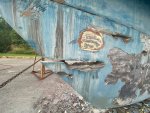
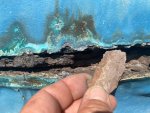
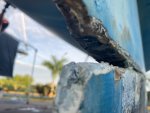
I just join this forum .I discover a similar damage on mi keel , after mi boat seat at dry dock for 3 years because the Covid restrictions .
I don't kwon if I can fix this problem or I have to change the full keel.
Mi boat is a Hans Christian Christina 49 , an will appreciate any advise about what to do.
Thanks a lot
 

Attachments

  • image006.jpg
    image006.jpg
    150 KB · Views: 89
  • IMG_0214.jpeg
    IMG_0214.jpeg
    163 KB · Views: 86
  • IMG_0255.jpeg
    IMG_0255.jpeg
    88.8 KB · Views: 78
Hi.
I just join this forum .I discover a similar damage on mi keel , after mi boat seat at dry dock for 3 years because the Covid restrictions .
I don't kwon if I can fix this problem or I have to change the full keel.
Mi boat is a Hans Christian Christina 49 , an will appreciate any advise about what to do.
Thanks a lot

Is that concrete?
 
Welcome to the forum

Difficult to tell how it is actually constructed, but that looks like a serious failure of the joint between the keel and the hull. Any advice based on those three photos would be mainly guesswork. Perhaps you need to employ a surveyor who is familiar with how the boat was built to advise you. Where are you and the boat located? Don't think your problem is anything like the original post.
 
From the first photograph, it seems as if the keel joint is much higher than where this major fault lies.

A quick search this yacht was built either in Taiwan or Thailand under the control of a New Zealander.

Could the keel be in two parts that are bolted together and this joint may have had corrosion problems?

The leading edge seems to have dropped, so has the boat run aground on rocks and fractured the keel?

The smooth start of the crack is odd and then an area of massive corrosion, but aft the keel looks perfect. If the keel was in one piece, then during the casting it might have had a double pour of molten metal and an area between the 2 pours had some slag or cooling that allowed water to enter and corrode.

These are just my thoughts.

It is very difficult to judge from the limited number of low resolution photographs. Any chance of more higher detailed photos?
 
The problem whit survey is , I am in Mexico on the border whit Guatemala, Tapachula, and not surveys around there
 
Top