JST connectors help

mattonthesea

Well-Known Member
Joined
28 Nov 2009
Messages
1,546
Location
Bristol
ayearatsea.co.uk
I've just bought a box of connectors off Amazon. I want to replace the chocolate box ones on the back of the standard horizon radio for AIS and GPS. I read the Grin ebike guide and all seemed good. Until I practised at home myself! How do you hold a tiny piece of soft, bendy metal, a thin wire, and clunking great crimper all at the same time?
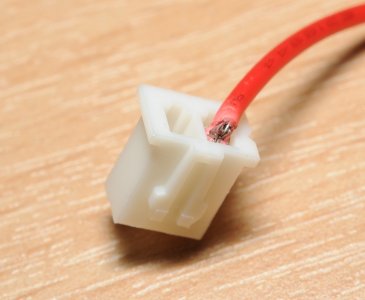
Once in, the reliance on the almost invisible lug to prevent removal is like gybing whilst holding the sheet by a little finger!

Rant over; can anyone give me some helpful tips?

TIA

M
 
Just use the crimper to very lightly hold the crimp whilst you insert the wire, and then close the jaws of the crimping tool firmly?

I haven't used JST connectors, but I think that's how I do it with regular crimps.
 
Last edited:
Just use the crimper to very lightly hold the crimp whilst you insert the wire, and then close the jaws of the crimping firmly?

I haven't used JST connectors, but I think that's how I do it with regular crimps.

It is also how I do it. You can close the jaws in the terminal slightly, one click. Practice before using it on a critical cable, as the position of the crimp in the jaws is important. Strip about 2-3mm of insulation and offer it into the crimp. Squeeze and release.
 
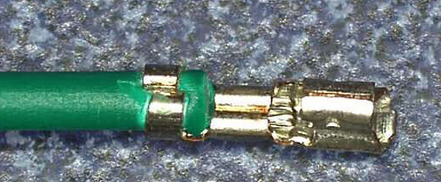
Proper crimp tools cost hundreds but you can probably obtain a decent crimp with a correct but cheaper tool if you are careful. The above advice is good but you must ensure that the outer end of the crimp provides strain relief on the insulation and the inner part of the crimp connects the stripped wire.
1772831124421.png
The crimp and tool should match the wire size and if you practice on some spare wire the same size and give it a pull you will know if it is a good crimp.
 
Proper crimp tools cost hundreds but you can probably obtain a decent crimp with a correct but cheaper tool if you are careful. The above advice is good but you must ensure that the outer end of the crimp provides strain relief on the insulation and the inner part of the crimp connects the stripped wire.
View attachment 207443
The crimp and tool should match the wire size and if you practice on some spare wire the same size and give it a pull you will know if it is a good crimp.

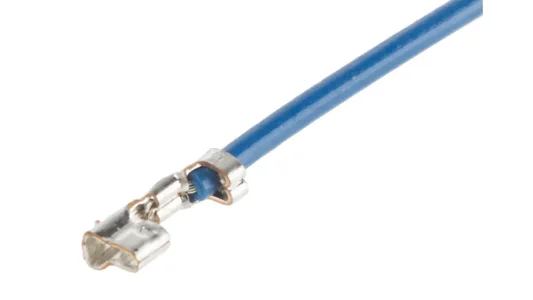
That crimp in your photo is not great. It has clearly been done with an unsuitable tool.

This is how it should look:

IMG_2257.webp

Notice how the insulation part of the crimp has “rolled” around on itself and not pierced the insulation.

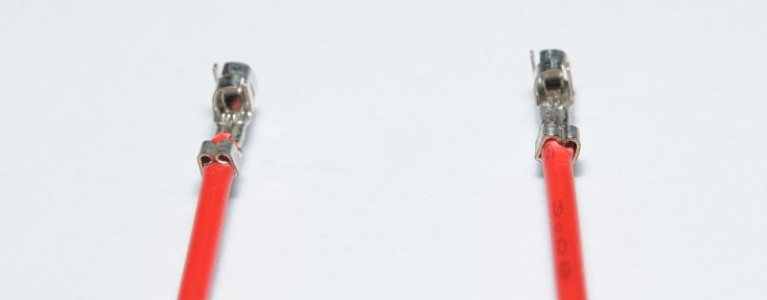
Here is another photo showing good crimp on the left, and bad crimp on the right (not quite as bad as your example though):

IMG_2259.jpeg

The crimp in your photo will shortly do this:

IMG_2260.jpeg


To answer @mattonthesea question, the answer is that no one does any number of crimps of decent quality with a cheap generic tool.

The proper tools have a “positioner” that holds the crimp in the correct place in the tool, allowing you to hold the crimper in one hand and the wire in the other. You then push the wire up to the stopper and crimp without any guess work.

Also what sort of JST crimp are you using? Huge difference between say and XH and an SH.
 
Last edited:
Another issue with 'budget' components is that the strain relief ears are too wide for the tool and so need to be adjusted before they will even fit in the jaws. That having been said, the cost of full spec. tools is not realistic for the hobbyist, so we have to do the best that we can with the junk.
 
It is also how I do it. You can close the jaws in the terminal slightly, one click. Practice before using it on a critical cable, as the position of the crimp in the jaws is important. Strip about 2-3mm of insulation and offer it into the crimp. Squeeze and release.

2 - 3mm is too much ... 1 - 1.5mm is the recc'd ... as the insulation needs to be crimped as well .... bare wire by the first crimp jaws .. insulation by the secoind crimp jaws. This is to make sure wire to pin is secure.

But yes - place pin in crimper .. making sure its against the slight ridge in the crimper slot .... have wire stripped and the strands neatly twisted ... insert into pin so that insulation is in the outer set of pin jaws ...... close crimper to complete ...

 
Another issue with 'budget' components is that the strain relief ears are too wide for the tool and so need to be adjusted before they will even fit in the jaws. That having been said, the cost of full spec. tools is not realistic for the hobbyist, so we have to do the best that we can with the junk.

I have budget Hobby Crimper with JST of various formats .... I use them regularly as I build my RC models .... the V 'ears' - I have never had to close them to insert into crimper .... you use the crimper to do that by placing to the required slot .. then closing the crimper jaws till 'ears' are pushed into the slot and first click. STOP .. insert wire ... complete crimp.
 
I have budget Hobby Crimper with JST of various formats .... I use them regularly as I build my RC models .... the V 'ears' - I have never had to close them to insert into crimper .... you use the crimper to do that by placing to the required slot .. then closing the crimper jaws till 'ears' are pushed into the slot and first click. STOP .. insert wire ... complete crimp.
On many junk tools if you try and do what you describe without first “pinching” the strain relief part of the crimp together a bit, when you crimp the strain relief ears would splay outwards not inwards.
 
On many junk tools if you try and do what you describe without first “pinching” the strain relief part of the crimp together a bit, when you crimp the strain relief ears would splay outwards not inwards.

Exactly so. I know how it is supposed to work, but budget parts don't always follow the rules!
 
That crimp in your photo is not great. It has clearly been done with an unsuitable tool.

This is how it should look:

View attachment 207450

Notice how the insulation part of the crimp has “rolled” around on itself and not pierced the insulation.

Here is another photo showing good crimp on the left, and bad crimp on the right (not quite as bad as your example though):

View attachment 207448


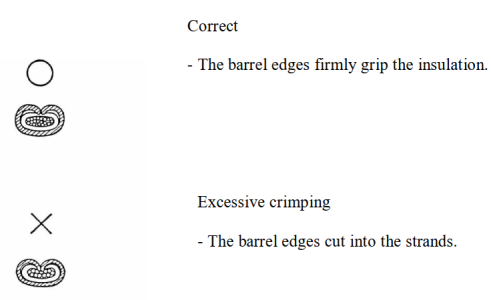
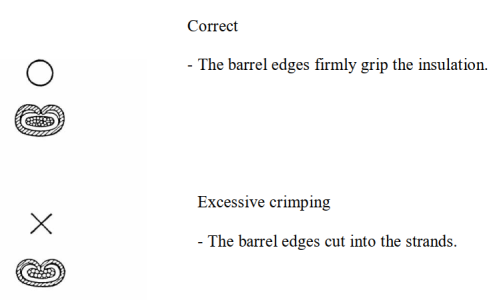
Agree that the first picture I posted was not a very good example. You probably have more experience than me but I have not seen crimps rolled like that when done with normal affordable hand tools. This information is from JST who seem to think it is OK as long as the strain relief does not damage the wire.
1772881511165.png
 

Attachments

  • 1772880852911.png
    1772880852911.png
    56.9 KB · Views: 0
Thanks all. That explains one issue: I've been trying to do it with crimpers for my bigger wire connectors. I have some better ones on the boat; the sort for crimping VHF inner pins. Would they do?

But the point about the tiny lug for fixing in the slot; does that really work?
 
Top