You are using an out of date browser. It may not display this or other websites correctly.
You should upgrade or use an alternative browser.
You should upgrade or use an alternative browser.
Is my anchor connected correctly?
- Thread starter citygent111
- Start date

ashtead
Well-Known Member
Is the picture missing maybe? This forum loves anchor posts so I’m sure many experts will be along soon if you post some pictures or explain the method of connection and materials etc. Best of luck though in deciphering some replies.
citygent111
Well-Known Member
Oops - I thought I'd attached it!!
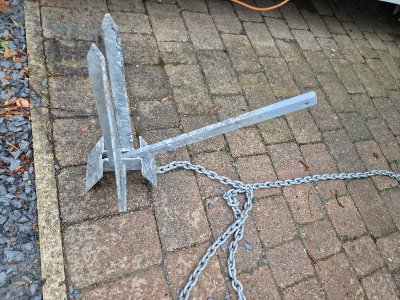
And to clarify, it's a Danforth type anchor but it doesn't have the long rod that extends from each side on a lot of them.
And to clarify, it's a Danforth type anchor but it doesn't have the long rod that extends from each side on a lot of them.

Concerto
Well-Known Member
Certainly looks like a drag anchor.
Wansworth
Well-Known Member
Where is it connected?

Seastoke
Well-Known Member
It’s a joke.

Roberto
Well-Known Member
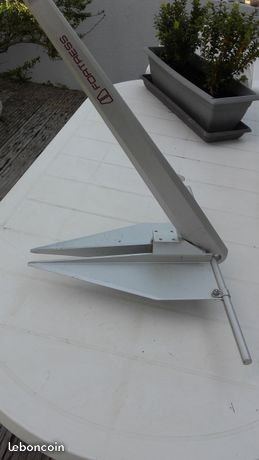
That type of chain attachment is more suited to this type of anchor
Wansworth
Well-Known Member
knowingly starting another anchour thread
Neeves
Well-Known Member
There are Danforth types and Danforth types - but any, types, with a pretence to excellence will need a protruding stock - it is there for a reason (on a genuine Danforth, or good copy).
Chain is commonly attached to the end of the shank - but this does not guarantee success (of good hold).
City Gent - an anchor is like a good wife or investment - they merit good research, an understanding of some simple rules and the choice of a wife, an anchor, nor an investment is a trivial matter.
Jonathan
Chain is commonly attached to the end of the shank - but this does not guarantee success (of good hold).
City Gent - an anchor is like a good wife or investment - they merit good research, an understanding of some simple rules and the choice of a wife, an anchor, nor an investment is a trivial matter.
Jonathan
Last edited:
Neeves
Well-Known Member
There are Danforth types and Danforth types - but any, types, with a pretence to excellence will need a protruding stock - it is there for a reason (on a genuine Danforth, or good copy).
Chain is commonly attached to the end of the shank - but this does not guarantee success (of good hold).
City Gent - an anchor is like a good wife or investment - they merit good research, an understanding of some simple rules and the choice of a wife, an anchor, nor an investment is a trivial matter.
Jonathan

PaulRainbow
Well-Known Member
I think you will find it's a Brittany type anchor.Oops - I thought I'd attached it!!
And to clarify, it's a Danforth type anchor but it doesn't have the long rod that extends from each side on a lot of them.
The chain is normally fitted to the end of the shank, but it's common practice with small angling boats to fix the chain to the crown, how yours is fitted, and then cable tie the chain to the end of the shank. You use enough cable ties to hold the boat under normal anchoring conditions, but not so many that you can't break them by using the engine if the anchor gets snagged.
Neeves
Well-Known Member
It is amazing - most of us have phones using which we can take pictures free of charge, save them for eternity, send them to all a sundry free of charge - yet many do not post pictures (and a few pics would save a few thousand words) or we do get pictures that do not allow the correct assessment of a product and the problems caused by the product.
I'm proudly computer illiterate, I'm of THAT generation - so why do some of youth ignore the opportunity they enjoy.
Jonathan
I'm proudly computer illiterate, I'm of THAT generation - so why do some of youth ignore the opportunity they enjoy.
Jonathan
Neeves
Well-Known Member
Roberto,
I don't want to be picky, especially with you, but your anchor looks strangely familiar but not.
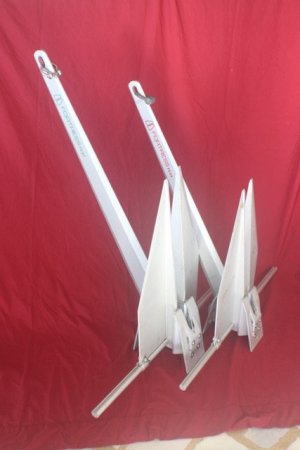
These are my Fortress - but my mud palms and yours look - different and your shank/fluke angle looks .... large. My Fortress are maybe of a 2005/10 vintage and these are FX 23 and FX 37. If you launch your Fortress then if it arrives inverted - the shank cannot articulate - or it can articulate but will hinge, rotate .... and never engage, let alone set.. it looks as if your mud palms have been attached back to front, or upside down....
Jonathan
Last edited:
Roberto
Well-Known Member
Roberto,
I don't want to be picky, especially with you, but your anchor looks strangely familiar but not.
These are my Fortress - but my mud palms and yours look - different and your shank/fluke angle looks .... large. My Fortress are maybe of a 2005/10 vintage and these are FX 23 and FX 37. If you launch your Fortress then if it arrives inverted - the shank cannot articulate. it looks as if your mud palms have been attached back to front, or upside down....
Jonathan
Roberto
Well-Known Member
Nonono not my anchor, I just found the picture in a second-hand equipment sale web site, it was offered as "never used", you bet... never used and never read the instructions to assemble it. By the look of it if one grabs the shank in vertical the two flukes would flip downwards at 180°. 
edit
For some reason the message came split, without quote, I was replying to Neeves above.
edit
For some reason the message came split, without quote, I was replying to Neeves above.

KREW2
Well-Known Member
As Paulrainbow says it is nearly rigged for tripping. Attach one of the chain links about half a meter up from the end to the hole in the shank with something that will snap under excess load. If the anchor snags it gives you a better chance of retrieving it.

citygent111
Well-Known Member
Perfect - and thank you both. I knew I'd seen something ages ago, but having a Bruce anchor at the time it was irrelevant to me then.As Paulrainbow says it is nearly rigged for tripping. Attach one of the chain links about half a meter up from the end to the hole in the shank with something that will snap under excess load. If the anchor snags it gives you a better chance of retrieving it.
I now consider myself an anchor noob (Neeves - that's what the young folk of today call a beginner ;-) )
Neeves
Well-Known Member
Be well aware that cable ties deteriorate in UV, even the black ones. The attachment at the crown, the junction of shank and fluke will secure as it is a shackle (well moused of course). The attachment with cable ties is questionable if the wind picks up (and you really need an anchor).
I have never, ever (even when fishing) felt the need for an attachment as described - but am well aware that those that fish near reefs do employ such practices.
Jonathan
I have never, ever (even when fishing) felt the need for an attachment as described - but am well aware that those that fish near reefs do employ such practices.
Jonathan
roaringgirl
Well-Known Member
I can't imagine a situation where the cable-tie method would be preferable to attaching the chain correctly to the shank and attaching a trip-line to the crown with a small buoy floating on the surface.Be well aware that cable ties deteriorate in UV, even the black ones. The attachment at the crown, the junction of shank and fluke will secure as it is a shackle (well moused of course). The attachment with cable ties is questionable if the wind picks up (and you really need an anchor).
I have never, ever (even when fishing) felt the need for an attachment as described - but am well aware that those that fish near reefs do employ such practices.
Jonathan
Roberto
Well-Known Member
+1I can't imagine a situation where the cable-tie method would be preferable to attaching the chain correctly to the shank and attaching a trip-line to the crown with a small buoy floating on the surface.
I think that attachment it's a solution mainly presented as a bright idea on books and hardly ever used in real life.
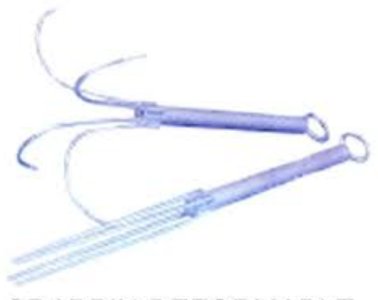
Conversely, the grapnel with bending prongs often surprise people (and personally I have never seen it mentioned in any "seamanship book") yet is one of the anchors more widely used by fishermen anywhere.