Is it ok to use a busbar by the batteries? instead of using a terminal connector

UK-WOOZY

Well-Known Member
Joined
7 Feb 2015
Messages
1,152
Location
medway river
Visit site
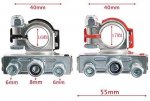
instead of using these

51362M4pthL._AC_.jpg
could i just use a busbar to connect everything to then from the busbar a single cable to the battery on each terminal?

IMG_20200612_154628.jpg
 
I do not see any reason why not. I would advise the the connector to the battery is of very low resistance. I did a similar thing when I wanted to install a 200A fuse for the starter battery, I used 1/16" thick copper strip x 3/4" wide to form a connecter, which was well insulated with multiple layers of PVC tape apart from where it was connected to the terminals on the battery and fuse. It worked well for 15 years.
 
instead of using these

View attachment 94555
could i just use a busbar to connect everything to then from the busbar a single cable to the battery on each terminal?

Yes and the more wires there are to connect the more sensible bus bars become

BUT .... Think abut fusing .

All circuits should have an appropriate fuse as close to the battery as possible.. You might need to look at a single connection to a fuse box. Then each circuit can be separately fused with an appropriate fuse the value of which should be matched to the load and the wire X section

There is a good selection of fuse boxes here:- Blade Fuse Holders Page 1 and here:- Fuse Boxes For Low Voltage Applications | 12 Volt Planet
Some even have a negative bus-bar incorporated
 
Last edited:
The two overriding considerations are to ensure that any cable/busbar/ connector is rated well above the rate of current expected. Also that the system is insulated from surroundings and accidental shorting as well as possible. If you comply with these two considerations I see no reason why you should not design a system using a busbar. I tend to agree that it is often better (neater, tidier) to run a cable away from the battery to a busbar for domestics but would personally always run the engine start battery directly to the terminal.
 
To me fusing would be the issue

either a single big fuse then ro a bus bar or you will need a fuse for each connection rated for the each cable capacity.
 
This isn't supposed to be sniping at anyone, but ... why do we worry so much about fusing everywhere possible? What exactly is the risk of a short between wires leading to two properly mounted and supported busbars?

Perhaps things have changed in the automotive world, but I have never owned a car (most recent was a 2007 Mazda) which had any sort of fuse on the main supply cables from battery to starter and from battery to fusebox. When I rewired my boat to have separate house and engine circuits I put 150A thermal breakers in each supply, but that's as much so I can pop them open if I need to isolate a problem than because I'm worried about shorts.
 
This isn't supposed to be sniping at anyone, but ... why do we worry so much about fusing everywhere possible?
To satisfy the requirements of ISO 10133 perhaps. Exceptions being short cables ( < 200mm ) and starter motor circuits.

In anticipation of the next obvious question, I dont know I did not write it :)
 
The "short cables" exemption sounds like it was written for exactly the OP's situation. Mount a pair of busbars on the outside of that box, connect all the random wiring to them instead of those shoddy-looking four-way things, and run a short link from each busbar to the corresponding battery terminal. Much neater.

Pete
 
This gentleman is worth listening to if you can get used to his crippling shyness. Un-switched and switched busbars are recommended for example. There's a whole series of linked videos on his site.

 
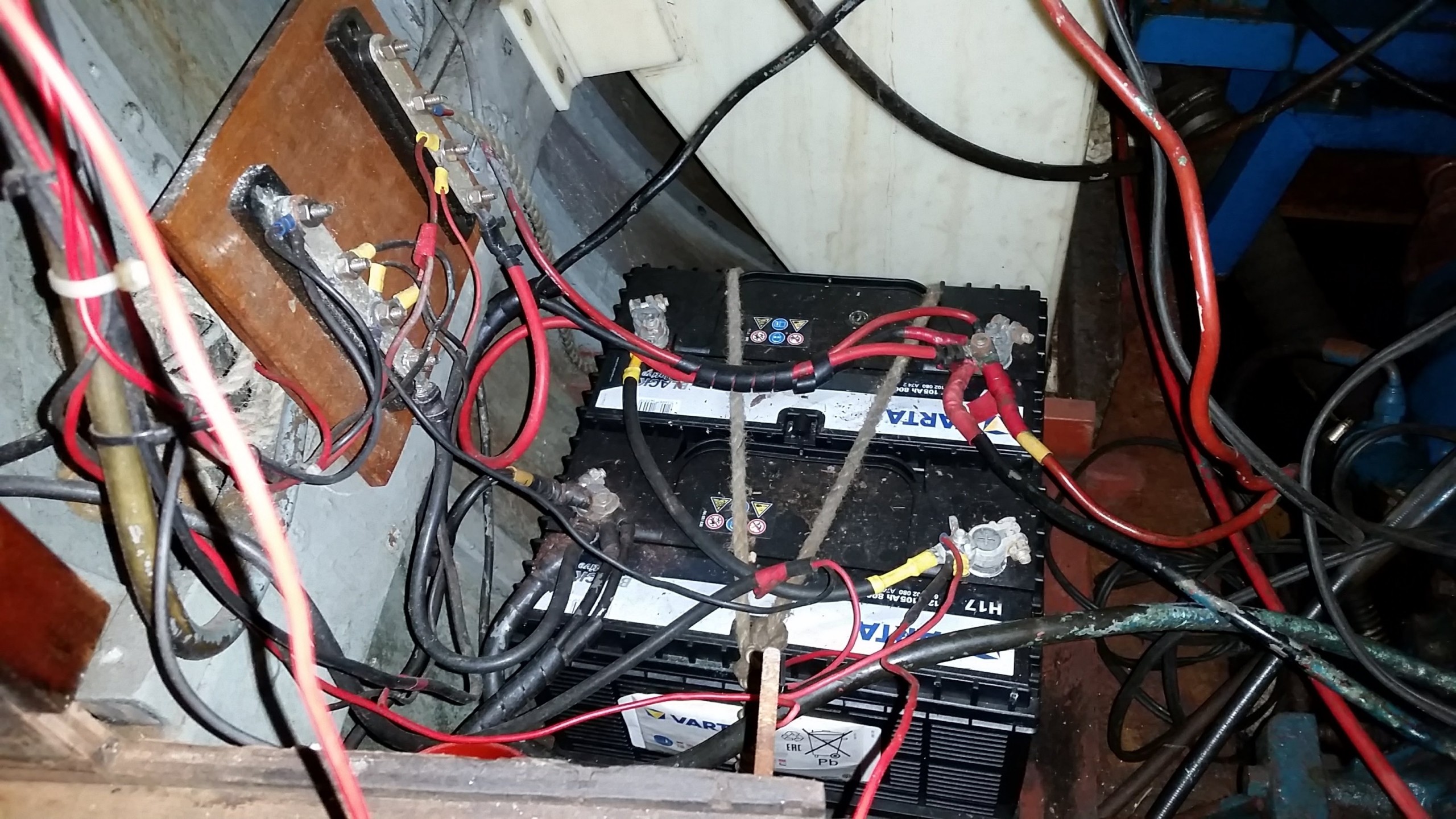
Multiple connections at the battery is almost always a bad idea, as the rats nest in post #1 demonstrates. Generally:

The positive cable from the domestic battery should go to an isolator switch.

If there are loads that must remain on a suitably fused cable(this doesn't need to get complicated, rate it for the cable, which should obviously be rated for the total loads and allow for voltage drop) should go from the isolator switch battery terminal to a fuse board with a common input, each separate load then gets its own fuse. Loads here might be bilge pumps, solar controller inputs, mains charger inputs etc.

For all other loads a cable should go to the distribution/switch panel. This cable should also be fused for the cable rating. From the panel, each load gets it's own fuse. If you want to have all of your navigation equipment come on with a single switch (plotter, NMEA network, MFDs, AIS etc, then connect a single switch to a fuse panel with a common input and connect each item of equipment to its own fuse. I like to keep the VHF on its own circuit (fused, not necessarily switched, unless it's a black box VHF), so it can be left on to monitor channel 16 when all other equipment isn't needed.

If there are clusters of equipment in different areas of the boat, let's say a large cabin with it's own TV, radio, lights, USB charging etc, you can run a heavy (fused for the cable rating) cable to the cabin, then fit it's own fuse/switch panel, with individual fuses for each circuit.

There is no end to the number of additional/satellite fuse panels. You do not have to have everything in one place. But, all panels should be easily accessible and use the same type of fuses. It's pointless running 20 positive cables to an area where you could run one thicker cable and use a separate fuse panel.

If you are using more than one or two circuits, connected to the isolator switch, you need to consider using busbars. These don't need to be next to the switch, i've designed installations where 35mm battery cable is connected to the isolator and goes to a busbar a few meters away, which then has separate circuits, all supplied with smaller cables (fused again) that go to fuse/breaker/switch panels.

For negative cables, there should only be a single cable going to the battery. This might go to a terminal post or a busbar close to the battery, or more likely close to the "always on" fuse panel, where you can connect all of the always on negatives and another thicker cable to a second busbar at the main distribution panel. If more than one fuse panel is fitted, as above, addition busbars or terminal posts can be fitted close to each fuse panel.

Fusing is important, but easy to deal with. Every cable that goes to a busbar should be fused at source, rated for the cable. Every cable that comes off of the busbar should be fused, rated for the load it's connected to, or in the case of another fuse panel, the cable.
 
i already have MCBs on each battery, the main boat panel and fuses on the solar cables. it isnt much of a nest, the engine battery is located at the front of the engine so the heavy cables go to an mcb by that first before going to the battery then to the blue sea switch/relay by the house battery, and its a small boat, not much space
 
Last edited:
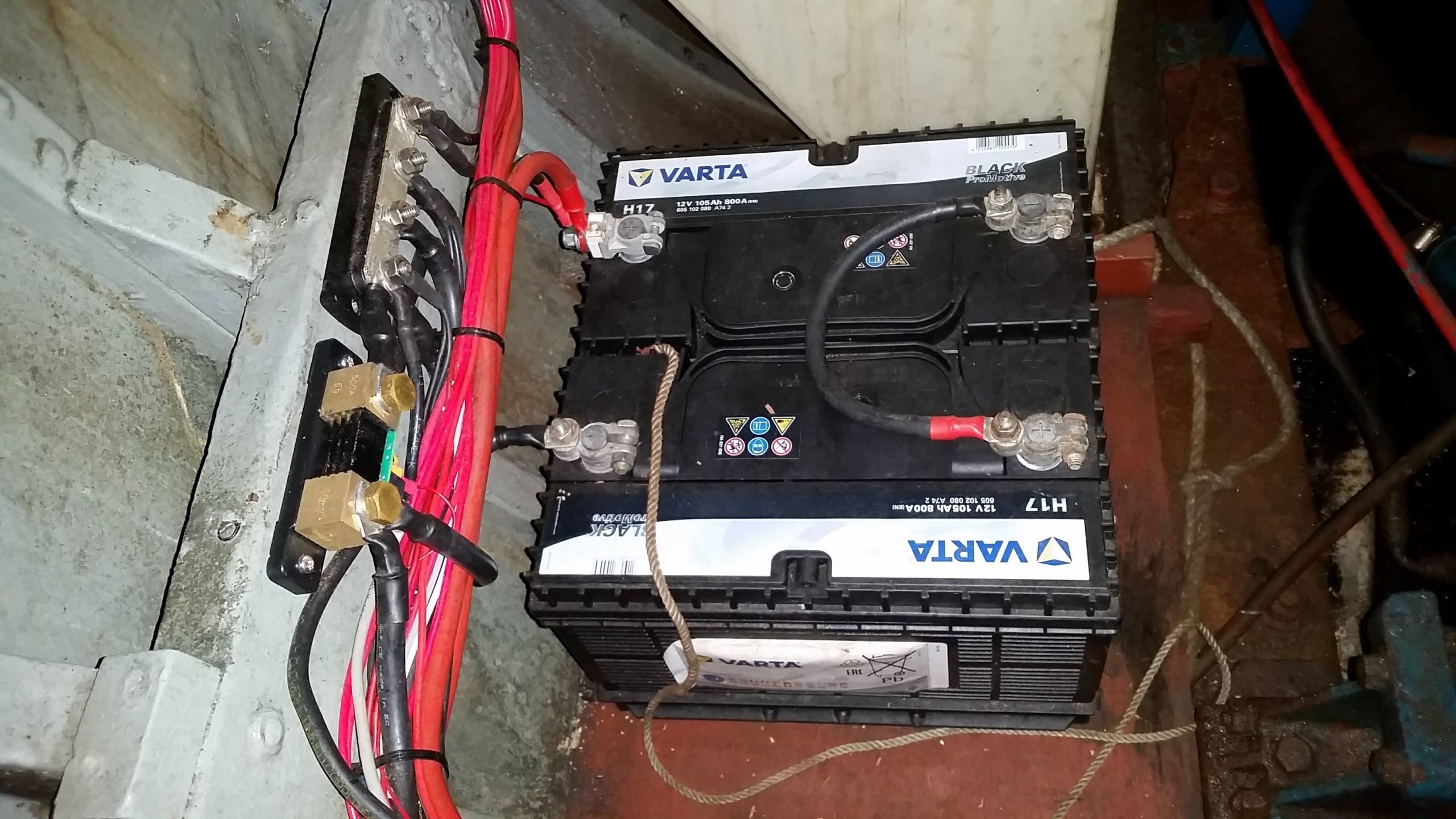
Before:

batteries-1a-scaled.jpg


After:

batteries-1b-scaled.jpg
 
I used to have few cables on battery terminals but as devices increased there was no more room so i added 2 bus bars with 4 X 8 mm crews. It worths doing that addition because everything is tidy and you can add circuits easily. I tape any terminal is uninstalled until its installed again. Wrenches are also sneaky always wanting to short-circuit the battery when I am not 100% focused!
 
Top