
Impellor blades installed wrongly. Trouble?

NPMR

Well-Known Member
Joined
14 Feb 2006
Messages
2,295
Location
Cornwall
Visit site
I keep a spare pump for my Yanmar 1GM10 'ready to go' rather than fiddle with an impellor in a seaway! Much easier.

Yesterday, as part of the winter re-fit, I fitted the spare pump and brought the old one home to do the new impellor on the workbench (also much easier)

However, I can't remember which way the 'blades' slanted in the one I've just fitted.

If they are "wrong", will they flip round to the correct way, when the engine starts, or will they stay wrong? Any thoughts?
 
I keep a spare pump for my Yanmar 1GM10 'ready to go' rather than fiddle with an impellor in a seaway! Much easier.

Yesterday, as part of the winter re-fit, I fitted the spare pump and brought the old one home to do the new impellor on the workbench (also much easier)

However, I can't remember which way the 'blades' slanted in the one I've just fitted.

If they are "wrong", will they flip round to the correct way, when the engine starts, or will they stay wrong? Any thoughts?

they will flip over suggest a light silicone grease as well
 
I keep a spare pump for my Yanmar 1GM10 'ready to go' rather than fiddle with an impellor in a seaway! Much easier.

Yesterday, as part of the winter re-fit, I fitted the spare pump and brought the old one home to do the new impellor on the workbench (also much easier)

However, I can't remember which way the 'blades' slanted in the one I've just fitted.

If they are "wrong", will they flip round to the correct way, when the engine starts, or will they stay wrong? Any thoughts?
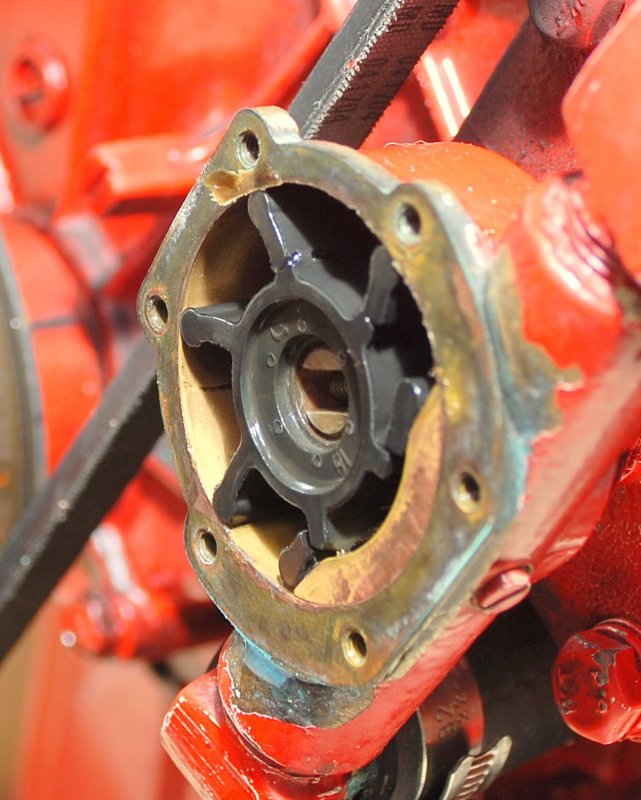
Yes they will self-align as soon as the engine is started. However if you are keeping it as a spare complete pump it may pay you to rotate the shaft to get the rotation correct. You'll have to check with your existing fitted pump to find out which rotation is correct.
 
Thank you M33 and SAILORMAN. I felt it would 'flip' too but I like reassurance!

Always installed with vaseline or grease but I have silicone in the stores and like the idea of that for the next one.

The spare pump thing really is quick - 3 bolts and it's off and just as quick to install the new one.

No fiiddling baout under the fan belt with tiny spanners or Allen keys. And the pump was cheap to buy in the USA, unlike the cost of the wretched thing in the UK.
 
As said they will flip over the right way

BUT

The owners manual does show the "correct" way of installing it and that the pump rotates counterclockwise

As they say RTFM Yanmar GM Owners manual

.
 
Even easier to change the impeller if you fit a Speedseal front cover! When you do replace the pump make sure you don't get any leaks around the pump. Combination of bronze pump body, cast aluminium housing and mild steel screws is an interesting cocktail, never mind the consequences of a drip of seawater onto the mild steel oil transfer pipe immediately below! Guess how I know.
 
I keep a spare pump for my Yanmar 1GM10 'ready to go' rather than fiddle with an impellor in a seaway! Much easier.

?

It may be easier, but I wouldn't say it was a good thing to have an unused pump sitting for months / years, with an impeller in it. The blades will tend to develop permanent bends. That is one of the reasons why most remove the impeller when the boat is laid up.
 
It is only there for a maximum of 12 months ready-to-go; I change the impellor at the start of EVERY season. I hadn't thought of removing the impellor each winter. Do many people/anybody really do this?

I usually run the engine ashore at the end of the season,to warm it up, then 'fill it' by letting it suck up several gallons of freshwater/antifreexe mixed, and then stop the engine. This way I felt it sits with a mixture of antifreeze in it but can't see how to do this if you remove the impellor, without losing all the fluids in the engine.
 
If they are "wrong", will they flip round to the correct way, when the engine starts, or will they stay wrong? Any thoughts?
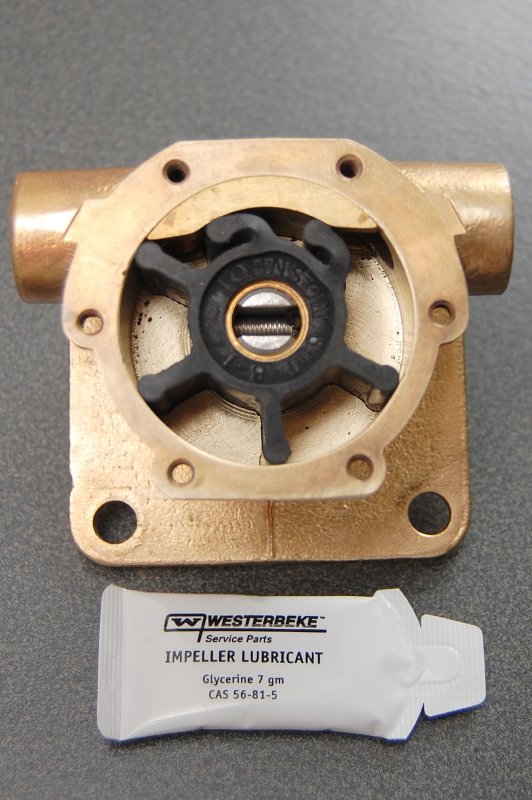
Yes they will just flip the right way. People often think this is a big problem and it is not. Diesel engines often have a slight reverse kick or slight back spin when they shut down. Many times when pulling an impeller cover the vanes are going the wrong way anyway due to this back kick. They flip flop with no issues..

This photo shows the results of some back kick at shut down.
100648217.jpg


The generally accepted lube for installing impellers is glycerin as it will not degrade the composition of the impeller.
110363060.jpg
 
Last edited:
It is only there for a maximum of 12 months ready-to-go; I change the impellor at the start of EVERY season. I hadn't thought of removing the impellor each winter. Do many people/anybody really do this?

Yes, every winter for at least the past 20. Then I check the impeller for cracks or other damage, if it's OK it goes back in next spring.
 
I don't bother taking my impellor out at the end of each season, I like to sail in the winter! I DO change my impellor each Spring regardless. Marine Power used to supply a little glycerin tube with their Yanmar service kits but no longer it seems. I use a smear of synthetic grease.
 
Yes they will just flip the right way. .......
This photo shows the results of some back kick at shut down........
and an impeller than should have been changed rather sooner. A few hours longer and one or more of those vanes could have been blocking a water passage somewhere :eek:
 
Had a Dolphin engine, always left impellor in during winter. Only needed to replace it once in 18 years!
In reverse of course the Dolphin runs backwards so the impellor had to flip from sucking to blowing ?? Or was it blowing to sucking ??
 
and an impeller than should have been changed rather sooner. A few hours longer and one or more of those vanes could have been blocking a water passage somewhere :eek:

Believe it or not that impeller was just three months old and only suffered a minor restriction in water flow that caused a 5 degree rise in engine temp from the steady 180 to 185. I removed the weeds from the strainer and she pumped fine so I did not check it but it had still been moving water and was never run dry.

I called Johnson Pump after discovering this and they claimed it may have sat on a shelf for a while thus becoming brittle & more prone to cracking. Know I know this to be true but in many years working in boat yards I never saw an impeller crack in three months time unless it had been burned and then the tips were always cooked. These tips were perfect.

I install a new one each spring and pull it in the fall to use as my next spare. The rubber can become brittle and degrade over time if they sit in stock this is why I swap my spares too.

I questioned Johnson's tech support on this premature cracking, as I have never had this happen before in 35 plus years, except for a few Globe brand impellers that were prematurely cracking. I suspect that Johnson had a bad batch of rubber compound but they would not admit to it. Johnson Pump now has a new compound called MC-97 that is supposed to be better...:confused:

It's a good thing I replace once a year, as you never know. They usually come out looking brand new..
 
Last edited:
Makes you wonder doesn't it. I had a 1GM10 impeller fail after 1 month / 10 engine hours last year ..... I bet the previous years impeller had many of seasons left in it.

Always worries me when I change a cambelt on the car .... the last one I changed was 12 years / 3,000 miles old and looked like new. Felt like I had introduced a whole load of risk for no apparent reason.
 
Is it really going to make a big difference taking out the impeller over the winter, i never do.

How many people strip their outboards down each year and take the impellers out of those, the shaft speed driving those is far greater isnt it ?

Steve
 
I don't bother taking my impellor out at the end of each season, I like to sail in the winter! I DO change my impellor each Spring regardless. Marine Power used to supply a little glycerin tube with their Yanmar service kits but no longer it seems. I use a smear of synthetic grease.

FWIW
In the multi-language instructions with VP replacement impeller packs it advises
'do not use any petroleum based products to lubricate the inside of the pump. Only use glycerin. Other products can damage the impeller'
 
Is it really going to make a big difference taking out the impeller over the winter, i never do.

How many people strip their outboards down each year and take the impellers out of those, the shaft speed driving those is far greater isnt it ?

Steve

Well, it might make a difference but it might not. It seems to me that leaving the impeller in all winter with a severe bend in one or more of the blades is inviting cracks to form. If you replace with new every year you may think this not to be a problem, but there are hundreds of posts on here pointing out that brand new impellers have a high failure rate. A 'run-in' impeller is a relatively known quantity, whereas a new one is not. My current one is at least two seasons old, rested every winter.
 
Is it really going to make a big difference taking out the impeller over the winter, i never do.

How many people strip their outboards down each year and take the impellers out of those, the shaft speed driving those is far greater isnt it ?

Steve


In the North East USA we haul each winter and suck antifreeze through the motor. I do not like to leave the glycol in contact with the pump seals all winter so I pull the cover and impeller. Takes under five minutes on my Westerbeke..
 
Top