I failed to extract diesel by Pela-help please!

Mike k

Well-Known Member
Joined
28 Mar 2011
Messages
1,307
Location
Rossendale
Visit site
Today I thought I would use my new Pela 6000 ( little plastic one holds 6L) to hoover the bottom of the tank to extract any water/crud. I Inserted the tube down the filler usual deisel filler plug pumped and pumped but hardly anything came out- I tried all sorts and tested the pump on other water sources and it was sucking ok.TBH once the tube was near the bottom ( about 4 feet down from the Pela on the pontoon) it did feel it was touching something a bit spongy- but it was very cold and cannot be 100%.Anyway I would greatly welcome any views why I failed- anti syphon device? some form of spongy fitting on the base of the filler pipe preventing suction etc etc

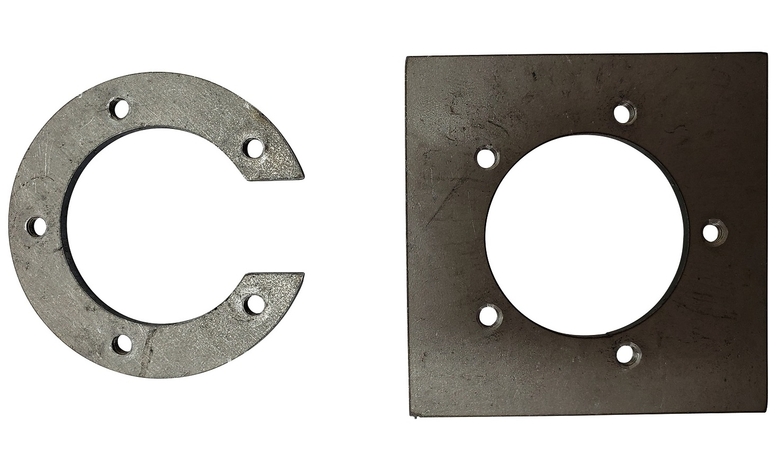
Also if the filler cap is not going to work - can I take this ( Picture below)capping off direct from the diesel tank to use the pela directly into the tank ( the one with the two wires) and 5 screws?
If yes any idea what lies below the two wires( am assuming its a fuel guage) but seriously dont want to mess anything up or throw something out of flunter.

Many thanks (as usual) for any responses to the two parts to my queries .
Deiseltankelectrics.jpg
 
Can't imagine any problem taking the cap off for direct access. I've done it with every boat I've had for one reason or another and it will be a float device to read tank level on dash gauge. Should be able to see the bottom of the tank with a torch and see what crud, if any, is in it.

Gary
 
Is the end of the tube cut at 90 degrees? Perhaps if its cut straight its suctioning itself to the bottom? Maybe try cutting a V on the end, or slash cut like a naff Harley-Davidson tail pipe.
 
it doesn't take much to block the pela pipes - are you using the black small bore pipe that comes with it? that blocks very easy if so try and find something with a bigger bore. also check the red cap connection at the pressure vessel
 
it doesn't take much to block the pela pipes - are you using the black small bore pipe that comes with it? that blocks very easy if so try and find something with a bigger bore. also check the red cap connection at the pressure vessel

+1

Also the Pela doesn't like lifting a great height (it seems to me having only used one three times!), so have the body of the pump as low as you practically can - ideally same height as what you're pumping, even if the pipe is going up (e.g. through tank access and then back down again).
 
+1

Also the Pela doesn't like lifting a great height (it seems to me having only used one three times!), so have the body of the pump as low as you practically can - ideally same height as what you're pumping, even if the pipe is going up (e.g. through tank access and then back down again).

My Pela 6000 quite happily sucks up water ( denser than diesel) from the bilge, which is at least 0.5 m below it. The black pipe ( designed to go down dipstick tubes, which works well with hot oil) will clearly restrict flow rates though; I just made uo another assembly using the blanking cap with larger bore tubing for "general" suction uses on the boat
 
I'm guessing it is getting blocked at the inlet. This happens to mine when I am sucking out the dregs from the bilge, but not normally a problem with engine oil. Have not tried the diesel tank yet, but it might be crud in the tank. As others have suggested, try a larger bore hose.
 
+1

Also the Pela doesn't like lifting a great height (it seems to me having only used one three times!), so have the body of the pump as low as you practically can - ideally same height as what you're pumping, even if the pipe is going up (e.g. through tank access and then back down again).

My Pela 6000 quite happily sucks up water ( denser than diesel) from the bilge, which is at least 0.5 m below it.

No doubt, but half a metre is not much. The original poster was talking about the pump being 4 feet above the intake, and our bilge is about a metre deep.
 
The pela should be able to do it no problem.

Its useful to make up a lance in tube so you can work in a straight line rather than a curved plastic tube either stainless or copper of the apropriate id to suit pela tube.

With copper its easier to bend to get into awkward places.

Some tanks like mine have sumps or the lowest point is one end of the tank or get familay and friends to rock the boat for you to get water and crud moving and then to stand on one side and end of the boat to get water and crud into one place. A friend of mine did this when he put water into his diesel tank quite sucessfully.

Cut the tank end of the tube at 45 degrees so it does not make a seal but retains a flow while in use.

Also make a point of using a good biocide for your diesel suitable for biodiesel as well such as Grotamar 82.
 
Last edited:
Your tank could be very well made with a purpose made strengthener for the fuel sender to attach to OR someone has had problems in the past removing the fuel sender and has cut it out and welded it back in.

You could well find they have used nuts on the underside which are now concealed, if you undo the bolts the nuts may well drop into your tank and then leave you with a difficult job of reattaching the sender bolts with no way of fastening nuts to the underside.

Has anyone ever seen a reinforced sender plate welded to any new tank on any boat ?
 
I bought a wet and dry vac from Willkes (£39 although I think they have gone up a bit). It has a tremendous suck and, before the paranoia starts, the motor is ventilated separately. It made cleaning the tank a doddle and is the best way yet of achieving a dry bilge. Being nearly all plastic, there are no corrosion worries.
 
No doubt, but half a metre is not much. The original poster was talking about the pump being 4 feet above the intake, and our bilge is about a metre deep.

I have no doubt it will suck up water that's in excess of 0.5 m below it, but I see no point in having the pump higher than I need to. The Pela is a vacuum pump, I have no idea of how good a vacuum it can pull. Nowhere near a perfect vacuum I'm sure ( ca. -14.7 psi compared to atmospheric pressure), if it did it would allow it to suck up water from ca 10m below it. Even if it only attains a ca 20% reduction in pressure, like a good vacuum cleaner does, it would be able to suck up water from ca 2m below it.
 
Today I thought I would use my new Pela 6000 ( little plastic one holds 6L) to hoover the bottom of the tank to extract any water/crud. I Inserted the tube down the filler usual deisel filler plug pumped and pumped but hardly anything came out- I tried all sorts and tested the pump on other water sources and it was sucking ok.TBH once the tube was near the bottom ( about 4 feet down from the Pela on the pontoon) it did feel it was touching something a bit spongy- but it was very cold and cannot be 100%.

Even the big pela is not good at sucking anything that's dense or Gloopy(for example gunge in the engine bilge) , especially if you're using the thinner / thinnnest tube.

Your problem could be diesel without additives - it goes waxy - your comment above. OR heavens forfend you've got a nasty attack of the Bug. Be afraid, very afraid......
 
Even the big pela is not good at sucking anything that's dense or Gloopy(for example gunge in the engine bilge) , especially if you're using the thinner / thinnnest tube.

Your problem could be diesel without additives - it goes waxy - your comment above. OR heavens forfend you've got a nasty attack of the Bug. Be afraid, very afraid......

thanks to all for comments I will retry with a recut black tube at 45degrees and take off the sender cover if needed- if the tube still isnt performing I will make a copper fitment of a larger diameter.Daka - i have checked the website for Durite senders ( looks like one) and I think the screws are self tapping but good thinking -that would have been annoying to lose the nuts.As for gloop/bug i dont think so because the bit that did eventually come out was ok no black stringy stuff at all.Still a big mystery to solve so more experiments needed- i did see sponge baffles on a deisel tank manufacturers website- but cannot see that being a common occurence can you?


ull
 
I've worked on a few tanks and never seen the sender welded in. The fitting patern is standard (DIN or SAE), and more than often it is made as a separate part, welded to the tank top.

The picture in post #1 shows screws in the mentioned pattern. I have never seen other than thread cut directly into the tank (even the original fitter would have a hard time putting nuts on unless the sender was fitted prior to welding. Makes no sense IMO.

I'd remoce the screws and take the sender out. Gives nice access and allows for checking the sender/float too.

When fitting a gasket can easily be made (or purchased, still s standard pattern). You may even use sealant or liquid gasket of some sort.

prd_95.jpg
 
I have just done the same thing to check the fuel in our (new to us) boat?

I bought a cheap (less that £8 on eBay) siphon air fuel pump and i was going to go into the top of the tank via the fuel guage sender but when i looked i found a spare blanked off fitting in the top of the tank which i used instead.

The cheap pump was suprisingly good.

I cut the bottom of the pipe to 45 degrees as others have said and it worked a treat! I just pumped diesel into a 5 litre container.

Thankfully diesel all clean!
 
I have no doubt it will suck up water that's in excess of 0.5 m below it....

Nor have I, because I have actually done it

.... but I see no point in having the pump higher than I need to.

Exactly my point.

The head of 4 feet is not the source of the OP's problems, but it isn't helping. If he can pump with the Pela in a lower position, he'll avoid adding one disadvantage to another.
 
Keep the extraction pump clean and tip out into a white plastic bucket also called a paint kettle by good chandlers or decorators merchants. You can get a paint kettle about 2 litre capacity with a plastic lid for a pound or two.

It is very difficult to see the diesel well in a dirty bucket or a black bucket but with a white paint kettle tipping the contents of of the extraction pump into it will imediately allow you to examine the fuel for cloudiness, diesel bug and water.
 
I've worked on a few tanks and never seen the sender welded in.

Mike that is the important bit .

I think that your tank has been modified.

My guess is that someone had a sender problem and couldnt get it out or it rotted out.

They have then fastened it on a new bit of metal and welded it back on the tank.

self cutting machine screws should have been used (not self tappers), self cutting machine screws are usually hex with slot.

The self tappers could be bolts with nuts on the underside.


Until you find someone who says that they have seen a strengthener welded on a new tank you should assume yours is bodged and not touch it.
 
Mike that is the important bit .

I think that your tank has been modified.
.

It's certainly possible the weld does look a bit newer, but a doubling plate is not very unusual on new tanks to provide enough thickness to tap a thread into. Nuts cannot be used when there is no access to the inside.


Machine screws are available with many head types.

Even if it has been repaired I don't see any problem removing the sender.
 
Top