Hurst Spit changes

ds797

Well-Known Member
Joined
16 Jul 2003
Messages
138
Visit site
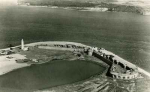
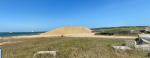
Was comparing some pictures of Hurst Spit, and amazed by the difference from the mid 1990s to now.

Now:
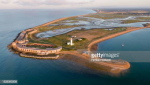
1636133596684.png

See the long thin spit under the "getty images

Compared with:
1636133956104.png

Or this one:

1636134018787.png

Its amazing (in my mind) how quickly that has changed!

:)
 
As I see it, the long spit under "Getty Images" doesn't appear on the other photos. So what point are you trying to make?
 
I kept my old Solent charts and when you compare the Bramble bank shape over the years the change is considerable. There used to be a channel between an East and West Bramble bank (flippin examiner asked me to a) find it and b) sail through it on an exam.) It's since gone.
 
I happened to be up on Blakeney point a couple of weeks ago and the information there showed just how much, and how fast, the point has been advancing. I think the process is very similar and has been going on for centuries.

But the odd thing about hurst is that the castle has been there for 500 years so it must have been pretty stable for centuries so the comparatively fast change in the last 20-30 years is a little unexpected.
 
The entrances to the Deben and Ore can change massively in a few months, especially over winter. Shingle is very mobile stuff.
Especially when a council bulldozer is pushing it...
I happened to be up on Blakeney point a couple of weeks ago and the information there showed just how much, and how fast, the point has been advancing. I think the process is very similar and has been going on for centuries.

But the odd thing about hurst is that the castle has been there for 500 years so it must have been pretty stable for centuries so the comparatively fast change in the last 20-30 years is a little unexpected.
See post #4

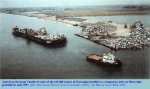
The spit was built by the local council in the mid-1990s following a storm in order to off-load barges full of Norwegian rock.
The rocks were used to re-build the the western end of the spit and near the castle as it was in danger of getting washed away.

6HS-larvikite-arrival.jpg
 
The North Sand Head (top of the Goodwin Sands) goes walk about by up to half a mile with no consideration for the inconvenience it causes.
With all due respect the Long Sand is in no way related to the Goodwins, it is a long way to the NW, and the quite extensive Kentish Knock intervenes before you get up to the Long Sand. So named I suppose as it is the longest of the "fingers" of shallow water that extend NE out from the Thames Estuary.
However you are correct in that the Long Sand Head buoy is one of the most frequently moved navigation marks around our coast.
 
But the odd thing about hurst is that the castle has been there for 500 years so it must have been pretty stable for centuries so the comparatively fast change in the last 20-30 years is a little unexpected.

The spit was built by the local council in the mid-1990s following a storm in order to off-load barges full of Norwegian rock.
The rocks were used to re-build the the western end of the spit and near the castle as it was in danger of getting washed away.

I was told, by some closely involved at the time, that the sea had breached Hurst Spit (about a couple of decades ago?). This, it was judged, would not only detach the castle from the shore, but would eventually likely have massive impacts on the depths, channels and shores of the western Solent (not to mention more or less wiping out Keyhaven). Faced with this prospect an awful lot of national Government (and local) money was found p.d.q. to repair and reinforce the spit. I believe (but may be mistaken) that the rock reinforcement works Greemble mentioned and pictured was part of that response.
 
I kept my old Solent charts and when you compare the Bramble bank shape over the years the change is considerable.

If you attend the cricket matches you can see considerable change in just one year. With the same height of tide in adjacent years I’ve seen a huge expanse well above water, and a few square feet awash surrounded by people paddling.

Pete
 
With all due respect the Long Sand is in no way related to the Goodwins, it is a long way to the NW, and the quite extensive Kentish Knock intervenes before you get up to the Long Sand. So named I suppose as it is the longest of the "fingers" of shallow water that extend NE out from the Thames Estuary.
However you are correct in that the Long Sand Head buoy is one of the most frequently moved navigation marks around our coast.

Bad me.:oops: I stand corrected I meant North Sand head.:unsure:
 
Top