How to test an RPM sender output with a multimeter

Bejasus

Well-Known Member
Joined
9 Jun 2002
Messages
6,528
Location
Savannah 32 00.50N - 80 59.90W
Visit site
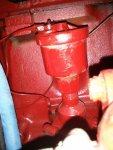
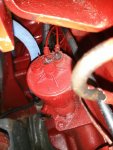
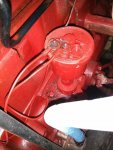
Hi all, I have a 1970s Sabre Ford Lehman 4D254 80 HP with a mechanical/electrical RPM sender and would like to test what the output signal is. Anyone have any ideas. Also, what are the differences between a 2711E and a 2712E?
Any help appreciated.


Bejasus
 
Normally tachometer or RPM info is picked up from the windings of the alternator. It takes the form of an AC (unrectified) signal, from memory around about 8 volts. This varies in frequency depending on engine revs. The rev counter is basically a form of frequency counter that then displays this as engine speed. However yours sounds different, the signal not coming from the alternator. Still, I suspect a pulse, possibly from some form of magnetic pick up or coil rotating inside a magnet. Try a multimeter set to either AC or DC volts and see if it shows an output of any kind. A clue might be found from the type of display instrument fitted, does it look like a typical REV counter, with a positive and negative supply and a sensor input of some kind ? Sorry cannot be of more help, but expect others will be along. No idea re engine numbers .
 
As Dickie T indicates there are basically two types on diesel engines ( petrol engine tachos can be driven from the ignition system) apart from a mechanically driven instrument

One way is by using an unrectified signal from the alternator the other by means of a pickup coil sensing the teeth on a gear wheel ( the ring gear may be) passing it. Yours is clearly the latter although the manual I have located on line for your engine only refers to the alternator type (post1976) and the mechanical type!

Check that you have a power supply to the tacho ( in addition to any for illumination) check the wiring to the sensor and all connections. Check the continuity of the sensor.
 
I wonder if it's the same as on a 4108? There's a cylindrical sender about the same size as a thread bobbin, driven from the camshaft - under the alternator in my case.
Two wires, as my engine is isolated from the negative return.
I can scope or meter if you think yours may be similar.
What are the symptoms of your problem - erratic, erroneous, nothing? (mine is sometimes a little erratic until the engine warms up = a minute or so.
 
I wonder if it's the same as on a 4108? There's a cylindrical sender about the same size as a thread bobbin, driven from the camshaft - under the alternator in my case.
Two wires, as my engine is isolated from the negative return.
I can scope or meter if you think yours may be similar.
What are the symptoms of your problem - erratic, erroneous, nothing? (mine is sometimes a little erratic until the engine warms up = a minute or so.

I think the 4108's type is simply a generator producing a voltage proportional to rpm - same principle as a bicycle dynamo.
 
I think the 4108's type is simply a generator producing a voltage proportional to rpm - same principle as a bicycle dynamo.

Correct, check for an ac voltage maybe 5 v from memory with the engine running. No 12v supply necessary.
 
elton, I know that this is a tacho drive, but I have no other information for it, nor can I find it for love nor money on the web.

Bejasus

I think he meant read the manual for your Fluke .... but FWIW the Hz button is a 200Hz to 200KHz range. It will, as Elton suggests, give you a more or less ( simple factor conversion ) indication of rpm
 
As was pointed out, if your fancy Fluke can measure Hertz, that might do the trick. Otherwise you'll need an oscilloscope. I've got this one and recently used it to diagnose a tachometer problem. On our alternator 'W' terminal it looked like the below (also see thread http://www.ybw.com/forums/showthread.php?116230-Alternator-W-terminal).

The oscilloscope is a pocket sized DSO203 for around £100: http://www.amazon.co.uk/gp/product/...=as2&tag=sdfjklorg-21&linkId=VWEZBWNYMGSOA7CK. Handy for all kinds of stuff around boat electronics (e.g. checking if your masthead sensors are sending anything at all or how badly mangled the inverter output is).

Lastly, do remember that if the pickup is from the alternator, you'll have to adjust the tachometer for the translation ratio to get the engine RPM.

View attachment 50727
.
 
As was pointed out, if your fancy Fluke can measure Hertz, that might do the trick.

It can! Leave it set to AC volts and press the Hz button ITYWF

Mnd you for over £1k I'd want it to all the other boat maintenance as well!
 
Possibly not at all applicable to OPs sender but I wonder if it has 3 terminals on the sender and he has lost a wire. Aircraft tachos tend to have a small 3 phase permanent magnet generator driven by the engine. This delivers a 3 phase AC proportional to RPM. The old style tachos inside have a 3 phase motor driving a magnetic drag cup type tacho. ie like old speedos on cars. It is just possible that he has something like that. In which case should get AC volts from any one wire to another and from each wire to the other 2 at a frequency comensurate with RPM. good luck olewill
 
Granted it is a fancy expensive Fluke and it may well have cost around 1k, but not to me(it was free to a deserving home), and it doesn't make the user any smarter. Besides, it sucks at doing oil changes.:p
I used to have a fancy optical speed sensor for testing pulley rpms, need to see if I can find that one and see what the differences are if I can get the tacho to work and then compare. It may be that I need a new tacho gauge.

Bejasus
 
Last edited:
Top