How to ground galvanic isolation transformer?

PatrickSeb

New Member
Joined
21 Jun 2021
Messages
17
Visit site
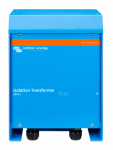
I am going to install a Victron galvanic isolation transformer. Installing appears straight forward - exept...
My 12V system uses the engine to ground negative. Can I hook up the 230V boat side earth from transformer to grounding point on engine? This is how I read the manual, but I am concerned there might be a difference if the 12V system is ground to engine or ground to through-hull plate. (I currently only have the engine as a ground option, and hope that is sufficient...).

Thanks ?
 
Last edited:
I am going to install a Victron galvanic isolation transformer. Installing appears straight forward - exept...
My 12V system uses the engine to ground negative. Can I hook up the 230V boat side earth from transformer to grounding point on engine? This is how I read the manual, but I am concerned there might be a difference if the 12V system is ground to engine or ground to through-hull plate. (I currently only have the engine as a ground option, and hope that is sufficient...).

Thanks ?

The transformer ground wire needs to be connected to the water. This can be the hull of a steel boat, the vessels ground plane or an anode, for example. The DC negative does not need to be connected in the same way, unless it is being used for an anode connection. The engine may be being used as a negative return for the DC circuits, but that is not necessarily a ground, unless the engine is also connected to an anode on the hull.

So, you can connect to the hull of a steel boat, the ground plane or an anode. You can make multiple connections to the same point, you can have a ground busbar, connecting all onboard grounding wires to one point. If the engine is thus connected, you can connect to the engine.

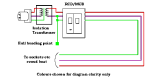
It should also be noted that the neutral and ground should be bonded at the isolation transformer. Follow the fitting instructions for your particular transformer. You need to check the operation of the RCD when the installation is complete, at the sockets etc, not by pressing the test button on the RCD.
 
Last edited:
The transformer ground wire needs to be connected to the water. This can be the hull of a steel boat, the vessels ground plane or an anode, for example. The DC negative does not need to be connected in the same way, unless it is being used for an anode connection.

It should also be noted that the neutral and ground should be bonded at the isolation transformer. Follow the fitting instructions for your particular transformer. You need to check the operation of the RCD when the installation is complete, at the sockets etc, not by pressing the test button on the RCD.
Thanks for a clear answer ? Then I will need to drill a hole in the hull to install a ground plane.
 
I am going to install a Victron galvanic isolation transformer. Installing appears straight forward - exept...
My 12V system uses the engine to ground negative. Can I hook up the 230V boat side earth from transformer to grounding point on engine? This is how I read the manual, but I am concerned there might be a difference if the 12V system is ground to engine or ground to through-hull plate. (I currently only have the engine as a ground option, and hope that is sufficient...).

Thanks ?
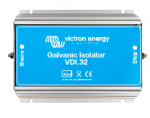
Do you actually mean an Isolation transformer or a Galvanic Isolator? Not much difference in earth connection as such but connections on units will be different. Sorry for question but some people get terminology confused.
 
Do you actually mean an Isolation transformer or a Galvanic Isolator? Not much difference in earth connection as such but connections on units will be different. Sorry for question but some people get terminology confused.

Sorry Alex, but there's no similarity in the connections of an isolation transformer and a galvanic isolator. The IT is wired as above, a GI just connects in line with the incoming shore power Earth.
 
Do you actually mean an Isolation transformer or a Galvanic Isolator? Not much difference in earth connection as such but connections on units will be different. Sorry for question but some people get terminology confused.
That's ok - much better to clarify what I mean ? I am to install a galvanic isolation transformer (27kg).
 
Last edited:
The RCD now requires the boat's systems to be grounded to water and on my Bavaria with saildrive this is done through a small button anode on a stud just behind the engine. Not connected to anything else so does not erode.

Glad you posted this, i have argued that this is a way to do it and have been told i'm wrong, even accused by one forum member of being a cowboy.
 
The RCD now requires the boat's systems to be grounded to water and on my Bavaria with saildrive this is done through a small button anode on a stud just behind the engine. Not connected to anything else so does not erode.
I know the outside of the hull much better than the inside ? Especially after removing all old anti fouling and re-priming - no anodes or studs anywhere. BTW Dufour from 2003; but does indeed have an RCD fitted.
 
The RCD now requires the boat's systems to be grounded to water and on my Bavaria with saildrive this is done through a small button anode on a stud just behind the engine. Not connected to anything else so does not erode.

What do you mean by RCD ?

Recreational Craft Directive or residual current device ?

.
 
I know the outside of the hull much better than the inside ? Especially after removing all old anti fouling and re-priming - no anodes or studs anywhere. BTW Dufour from 2003; but does indeed have an RCD fitted.
Recreational Craft Directive (rules for design and construction). Sorry for confusion. It was a suggestion to add a small stud type anode to ground your IT. My previous Bavaria (2001) did not have a ground - the requirement only came in around 2012.
 
Thanks ? As I cannot find a grounding point to water on my existing 230V system, the easiest and probably best is to install a through hull grounding plate.

No it isn't. Just fit a small button anode, as Tranona said. A Google search will turn loads up. As it isn't acting as an anode, it will last forever. Just don't connect anything else to it.
 
Top