You are using an out of date browser. It may not display this or other websites correctly.
You should upgrade or use an alternative browser.
You should upgrade or use an alternative browser.
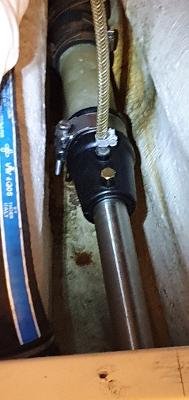
How long will this stern gland keep going.
- Thread starter KAM
- Start date

Refueler
Well-Known Member
Maybe Don't fix what aint broke ???
SimonD
Well-Known Member
Agreed. When it's broke it will start dripping a bit.Maybe Don't fix what aint broke ???

Tamar
Well-Known Member
Mines done 35k miles according to my plotter, I just repack it every time I run out of play.
Edit sorry different gland
Edit sorry different gland
Refueler
Well-Known Member
Mines done 35k miles according to my plotter, I just repack it every time I run out of play.
Edit sorry different gland
I was going to ask you what gland you have - but decided not to .... you solved that one !!
Refueler
Well-Known Member
Agreed. When it's broke it will start dripping a bit.
Unless the shaft fails and comes out of the gland - yep - the water in will be manageable ..... a simple bilge pump would more than handle it ...
rotrax
Well-Known Member
A clubmember has one 17 years old too. He has a spare on board, but has no intention to change it until it starts leaking.It's a Volvo fitted 17 years ago. It's done 1600 hours and never leaked a drop. Pretty impressive design. I carry a spare but just wondering when to think about changing it. I think Volvo give it 1000 hours.
The Volvo type seal is my prefered stern seal, never had a problem with one.

johnalison
Well-Known Member
I had one of those and it was impeccable for many years. I reckon it will see you out, though you may want an engineer's view. I was told when I bought mine that the heavily-worked ones in charter fleets would eventually start dripping but your hours are fairly modest.
earlybird
Well-Known Member
17 years for a critical elastomer component seems to be pushing it to me. PSS recommend a lot less for their bellows. What happens if the sleeve tears?
Last edited:
PetiteFleur
Well-Known Member
I fitted a Volvo one a few years ago, which started dripping after 7 yrs - I realised after I inspected it that I had fitted it incorrectly... Replaced with another similar (forget the brand) which was easier to lubricate as it had a little plug which makes it much easier now l0 yrs later not leaking.

Cerebus
N/A
I’d simply keep an eye on it and how supple it is or remains (and have an automatic bilge pump installed).
Tranona
Well-Known Member
Their bellows perform a different function as the seal of the faces relies on compression from the bellows. On the Volvo there is no pressure or strain on the moulded housing. The seal is made with integral lip seals and it is wear on these that limits life17 years for a critical elastomer component seems to be pushing it to me. PSS recommend a lot less for their bellows. What happens if the sleeve tears?

Plum
Well-Known Member
Replaced mine after 15 years, even though it was not leaking, for peace of mind.It's a Volvo fitted 17 years ago. It's done 1600 hours and never leaked a drop. Pretty impressive design. I carry a spare but just wondering when to think about changing it. I think Volvo give it 1000 hours.

Moodysailor
Well-Known Member
I'd suggest replacing it. The rubber breaks down over time and becomes more brittle, the seals are the most common failure, which would be a minor leak - if it splits then you have a bigger problem and not necessarily easy to fix in situ, and even if you could it would be major hassle.
I'd agree with the sentiment to leave it in different circumstances, but you have got pretty much double the recommended life out of it. Peace of mind for something as critical as this, for the cost is not worth it IMO.
I'd agree with the sentiment to leave it in different circumstances, but you have got pretty much double the recommended life out of it. Peace of mind for something as critical as this, for the cost is not worth it IMO.

Stemar
Well-Known Member
Am I right in thinking that, long before the rubber is ready to fail, it will change texture, becoming stiff? If so, I'd keep an eye on it, and change it at the next lift-out if that happens.
Because we're on a drying mooring, I'd fit the Obitrade version, as it has a vent, so doesn't have to be burped when it dries out.
Because we're on a drying mooring, I'd fit the Obitrade version, as it has a vent, so doesn't have to be burped when it dries out.
rotrax
Well-Known Member
These seals are extremely durable synthetic rubber material. One I changed, eight years old, was as good as new, perfect surface condition externally, still extremely flexible with very little wear on the sealing lips. I cannot envisage one failing due to material deteriation in less than 30 years. They are in a dark place, out of direct sunlight and UV.I'd suggest replacing it. The rubber breaks down over time and becomes more brittle, the seals are the most common failure, which would be a minor leak - if it splits then you have a bigger problem and not necessarily easy to fix in situ, and even if you could it would be major hassle.
I'd agree with the sentiment to leave it in different circumstances, but you have got pretty much double the recommended life out of it. Peace of mind for something as critical as this, for the cost is not worth it IMO.
Far better than the victorian 'Steam Engine' technology they replace.
Some are in long term use on canal boats, despite the naysayers suggesting they will not last due to grit and mud damaging the lips of the seals.
rogerthebodger
Well-Known Member
The important fact with regard to any lip type seal is that the shaft surface where the seal bears is that the shaft need to be very smooth to reduce ware of the lip on the seal
Plum
Well-Known Member
I still have the one I replaced when it was 15 years old so it is now 25 years old and no indication of deterioration/stiffness/brittlement/breaking down, etc. of the TPE or EPDM material at all.
Last edited:
Moodysailor
Well-Known Member
It's each person's decision to make, but all rubber components have a shelf life for a reason. It isn't just sunlight and UV that degrades the rubber, ozone, temperature cycles and all sorts of bilge chemicals will affect the life. yes, UV will accelerate the process, but it happens irrespective - it's inherent in the material.These seals are extremely durable synthetic rubber material. One I changed, eight years old, was as good as new, perfect surface condition externally, still extremely flexible with very little wear on the sealing lips. I cannot envisage one failing due to material deteriation in less than 30 years. They are in a dark place, out of direct sunlight and UV.
Far better than the victorian 'Steam Engine' technology they replace.
Some are in long term use on canal boats, despite the naysayers suggesting they will not last due to grit and mud damaging the lips of the seals.
My advice is based on best practice and experience given the OP's case. In yours, at 8 years, I would have probably advised to leave it a year or two and closely monitor it - I definitely would never advise waiting 30 years. IMO the big risk is that there is rarely an obvious sign that it will fail, perishing and hardening are not easy to see or check, especially in the depths of a bilge.
FWIW, I removed the "steam engine" technology from our boat as part of the refit. The section of (high quality) reinforced marine exhaust hose that was used between the stuffing gland and stern tube was cracking when I tried to remove it. Even though it looked fine externally, it was very degraded and had lost most of it's elasticity and flexibility. I don't know how old it is, but it's less than 30 years young. I will be replacing it with a VP seal

rotrax
Well-Known Member
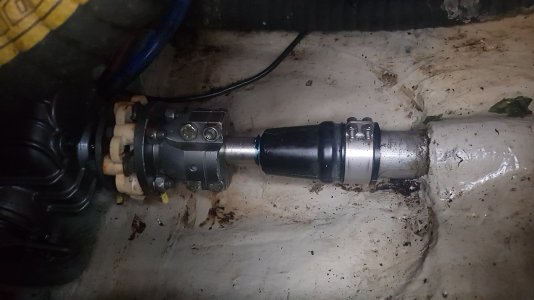
I replaced the 'Cuff' between the stern tube and the seal when I fitted our 'Orbitrade' version of the Volvo seal. It was still in very good condition, internally as well as externally. It was kept as a spare. I also moved the Orbitrade seal some eight inches further forward to improve access. Even Clyde the UrangUtang from 'Any Which Way But Loose' could not have reached the OE 'Squeeze a bit of string around the shaft' seal. Tools could not be placed on the adjusting nuts and turned either. I draw the line a knocking the bronze nuts round with a screwdriver!It's each person's decision to make, but all rubber components have a shelf life for a reason. It isn't just sunlight and UV that degrades the rubber, ozone, temperature cycles and all sorts of bilge chemicals will affect the life. yes, UV will accelerate the process, but it happens irrespective - it's inherent in the material.
My advice is based on best practice and experience given the OP's case. In yours, at 8 years, I would have probably advised to leave it a year or two and closely monitor it - I definitely would never advise waiting 30 years. IMO the big risk is that there is rarely an obvious sign that it will fail, perishing and hardening are not easy to see or check, especially in the depths of a bilge.
FWIW, I removed the "steam engine" technology from our boat as part of the refit. The section of (high quality) reinforced marine exhaust hose that was used between the stuffing gland and stern tube was cracking when I tried to remove it. Even though it looked fine externally, it was very degraded and had lost most of it's elasticity and flexibility. I don't know how old it is, but it's less than 30 years young. I will be replacing it with a VP seal
Bringing it forward also allowed a fresh bit of unworn shaft to be the sealing area, and made it very easy for the annual lube injection. That should make rogerthebodger happy!
I recently successfully fitted a 70 year old master cylinder repair kit to a Land Rover. The rubber bits were fine, wrapped in special protective paper and in a cardboard box they were just as I remember getting them from the stores when an apprentice.
I obviously made sure of their condition before installing.
I have a 70 year old competition motorcycle. It uses bands cut from old inner tubes as 'bungys' fitted about 25 years ago. They are still fine. Some red rubber Czech 'Barum' Speedway inner tube bands, made from natural rubber, not synthetic rubber, fitted at around the same time are crumbling.
I agree, one must be prudent, but as one of the 20th centuries origonal recyclers in my long time business as a Veteran, Vintage and Classic Motorcycle restorer I have considerable direct experience of rubber and synthetic rubber bits.
Pic shows the extended seal. Note how tight access was before it was moved-and the rusty splash marks where the OE Bronze seal was leaking.