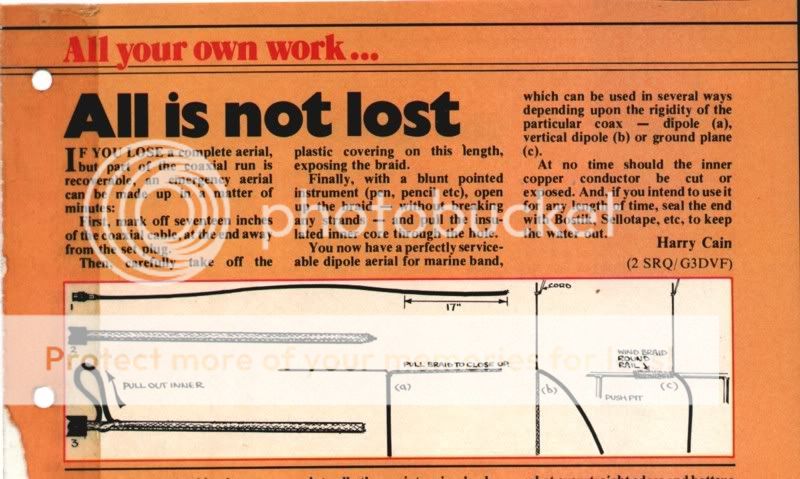
bear in mind that the frequency of the marine vhf band is different from that of the ham bands, so the ideal physical dimensions will be different from those shown. If you reduce all resonant dimensions by 9%, that should compensate. Or use 155 mc/s for calx.
So for a VHF antenna a quarter wave is about 17 inches. Marine VHF is vertically polarised which means the antenna should be vertical for best results.
I have had a lot of success indeed the main VHF antenna on the boat (on the pushpit) with an antenna that consists of 17 inches of the centre conductor of coax exposed. Screen removed. 17 inches of the screen from a larger coax cable is soldered to the top of the screen of the cable and this additional screen extends down the cable for 17 inches. It is very much like the above illustration except the second part of the antenna (not the cable) is extended around the feed cable. It is all pushed into a piece of plastic conduit pipe and clamped to the pushpit so that the bottom of the additional screen is well clear of the metal pushpit. The higher the better but at least 12 inches higher than the nearest metal. good listening olewill
For the ozzie forumites. This form of artificial gound plane (the additional screen works really well for 27 mhz HF the length being about 8ft which can be under the deck of a f/g boat. With a commercial CB coiled whip on top. olewill
For the UK boaties just ignore this. It is a form of marine radio based on CB radios from Japan/US so 27.88 mhz is distress and calling freq. Peculiar to Australia but is cheap and works well. But no good talking to ships etc just for pleasure boats. olewill