
High Moisture readings on deck in balsa core - advice please as to where the moisture has come from?

jimbo

Member
Joined
12 Jun 2004
Messages
37
Visit site
I have just had my 2014 Sun Odyssey 439 surveyed and all fine except very high moisture readings on the deck just in front of and behind the mast base, Both the Sovereign and Tramex meters recorded high levels so I believe they are real. The surveyor thought it was moisture migrating from the 4 mast step plate bolts (it is deck stepped) forward and aft into the balsa core. The mast plate is bolted on to a solid laminate pad which is slightly raised above the non slip coach roof and through to the compression post under deck, and was factory fitted. There are no signs of seepage via these bolts under the deck into the saloon. The simple solution is to un-step the mast, remove the plate and re-bed it with new sealant/caulk, but it seems to me unlikely that moisture could migrate sideways through the solid laminate in sufficient quantities to wet out the balsa core for and aft of the mast (port and starboard are ok). There is no other throuhh bolted deck gear in the vicinity of the mast and the gelcoat and non slip on the deck is in good condition. There is no blistering or sponginess, or dull sounds when tapped with a hammer, so it seems the core has not yet started to de-laminate or turn to mush.
Has anyone had a similar experience with a fairly modern production boat, and was re-bedding the mast plate the solution? Also, will the balsa core deck dry out of its own accord once the source of the water has been cut off?
Any other suggestions as to where the moisture has come from and how to deal with it welcome.
 
Are there cable glands or similar through the deck near the mast base? Or any other fitting screwed in? I own a Jeanneau and although they are built "down to a price" I doubt if the mast step base pad would actually be just bolted through a balsa section of the deck surface. That would be truly appalling construction.

If balsa core is wet just removing the source of water is most unlikely to dry it significantly. In my innocent youth I bought an early GRP boat with sodden balsa deck core. A previous idiot owner had screwed and bolted various fittings in without sealing them properly.
 
I have just had my 2014 Sun Odyssey 439 surveyed and all fine except very high moisture readings on the deck just in front of and behind the mast base, Both the Sovereign and Tramex meters recorded high levels so I believe they are real. The surveyor thought it was moisture migrating from the 4 mast step plate bolts (it is deck stepped) forward and aft into the balsa core. The mast plate is bolted on to a solid laminate pad which is slightly raised above the non slip coach roof and through to the compression post under deck, and was factory fitted. There are no signs of seepage via these bolts under the deck into the saloon. The simple solution is to un-step the mast, remove the plate and re-bed it with new sealant/caulk, but it seems to me unlikely that moisture could migrate sideways through the solid laminate in sufficient quantities to wet out the balsa core for and aft of the mast (port and starboard are ok). There is no other throuhh bolted deck gear in the vicinity of the mast and the gelcoat and non slip on the deck is in good condition. There is no blistering or sponginess, or dull sounds when tapped with a hammer, so it seems the core has not yet started to de-laminate or turn to mush.
Has anyone had a similar experience with a fairly modern production boat, and was re-bedding the mast plate the solution? Also, will the balsa core deck dry out of its own accord once the source of the water has been cut off?
Any other suggestions as to where the moisture has come from and how to deal with it welcome.
Water vapour will pass through polyester resin. If you stop liquid water getting into the core, assuming no rot occurs, the water will eventually turn to vapour and escape.
 
If your right about the construction it is difficult, as you say, to see how moisture can get through a solid laminate pad, bit are you sure it is not a glassed in marine ply pad pr some other solid material?
As post 2 suggests, I would be looking at the through deck cable glands first.

It is unlikely the moisture will just dry out, it will probably wick along the grain of the balsa core to other areas.

It’s a bit of a shocker that a 10’ish yr old boat is already having issues, it normally takes a long time for the core to get wet enough to be an issue.
 
Are there cable glands or similar through the deck near the mast base? Or any other fitting screwed in? I own a Jeanneau and although they are built "down to a price" I doubt if the mast step base pad would actually be just bolted through a balsa section of the deck surface. That would be truly appalling construction.

If balsa core is wet just removing the source of water is most unlikely to dry it significantly. In my innocent youth I bought an early GRP boat with sodden balsa deck core. A previous idiot owner had screwed and bolted various fittings in without sealing them properly.
Thanks for your reply. There are no cable glands or similar going through the deck near the mast. All the cables go through a short tube in the centre of the mast plate which was filled with sealant to stop drips. I have dug out the sealant and it is reasonably dry above and you can see about 12mm of solid laminate on which the mast plate sits - this is also dry. This is why I have my doubts that the mast plate is the culprit.
 
Water vapour will pass through polyester resin. If you stop liquid water getting into the core, assuming no rot occurs, the water will eventually turn to vapour and escape.
Thanks - thats encouraging
If your right about the construction it is difficult, as you say, to see how moisture can get through a solid laminate pad, bit are you sure it is not a glassed in marine ply pad pr some other solid material?
As post 2 suggests, I would be looking at the through deck cable glands first.

It is unlikely the moisture will just dry out, it will probably wick along the grain of the balsa core to other areas.

It’s a bit of a shocker that a 10’ish yr old boat is already having issues, it normally takes a long time for the core to get wet enough to be an issue.
All the cables come down through a hole in the centre of the mast plate (which has an upward pointing flange which creates a small tube) and this was plugged with sealant to stop drips which I have now dug out. It was reasonably dry above and you can see the hole in the deck itself, about 5cm in diameter, and that is solid laminate - and also dry. There are no through deck cable glands or other fittings in the vicinity. I have asked Jeanneau to confirm that the pad is solid laminate.
 
If it was mine I would not trust the moisture meter readings until I had verified them by drilling some 25mm diameter holes with a holesaw in the area identified by the surveyor through just the grp skin, preferably from within the cabin, so you can scoop out a sample of the balsa.
 
Just how high exactly were these moisture readings? And did the surveyor say whether he calibrated the meters before starting? Although it's kinda relative as the readings are higher in comparison to the rest of the deck, so something is happening.
And very randomly, check there are no areas of liquid below decks underneath the high readings, like a toilet bowl/wet bilge/waterpipe or tank etc etc :). Unlikely but not unknown, though your surveyor probably already did,
 
Thanks for your reply. There are no cable glands or similar going through the deck near the mast. All the cables go through a short tube in the centre of the mast plate which was filled with sealant to stop drips. I have dug out the sealant and it is reasonably dry above and you can see about 12mm of solid laminate on which the mast plate sits - this is also dry. This is why I have my doubts that the mast plate is the culprit.
How is the tube itself isolated from the core and plate? From your description (I have no knowledge of this boat) water will run down to, then overflow the sealant filled tube and run down its outside, then perhaps track across the top of the mast plate to the core at its periphery, but probably you can discount that, from your observations.

Re dealing with it, in one of the recent threads on this topic there was a link to the use of a modified microwave oven to cook wet deck core in situ to dry it out, so that might be a non-invasive possibility. I would want to be quite a long way away when it turned on though.

(I have found a few functional old microwave ovens discarded by the side of the road in Edinburgh, but that was a long time ago.)
 
Just how high exactly were these moisture readings? And did the surveyor say whether he calibrated the meters before starting? Although it's kinda relative as the readings are higher in comparison to the rest of the deck, so something is happening.
And very randomly, check there are no areas of liquid below decks underneath the high readings, like a toilet bowl/wet bilge/waterpipe or tank etc etc :). Unlikely but not unknown, though your surveyor probably already did,
Be worth checking a few other boats of the same marque, in case of constructional artefacts.
 
Surprised if the mast step had no reinforcing ply or metal pad. If it has no core then it must be thinner than the surrounding cored deck. 12mm sounds thick but a cored deck could easily be twice that thickness (mine is).

I would want to know what is going on structurally beneath the mast step - solid grp or a pad of some sort. I'm surprised if the fitting and bolts could leak but not show any corrosion or seepage in the cabin, unless there was an easy (core) passage from the bolt channels.

Can you withdraw a bolt with the mast in situ and establish the structure?
 
Just how high exactly were these moisture readings? And did the surveyor say whether he calibrated the meters before starting? Although it's kinda relative as the readings are higher in comparison to the rest of the deck, so something is happening.
And very randomly, check there are no areas of liquid below decks underneath the high readings, like a toilet bowl/wet bilge/waterpipe or tank etc etc :). Unlikely but not unknown, though your surveyor probably already did,
The readings from on deck from in front of the master were about 50-55 on the Sovereign meter (an area about 30 x 30cm), and from below about 30cm aft of the mast 65-70, for perhaps a slightly smaller area. The readings on dec from behind the mast were acceptable, about 20-25. The rest of the deck and hull was dry with readings in the 10-15 range. There was nothing below deck that we could see that could give these readings.
 
Be worth checking a few other boats of the same marque, in case of constructional artefacts.
I have asked on t he Jeanneau Owners forum and so far no-one has said they have experienced similar. I have also approached Jeanneau in case they know of a potential cause of this moisture
 
Surprised if the mast step had no reinforcing ply or metal pad. If it has no core then it must be thinner than the surrounding cored deck. 12mm sounds thick but a cored deck could easily be twice that thickness (mine is).

I would want to know what is going on structurally beneath the mast step - solid grp or a pad of some sort. I'm surprised if the fitting and bolts could leak but not show any corrosion or seepage in the cabin, unless there was an easy (core) passage from the bolt channels.

Can you withdraw a bolt with the mast in situ and establish the structure?
The mast step is, as far as I can see from the hole cut through for the cables, solid grp/laminate. I will try to draw the bolts one by one to see if there is anything obvious but as you say, how is any water going to get from these holes to the balsa core?
How is the tube itself isolated from the core and plate? From your description (I have no knowledge of this boat) water will run down to, then overflow the sealant filled tube and run down its outside, then perhaps track across the top of the mast plate to the core at its periphery, but probably you can discount that, from your observations.

Re dealing with it, in one of the recent threads on this topic there was a link to the use of a modified microwave oven to cook wet deck core in situ to dry it out, so that might be a non-invasive possibility. I would want to be quite a long way away when it turned on though.

(I have found a few functional old microwave ovens discarded by the side of the road in Edinburgh, but that was a long time ago.)

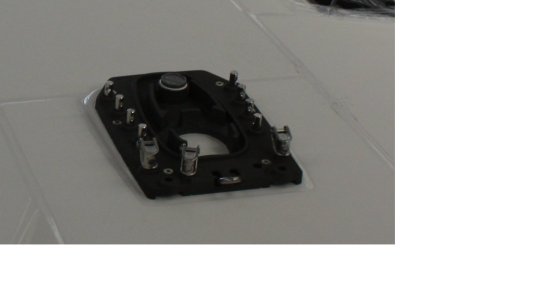
The plate sits on top of the gelcoat covered pad (which I believe is about 12mm of solid grp/laminate). I have attached a photo from commissioning that shows the deign more clearly than I can describe.
The tube can be seen (with a temporary grey cap on it) and is an integral part of the mast plate.
deck plate picture.jpg
 
Top