Heat exchanger and Oil cooler advice

No fins should ever come in contact with either Porto. If raw water doesnt touch it, dont put descaler on it.

The tubes have a slight peen. Any solder is behind that and is NOT exposed to raw water hence should not be exposed to descaler either. Even that which is, is a very slow reaction unless in elevated temps to 80C (thats fact)

I cant take at face value your point that Rydlyme has special additives to protect metal without neutralising the HCL content. This I must relegate to internet lore unless you can furbish any manufacturer literature that at least hints to that fact. I have scoured and found no such claim
 
Bruce K
Those photos you post three posts above are they before treatment, after treatment with HCL or after Rydlyme?

HCL at 10% by volume only used until effervescent bubbling stops (under an hour's exposure, typically 20 min or so). Then I take the rod to it and find the deposits are softenned to a sludge rather than a hard mass.

Edit: Before and after shots as labelled
 
Last edited:
I cant take at face value your point that Rydlyme has special additives to protect metal without neutralising the HCL content. This I must relegate to internet lore unless you can furbish any manufacturer literature that at least hints to that fact. I have scoured and found no such claim
who said “ neutralising the HCL “ ? ....Your words not mine .

I said its a given they both dissolve scale etc

The spec sheet you earlier found only shows the haz ingredients , correctly the HCL nobodies denying that .

The stuff iam I’m on about is “ proprietary “

Go to post #4 then #7 .
“Inhibitors “ a better word .
Rydlyme raw water system cleaning - SailNet Community
 
I went to post 4 and post 7 in your link and all they do is confirm everything I'm saying. Your post 7 chap even inverted comma'ed "inhibitors" in bold.
Internet lore and BS abound. When the manufacturer makes no claim as such how honestly can you believe the "lore" . Rydlyme was developed to clean food manufacturing plants, i.e. non toxic, biodegradeable detergents etc added. No quibble. The rest as far as I can tell w.r.t. inhibitors is one fraud making a claim and 100 plus repeating it to create a legend.

Show me the evidence. Even a disguised claim of as much from the manufacturer. Then I will eat humble pie and take video evidence of such to send you.
 
What really gripes me is Rydlyme's "Rule of thumb" in their directions and instructions and then the fact that everybody takes comfort that because it has Marine in the name they can use it without caution or fear and it must ipso defacto be superaltive to the detriment of every other solution out there. It's like arguing that Y10 is better than Oxalic acid because it has a the claim Original Fibreglass Cleaner emblazoned on its side
 
Rydlyme Marine Descaler

says it’s ok with aluminium as long as it’s not at 100% and left for ages. got buffers too ?

I dropped my entire intercooler insert in a 50/50 mix Last year. Done so in error but all was fine. You’ve got to play to the lowest common denominator (I.e. numpties like me)

look Forward to the YouTube video ???

I think we all need the wind to drop so we can going boating rather than talk about bloody engine maintenance ???
 
I have looked at this several times and in my view Bruce K is correct.

The product 10% HCL with wetting and penetrating agents.

Others in the industry have tried to understand how Rydlyme can claim to be non hazardous and failed. These are chemists who have every incentive to say " hay my product is harmless as well and can be flushed in the the water supply"

http://www.industrialchemtex.com/do...Exploding the Myth of Safe Scale Cleaners.pdf

The test they show on their site is a shell dissolving on someones hand. Their own sheet says it is irritating to skin and wear gloves.

They have clearly made a decent living of branding HCL, as have many people like the bottled water industry. Good luck to them, but it does not make it true!

They sell weak HCL. They then say dilute it 50% - so it is 5% HCL. In a Spanish supermarket 25% HCL is E1 for 1.5 litres. It is cheaper than bottled water and used as a day to day cleaner for toilets etc.

What it brings to the party is a known concentration, instructions and something that is sufficiently weak it will not cause too much damage to people or anything else. The tradeoff is it takes time - and price.

The case here is absolutely nothing to do with brick cleaner. The whole exchanger was put in a bucket of acid. Would Rydlyme do it. I will wager £100 that it would do the same. The main thing is that it would have done it slower as it is much weaker.

If people want to buy Rydlyme then that is up to them. Personally I am happy with my Spanish supermarket HCL. HCL is dangerous - very - especially in high concentrations. The fumes and if you touch it your skin turns to soap. I dilute mine 50./50 - so that is 12.5% - which is roughly 2.5 times the strength of Rydlyme. Nothing to do with the metals ( the periodic table will tell you that) but next time I do it I should probably dilute to a lower level and leave it for longer - simply for my own safety. I wear gloves and goggles and I would suggest anyone using Rydlyme uses the same.

Acids are not to be messed with, but in this case the HCL had nothing to do with the outcome.

If anyone has any Rydlyme and fancies putting up a video of some thin Ali being immersed in it - lets see the results please.
 
Enormous respect to you VP but....

So if Jon had dumped his intercooler into a bucket of Rydlyme he'd be safe. I very much doubt it see tech specs below.
You wont go into technical reasons why Rydlyme is safer - nor do the manufacturers.
Rydlym is diluted hydrocloric acid based with various added non toxic detergents too aid cleaning and be safe with potable water. Will it do a better job than straight diluted hydrochloric acid. Undoubtedly. Does it make it safer to use on the materials it will be in contact with? No, see tech sheet below.
Does HCL attack Pb Sn solder. HCL is an electrolyte so some plating can occur and it could use the Pb or Sn as a parent material. Is it a fast or violent reaction. No. If it did Rydlym would be just as harmful bearing in mind it has the same HCL concentrations as brick cleaner proposed.

As with everything the blind use of both products can be damaging and Rydlyme most certainly isn't idiot proof even if it gives the user some sort of comfort factor but without corroborating evidence in support it's hard to analyse your argument for validity as to why Rydlyme yes, brick cleaner no, other than you have always stood by your argument but I certainly have never seen you provide any evidence in support.
The Bostik Cementone spec sheet is posted earlier and is in the same concentration as Rydlyme and further more is used to clean metalic tools, also with a set of instructions to do so.

https://www.apexengineeringproducts.com/wp-content/uploads/2019/12/RYDLYME-SDS-112020.pdf
https://www.apexengineeringproducts...ds/2019/12/Rydlyme_Specifications_19JUN18.pdf


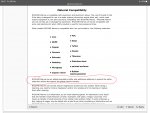
12. RYDLYME does not corrode, erode, attack, oxidize or have other deleterious affects on virtually any metal or materials commonly found in water systems such as:
COPPER BRASS BRONZE IRON RUBBER STEEL TITANIUM GLASS
or other materials found in heat exchangers, vacuum pumps, evaporators, condensers, and other water operated equipment when used as directed.


13. An exception to number 12 is that when using 100% concentrated (non-diluted) RYDLYME on magnesium, zinc, and/or aluminum, it could oxidize or pit. Furthermore, polished chrome and some alloys of stainless steel could become discolored. It is not recommended for use with concentrated solutions. The rule of thumb is that if the alloy is designed for use in a water system (aluminum engine block, aluminum mold, etc.), the alloy should be compatible with the RYDLYME solution. Otherwise, it is recommended that the RYDLYME be diluted 50% or more with water when cleaning.
Hi Bruce , like Bandit I do this for a living, I’ve done endless 41/42/43/44/300 intercooler stacks in Rydelime , no problem with the fins at all , just a jet wash after and a blow with the airline to disperse the water .
As we know Brick cleaner is for cleaning bricks otherwise it would be a lot more expensive .
Your coolers look good and I hope you used Rydelime , if you didn’t you could certainly loose the integrity of the vessel when the solder breaks down .
 
Rydlyme Marine Descaler

says it’s ok with aluminium as long as it’s not at 100% and left for ages. got buffers too ?

I dropped my entire intercooler insert in a 50/50 mix Last year. Done so in error but all was fine. You’ve got to play to the lowest common denominator (I.e. numpties like me)

look Forward to the YouTube video ???

I think we all need the wind to drop so we can going boating rather than talk about bloody engine maintenance ???

Firstly the eat humble pie was for evidence that Rydlyme contains additives that protect metals, these "inhibitors"

Secondly Ali block engines that carry RAW water are almost certainly an alloy in the 5xxx range and not the same as those on fins which I believe would be 7xxx and have zinc as the primary alloy. Lastly you didn't leave your intercooler in the bucket long enough. I agree the length of time and concentration play an effective role but I can assure you had you repeated the same in an effective 2.5% solution of HCL you also would have got away with dropping it in. Lessening the solution slows the reaction it doesn't inhibit it. Rydlyme diluted to 2.5% and run for it's 4 hours is linear to 10% diluted and run for less than an hour
 
I have emailed the U.K. distributor and base US manufacturer this ...

Rydlime marine - does it contain inhibitors to prevent the HCL etching the metal tube stacks ? If so how does t work .I realise the HCL dissolves the marine carbonates etc , but what about the metals micro surface integrity.

Naturally now we have started this , it’s in everybody’s interests to get to the bottom .
Not bothered about seeing a vid of Bruce stuffing a pie in his face btw :)

More factual for future ref , piece of mind ( either way ) ......and safe boating .
 
Firstly the eat humble pie was for evidence that Rydlyme contains additives that protect metals, these "inhibitors"

Secondly Ali block engines that carry RAW water are almost certainly an alloy in the 5xxx range and not the same as those on fins which I believe would be 7xxx and have zinc as the primary alloy. Lastly you didn't leave your intercooler in the bucket long enough. I agree the length of time and concentration play an effective role but I can assure you had you repeated the same in an effective 2.5% solution of HCL you also would have got away with dropping it in. Lessening the solution slows the reaction it doesn't inhibit it. Rydlyme diluted to 2.5% and run for it's 4 hours is linear to 10% diluted and run for less than an hour

I says that in the link.....protect softer materials.....that’s my take anyway.

its been an interesting thread anyway. Be boring if everyone agree!

7B7D63B2-4E0C-4F47-83D2-6A71BE473585.png
 
For you sir, on a technicality, I shall consume humble pie, even as I now go back to my old professor demanding a refund on my education. 4 years of geology and metallurgy out done by dark magic. Your video is in the making and I shall deliver it via pm shortly.
 
I have looked at this several times and in my view Bruce K is correct.

The product 10% HCL with wetting and penetrating agents.

Others in the industry have tried to understand how Rydlyme can claim to be non hazardous and failed. These are chemists who have every incentive to say " hay my product is harmless as well and can be flushed in the the water supply"

http://www.industrialchemtex.com/docarchive/news/Water Treatment News 29-Exploding the Myth of Safe Scale Cleaners.pdf

The test they show on their site is a shell dissolving on someones hand. Their own sheet says it is irritating to skin and wear gloves.

They have clearly made a decent living of branding HCL, as have many people like the bottled water industry. Good luck to them, but it does not make it true!

They sell weak HCL. They then say dilute it 50% - so it is 5% HCL. In a Spanish supermarket 25% HCL is E1 for 1.5 litres. It is cheaper than bottled water and used as a day to day cleaner for toilets etc.

What it brings to the party is a known concentration, instructions and something that is sufficiently weak it will not cause too much damage to people or anything else. The tradeoff is it takes time - and price.

The case here is absolutely nothing to do with brick cleaner. The whole exchanger was put in a bucket of acid. Would Rydlyme do it. I will wager £100 that it would do the same. The main thing is that it would have done it slower as it is much weaker.

If people want to buy Rydlyme then that is up to them. Personally I am happy with my Spanish supermarket HCL. HCL is dangerous - very - especially in high concentrations. The fumes and if you touch it your skin turns to soap. I dilute mine 50./50 - so that is 12.5% - which is roughly 2.5 times the strength of Rydlyme. Nothing to do with the metals ( the periodic table will tell you that) but next time I do it I should probably dilute to a lower level and leave it for longer - simply for my own safety. I wear gloves and goggles and I would suggest anyone using Rydlyme uses the same.

Acids are not to be messed with, but in this case the HCL had nothing to do with the outcome.

If anyone has any Rydlyme and fancies putting up a video of some thin Ali being immersed in it - lets see the results please.
The article in the link ^^^ blabs on about bio safety ......misses the debate point that supermarket HCL ( suitably diluted) is just the same as Rydlyme.

We are interested in tube stacks integrity , both solder if applicable and surface etching of a what was a smooth surface . I,am I the camp with the pros on here Rydlyme is safer ........going further I think it has help “ inhibitors “ .


edit was typing this while Farsco did post #111 .....otherwise wouldn’t have bothered .
 
Last edited:
00E5EF6B-EE98-4110-9E3A-17AEB2DAC77A.jpeg

From what I understand the term “ proprietary “ in the US state the parent Co registered the stuff , means it’s a industrial secret .
That’s why in the HAZ docs you only see the hazard HCL 5-9 %ww , legally that’s only what they have to disclose .

That’s what’s happened here and other threads ...folks have hung there hat on the US HAZ chem doc thinking it’s the same format as say a U.K. dare I say it EU type approval / CE doc ....which is absolute in detail .

Any one for US imported Chicken post 2020 :)
 

Other threads that may be of interest

Top