
Has engine soundproofing improved in the last 30 years?

A naturally aspirated 4 stroke engine will presumably require half of its displacement multiplied by its maximum revs per minute.

So in the case of dankilb's Beta 50, which is 2,197cc and revs to 2,800rpm -
2.197 litres /2 x 2800 = 3, 076 litres per minute

= 51 litres per second.

That's a lot of air for your intake to handle without it being restricted. Lining an existing intake with sound insulation might not be such a good idea in all cases.

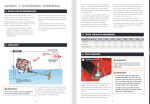
Directly from BETA.

I note gladly that BETA also advocate (as @geem ) for an extraction fan
1612516999078.png
 
Directly from BETA.

I note gladly that BETA also advocate (as @geem ) for an extraction fan

View attachment 108613
All excellent advise. Installing the fresh air inlet to discharge over the alternator would be the perfect solution. Alternators suffer terribly in hot engine rooms. Over heated winding are a common problem. Reducing air temperature will help this issue
 
A lot of people dont realise how important it is the fill the tiniest gaps between the sound insulation. If you imagine you are building a swimming pool you won't go far wrong.

Whilst I don't doubt that filling the gaps has value (only if you can do that without restricting the combustion air intake), lining the main areas alone, without filling the gaps, should make a significant difference.

I think the swimming pool is a false analogy. You are not trying to keep the air in, you are trying to deaden the air vibrations, and, especially, deaden the resonance of the panels surrounding the engine (which will transmit the sound to outside the compartment). Having good, thick and heavy sound insulation on the largest panels will make a lot of difference even if there are gaps.

If you think of a crowd in a large box shaped room, with a varnished wooden floor, bare plastered walls and ceiling, and a lot of bare window glass, the noise will be deafening. Carpet the floor, pull curtains across the windows, put acoustic tiles in the ceiling, and soft furnishings around the room, and it will be much quieter.

Someone above mentioned that 'sound doesn't go round corners'. That's not strictly true. For high frequencies the sound is very directional, but can be either well reflected off shiny surfaces, or easily absorbed by soft material. Lower frequencies are not very directional: they go round corners easily and are less easily attenuated. They also contain enough energy to set panels vibrating (and perhaps even resonating and amplifying certain frequencies) which radiates the noise from the other side of the panel.

A change in direction in, for example, an intake port will help attenuate high frequencies if the port is lined with thin insulation, but you would need very thick and heavy material to absorb the lower frequencies, which may unduly restrict the air flow. If the cross sectional area of an intake duct is marginal, note also that the air will flow more readily around curves than corners.

On the lower tech side of things, my latest boat had carpet panels laid loosely on on the cockpit and wheelhouse floor, underneath which is the engine. On my first long-ish trip I left the carpet in the car to save space and weight. The carpet is decadently luxurious, I thought, but who really needs it? I was then plagued by the wooden floor panels (which are just laid into their positions) vibrating loudly in sympathy with the engine noise, and as winds were light we were having to do a lot of motoring. I ended up with a diverse collection of the Reeds' Almanac, another book and some heavy tool, strategically placed in certain critical positions around the floor panels to stop them rattling! I now don't leave the carpet behind, and am planning to put some sound insulation on the underside of the floor panels, and some thin foam under the edges where they are supported.
 
When I bought new sound sheets for the Bav and carefully laid them in, actually on top of the low calibre proofing standard at the time, I was acutely aware there was nothing I could do about direct sound transmission through to the hull beneath the engine. Still haven't seen a solution that cocoons sound the way I once desired.
But a "top and sides box "is worth the effort and cost, combined with the S le9g which has its own rubber isolation skirt of course.

Reducing noise in the upper register is probably most beneficial to normal hearing. Low frequency is much tougher to inhibit

I once test sailed a lovely Catalina yacht and my cheque book was half way open when the engine was engaged. End of story. Sound proofing is so important that any reputable builder should lay it on thick. Sham noise proofing panels, the egg crate format, need replacement to advantage.

PWG
 
Whilst I don't doubt that filling the gaps has value (only if you can do that without restricting the combustion air intake), lining the main areas alone, without filling the gaps, should make a significant difference.

I think the swimming pool is a false analogy. You are not trying to keep the air in, you are trying to deaden the air vibrations, and, especially, deaden the resonance of the panels surrounding the engine (which will transmit the sound to outside the compartment). Having good, thick and heavy sound insulation on the largest panels will make a lot of difference even if there are gaps.

If you think of a crowd in a large box shaped room, with a varnished wooden floor, bare plastered walls and ceiling, and a lot of bare window glass, the noise will be deafening. Carpet the floor, pull curtains across the windows, put acoustic tiles in the ceiling, and soft furnishings around the room, and it will be much quieter.

Someone above mentioned that 'sound doesn't go round corners'. That's not strictly true. For high frequencies the sound is very directional, but can be either well reflected off shiny surfaces, or easily absorbed by soft material. Lower frequencies are not very directional: they go round corners easily and are less easily attenuated. They also contain enough energy to set panels vibrating (and perhaps even resonating and amplifying certain frequencies) which radiates the noise from the other side of the panel.

A change in direction in, for example, an intake port will help attenuate high frequencies if the port is lined with thin insulation, but you would need very thick and heavy material to absorb the lower frequencies, which may unduly restrict the air flow. If the cross sectional area of an intake duct is marginal, note also that the air will flow more readily around curves than corners.

On the lower tech side of things, my latest boat had carpet panels laid loosely on on the cockpit and wheelhouse floor, underneath which is the engine. On my first long-ish trip I left the carpet in the car to save space and weight. The carpet is decadently luxurious, I thought, but who really needs it? I was then plagued by the wooden floor panels (which are just laid into their positions) vibrating loudly in sympathy with the engine noise, and as winds were light we were having to do a lot of motoring. I ended up with a diverse collection of the Reeds' Almanac, another book and some heavy tool, strategically placed in certain critical positions around the floor panels to stop them rattling! I now don't leave the carpet behind, and am planning to put some sound insulation on the underside of the floor panels, and some thin foam under the edges where they are supported.
The swimming pool analogy is used by professional sound engineers who spend a lifetime dealing with noise engineering. You are raising all sorts issues that I has assumed any sensible person would have dealt with before getting to the issue of correctly installing sound proofing media. Fixing floorboards so they do not resonate being one of them. Adding mass to any vibrating panels, etc
Sound goes around curved corners in circular ducts almost unimpeded. In square ducting the high frequency noise will be reflected back down where it came from in 90deg square bends. As mentioned previously, a couple of 90deg bends back to back is quite effective. We use to design labyrinth silencers like this years ago
If you ever have a look at the inside of a commercially available sound attenuator you will see they are normally made of mineral wool held in place by a thin cloth to stop fibre migration and then all held in place by a perforated plate. These silencers are easily manufactured out of thin plywood if you want to build your own. My engine room walls and ceiling were made this way. It is very effective for all frequency ranges assuming you use 3/4 or 1” ply with 2” mineral wool encased in aluminium perf plate.
Once you have treated all your engine room walls and air intake path your only source of noise will then be all the little gaps you have missed between the acoustic panelling?
 
Top