GRP & gel-coat damage - is it a DIY fix for a first-timer?

aidancoughlan

Well-Known Member
Joined
24 Jun 2002
Messages
548
Location
co.Wicklow, Ireland
Visit site
A colleague is buying a GRP-covered trailer, and knowing I have a GRP boat asked me about repairs. Unfortunately, I've never done any GRP or gelcoat repairs myself.

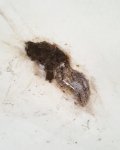
The one he is looking at has the following damage. Could anyone tell from these photos if it looks like a DIY-job for someone handy, or needs professional work ?
I understand he has done some kind of GRP/exoxy repairs before (on a rally car), but has never worked with gelcoat.

Apologies for the slightly non-boaty slant, but it is GRP + Gelcoat...

 

Attachments

  • image3.jpeg
    image3.jpeg
    165.8 KB · Views: 48
  • image2.jpeg
    image2.jpeg
    240.7 KB · Views: 51
  • image1.jpeg
    image1.jpeg
    80.3 KB · Views: 49
I would def do it.

It might take skill to make it invisible, but a first-time Muppet can do an 80 pc good job that the average passer-by won't notice.
 
Easy enough to fill and smooth the holes but getting a colour match with the undamaged surroundings can be tricky. Even in white.

Crack on if that doesn't matter.
 
It's worth taking time to make a reasonable stab at a colour match.
Compare with some pure white. Is it greyish, blue ish creamish by comparison?
Get some pale grey/blue/cream as appropriate and compare 10% 50% or whatever.
For instance my last boat, the chips in the deck were hard to see when filled with 50/50 white and Laser Vela Grey.
You can get a little kit of pigments to tint white with.

Or get some stickers for it? :-)
 
Absolutely!

I don't know why everyone seems to be obsessed with epoxy!
Possibly because the WEST books and online info are very good, lots of technique info which is valid across all resins (and some that isn't?).
 
As others have said, it's matching the colour that is the trickiest part. I worked as a colour matcher for seven years with sophisticated instruments to help but still find it difficult.

The problem is that there are no pure colours, so red for example will have a little blue or yellow in it and will also darken. The method is to take some white gelcoat, add tiny amounts of pigments and mix with a pallette knife on a white tile. Don't add catalyst until the match is as good as you will get.
 
As others have said, it's matching the colour that is the trickiest part. I worked as a colour matcher for seven years with sophisticated instruments to help but still find it difficult.

The problem is that there are no pure colours, so red for example will have a little blue or yellow in it and will also darken. The method is to take some white gelcoat, add tiny amounts of pigments and mix with a pallette knife on a white tile. Don't add catalyst until the match is as good as you will get.
Then expect the colour of the new to change over the next year or two...

But it doesn't matter, nor does the epoxy/polyester argument for a small., non-structural repair. As long as your offer is reduced by the cost of a repair, just do it!
 
Have you guys thought about gel-coating over epoxy or doesn't it matter??

Polyester or Epoxy Resin?
By Don Casey
What kind of resin you should select depends on the job you are doing. Polyester resin is excellent for fiberglass lay-up — building a boat, for example. Polyester laminating resin doesn't fully cure while exposed to air, so when it is used for lay-up, every application joins to the previous one on a molecular level. You end up with what is essentially a single substance encapsulating multiple layers of glass fabric.
However, when you are doing a repair, you need for the resin to also function as an adhesive — gluing the patch to the surrounding surface. Polyester is an adequate adhesive but not as good as epoxy. As a general rule, the tensile strength of a polyester bond will be around 20 percent weaker than the same bond made with epoxy. That makes epoxy resin usually the best choice for fiberglass repair work.
There are a couple of exceptions. When the repair will be finished with gelcoat, the laminating or filling needs to be done with polyester. While epoxy adheres tenaciously to cured polyester, the reverse is not true, so the bond between an epoxy repair and an overcoat of polyester gelcoat will not be strong. Use polyester for repairs that will be gelcoated.
 
Last edited:
For the colour get a RAL code booklet. Match the colour with those on the booklet and Oder gel coat in the closest RAL code colour. Should be good enough.
 
Surely the easy thing is to do a structural repair with a smooth finish then add some vinyl or even painted graphics to hide the repair?
 
Surely the easy thing is to do a structural repair with a smooth finish then add some vinyl or even painted graphics to hide the repair?
That's always an option, but it's an opportunity to learn to do the job better.
It's quite satisfying if it comes out well and not a disaster if it's so-so.
It's not hard to do a job that doesn't notice from across the street.
With care and practice, not too hard to do better than that.

Not sure if anyone's mentioned it, but it's always worth asking the maker what the gelcoat colour actually is, my old white-ish laser was actually 'Dawn Grey', buying a small pot of gelcoat from Rooster gave a darn good match despite the boat being about 20 years old. Once I'd polished the rest of the boat that is!
 
Wow, many thanks for all the replies folks. Much appreciated. Sorry I didn't get back here before now, I haven;t been very active on the forum and my notifications are not working for some reason.
Will pass this on to him - especially the links, and advice on gel coat matching. I suspect he will be happy with an 80% job, and since I believe it's it's for a Rally Car spares trailer, adding stickers are an option.

It's whetted my appetite too - I've got a few knocks on gelcoat on the transom which would be nice to tackle while the boat is out of the water.
 
Top