
GPS . ......on a tablet

But it is used in cars and works with Google maps so why shouldn't Navionics use it on boats? :unsure:

Richard

The difference between the device movements due to you holding it while seated in a car and the device movements due to the movement of the car are quite large, you probably can't move it more than a meter in any direction but the car, even travelling at 30mph, is moving it at 13 metres per second, so your movements will have little effect and are lost in the general positioning noise anyway.

On a sailing boat you could walk from the bow to the stern, say 12m, at boat speed, and for the duration of your walk, the device is stationary according to GPS, but the boat isn't. It is travelling forward at constant speed.

Developers of Navionics software seem to have taken this into account and they seem to have done it by applying a damping algorithm to vessel heading and speed ... simply to try and eliminate the effects of device movement on board. It would also be daft to use the device compass - otherwise every time you took your phone near your engines or anchor locker, you would momentarily mess up your heading.

PS: This is one of the advantages of using an external GPS as opposed to the internal device GPS. It is usually in a fixed position and doesn't get carried around the boat.
 
I use my Hudl 2 when driving the sailing club committee boat and find it great for motoring to race mark locations that I may not pick out visually. The |Hudl draws a heading line out from the bow once moving and then I just keep that heading line on the destinaltion. It is quite steady and when it shows the buoy longside yes it is . If you have done passage planing and marked out a route on your Navionics then no problem using the same facility to keep on course. I still have a steering compass when required.

I have had Android compass Apps and waved the Tablet around like like a whirling Dirvish to calibrate it but it is very difficult to get the compass set up to the extent a Compass adjuster would even call acceptable and a Deviation Chrt woould look like a drunken snake.

Navionics is great once you get into it particularly things like the share facility with course planning and the ability to put your own markers such as club marks on the charts.
 
The difference between the device movements due to you holding it while seated in a car and the device movements due to the movement of the car are quite large, you probably can't move it more than a meter in any direction but the car, even travelling at 30mph, is moving it at 13 metres per second, so your movements will have little effect and are lost in the general positioning noise anyway.

On a sailing boat you could walk from the bow to the stern, say 12m, at boat speed, and for the duration of your walk, the device is stationary according to GPS, but the boat isn't. It is travelling forward at constant speed.

Developers of Navionics software seem to have taken this into account and they seem to have done it by applying a damping algorithm to vessel heading and speed ... simply to try and eliminate the effects of device movement on board. It would also be daft to use the device compass - otherwise every time you took your phone near your engines or anchor locker, you would momentarily mess up your heading.

PS: This is one of the advantages of using an external GPS as opposed to the internal device GPS. It is usually in a fixed position and doesn't get carried around the boat.
I'm not holding it while seated in the car, it's in a cradle just like it could be on a boat, or at least stationary on the helm station. Why would I want to be walking around with it?

Richard :unsure:
 
I'm not holding it while seated in the car, it's in a cradle just like it could be on a boat, or at least stationary on the helm station. Why would I want to be walking around with it?

Richard :unsure:

In cars, the trend is to allow the user to leave the device in their pocket, briefcase, or to dump it on a wireless charging pad where it can be picked up by passengers or slide around. The device display is exported to the vehicle screen using Apple Carplay or Android Auto. Cradles are a bit old hat.

Charter boats tend not to have cradles for devices and the charter skipper is a major customer of Navionics - every charterer I know has Navionics and uses it. Last year I chartered in Scotland and there were 5 devices on board running Navionics - all getting carried around in pockets or being used all around the boat.

You have a specific use-case where you have provided cradles in your own cars and boats, but the software developers cannot make the assumption that the device will remain in a fixed position and orientation when it is being used.
 
Very confusing thread.

Heading- the direction you or your boat or your sensor is pointing.

Track/course over the ground - your direction of travel.

A-gps - assisted GPS, the GPS receiver is assisted by localisation through known wifi transmitters and may also receive ephemeris data to speed up first fix. It still works without any wifi signal.
 
- otherwise every time you took your phone near your engines or anchor locker, you would momentarily mess up your heading.
Bearing in mind heading & COG are very different things, if navionics actually could display both like openpcn ( assuming it can't) then a weird heading wouldn't be the end of the world .

Google didn't come up with any reference to navionics using nmea sentences HDM, HDG or HDT nmea sentences so seems unlikely that it can display more than COG in RMC,
Unless someone knows different. Someone with navionics could check, easiest way to have a play would be in signalk.
 
Bearing in mind heading & COG are very different things, if navionics actually could display both like openpcn ( assuming it can't) then a weird heading wouldn't be the end of the world .

Google didn't come up with any reference to navionics using nmea sentences HDM, HDG or HDT nmea sentences so seems unlikely that it can display more than COG in RMC,
Unless someone knows different. Someone with navionics could check, easiest way to have a play would be in signalk.
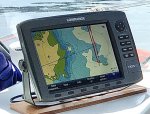
If your talking about Navionics on plotters rather than tablets it can. The pic shows me drift fishing, the plotter is set to course up, the blue line shows my actual heading (boat likes to drift sideways :mad:). Crap quality photo as I had to crop it to death to be allowed to upload it ?
C84B76B4-254F-4429-BB28-9A14258E2D16.jpeg
 
If your talking about Navionics on plotters rather than tablets it can. The pic shows me drift fishing, the plotter is set to course up, the blue line shows my actual heading (boat likes to drift sideways :mad:). Crap quality photo as I had to crop it to death to be allowed to upload it ?
Was thinking a tablets - so on the pic is your boat's bow pointing slightly south of west? You must have an electronic compass feeding the plotter with nmea?
 
Was thinking a tablets - so on the pic is your boat's bow pointing slightly south of west? You must have an electronic compass feeding the plotter with nmea?
I’m actually drifting ~NE so yes, boat is pointing ~NW. GS25 electronic compass just visible behind the MFD. The thread seemed to have drifted towards Navionics’ capabilities so just demonstrating it can differentiate between heading and COG.
 
I’m actually drifting ~NE so yes, boat is pointing ~NW. GS25 electronic compass just visible behind the MFD. The thread seemed to have drifted towards Navionics’ capabilities so just demonstrating it can differentiate between heading and COG.
(y) NW, course up, -forgot instantly people use that despite reading the words ;

Don't think the tablet version can though, anyone know if it does accept heading nmea0183 sentences over wifi or internally from an inbuilt compass?
 
Bearing in mind heading & COG are very different things, if navionics actually could display both like openpcn ( assuming it can't) then a weird heading wouldn't be the end of the world .

Google didn't come up with any reference to navionics using nmea sentences HDM, HDG or HDT nmea sentences so seems unlikely that it can display more than COG in RMC,
Unless someone knows different. Someone with navionics could check, easiest way to have a play would be in signalk.

Had an interesting issue at work relating to the vehicle emergency call algorithms and the data sent to the emergency services.

The historical trajectory of the vehicle and its speed was decided on as the best solution to predict heading info, as when the s**t hits the fan, it's the physics that determine the probable location of the vehicle rather than any heading info relating to the direction it was pointing in at any point in time. Mobile devices are similar, but you are looking to predict the trajectory of the boat (heading) from the combined trajectories of the device and the boat.

Navionics help has some interesting info ....

Mobile: GPS Technology
Mobile: GPS & Cellular Data Usage

I would imagine Navionics is using the location APIs available in Google Play services rather than the NMEA info directly from the aGPS Hardware.
 
Someone with navionics could check, easiest way to have a play would be in signalk.

Stop with the SignalK already! We don't have to involve megabytes of JSON for this :-) I just wrote a little script outputting
$HCHDG,270,,,,*59
..once a second, piping it through kplex into the tcp server running on the pi I'm currently doing some AIS testing with. I have Navionics hooked up to that and plotting AIS and when I started feeding in heading information.......the little icon stayed pointing North. So I offer this as further confirmation that Navionics does not do anything with heading info.
 
Depending on what instruments you have aboard one of the quark boxes which sends instrument data over WiFi could be more useful as an investment, getting depth data into navionics is quite useful. It would also let you send gps from an onboard device as well as ais data if you had a receiver.
 
I use my Hudl 2 when driving the sailing club committee boat and find it great for motoring to race mark locations that I may not pick out visually. The |Hudl draws a heading line out from the bow once moving and then I just keep that heading line on the destinaltion. It is quite steady and when it shows the buoy longside yes it is . If you have done passage planing and marked out a route on your Navionics then no problem using the same facility to keep on course. I still have a steering compass when required.

I have had Android compass Apps and waved the Tablet around like like a whirling Dirvish to calibrate it but it is very difficult to get the compass set up to the extent a Compass adjuster would even call acceptable and a Deviation Chrt woould look like a drunken snake.

Navionics is great once you get into it particularly things like the share facility with course planning and the ability to put your own markers such as club marks on the charts.
Good stuff thanks

I'm finding Navionics very useful for rehearsing the route in my head and anticipating issues. There are so many wrecks ?

Drawing less than a metre helps I think ?
 
Further from the "who needs instruments when you have the man page for strftime(3)" department...

I wrote a script to create RMC sentences with my current GPS location and feed them to Navionics as above. I gave myself a COG of 270 and SOG of 0.1kn.

With location services available to Navionics on the ipad, the icon remained pointing north.
Turning off Navionics access to location services in the ipad setting bingo! pointer flips to the west.
Keeping COG at 270 but changing SOG to 0.0...pointer heads north again.
 
In cars, the trend is to allow the user to leave the device in their pocket, briefcase, or to dump it on a wireless charging pad where it can be picked up by passengers or slide around. The device display is exported to the vehicle screen using Apple Carplay or Android Auto. Cradles are a bit old hat.

Charter boats tend not to have cradles for devices and the charter skipper is a major customer of Navionics - every charterer I know has Navionics and uses it. Last year I chartered in Scotland and there were 5 devices on board running Navionics - all getting carried around in pockets or being used all around the boat.

You have a specific use-case where you have provided cradles in your own cars and boats, but the software developers cannot make the assumption that the device will remain in a fixed position and orientation when it is being used.
Nope, we'll have to agree to disagree. I think that Navionics have not implemented compass heading because they haven't yet got around to it, probably because many tablets don't have it, or don't have it in a way which Navionics can easily access it.

Google have done it, certainly on Android as you would expect, as more phones can use it. Watch this space for Navionics, I say. :)

Richard
 
Top