Glueing teak lipping to teak faced ply?

I used pu glue externally and around 2 years all the joints started failing, just as the many youtube vids filmed and tested by proper craftsman show. For people to say it's b*ollox without any backup their opinion is more b*llox. I think I would trust a highly skilled carpenters tests than someone's non skilled opinion.
Have you actually done any long grain to long grain or long grain to end grain tests using various glues multiple times for accurate test results? I guess not as you still think pu glue works well outside.
The youtube carpenter spent two months using quality test equipment to get his results that even he was surprised by.
Watch any video showing shear strengths of various glues and you will see pu is consistently one of the weakest but super glue outperformed epoxy
 
PU glue is easily removed before set with Nail Varnish Remover ...... go ask the wife to borrow her bottle !!

You can use a sharp knife while its still gooey ... not hard ... for large blobs ... then Acetone (Nail Varnish Remover) for the smear residue.

If its hard - it can be cut / sanded / sawn.

Agree with all those but, on veneered panels, I don't want to be using acetone or sanding too much. Easy enough to remove from glueline with a sharp chisel and cabinet scraper when dry but taping reduces the glue area.
 
................

Also Sikaflex is a PU sealant that I have also used to glue wood to wood where the gaps are bigger than should be.


Yes, PU wood adhesives were always said to be gap filling which they are but the "fill" has about as much strength as expanded polystyrene. What it needs is a good join line and hard clamping.
I have just fixed a short scarph with it on my toerail, it will be interesting to see how this pretty poor joint fairs in the light of the shock and horror revelations on 'tinternet, outlined above. In it's favour it did take the Woodskin finish rather well.
.
 
Yes, PU wood adhesives were always said to be gap filling which they are but the "fill" has about as much strength as expanded polystyrene. What it needs is a good join line and hard clamping.
I have just fixed a short scarph with it on my toerail, it will be interesting to see how this pretty poor joint fairs in the light of the shock and horror revelations on 'tinternet, outlined above. In it's favour it did take the Woodskin finish rather well.
.


The strength of cure PU is dependent on the amount water you use in its use. Raw PU without spraying water on other surface will have greatest density and strength.

Join two bits of softwood dowel and leave a small gap for raw PU to fill ..... those dowels will break long before the PU fails ...

A good joint is always best ... and the clamping is not so much for forcing joint together but to hold shape and to resist PU expansion ...

I think you will be pleasantly surprised with your toerail. I have a couple of joints in mine that I used PU in years ago ... still fine.
 
Holy carp! I thought this would be a relatively simple question! I should have known better ?

I have found some evo-stik weatherproof in the garage.. I think I used that on teak lipping before, about 6 years ago, and that is all still firmly bonded. My oppo has been muttering about something called titebond 3.
 
I used pu glue externally and around 2 years all the joints started failing, just as the many youtube vids filmed and tested by proper craftsman show. For people to say it's b*ollox without any backup their opinion is more b*llox. I think I would trust a highly skilled carpenters tests than someone's non skilled opinion.
Have you actually done any long grain to long grain or long grain to end grain tests using various glues multiple times for accurate test results? I guess not as you still think pu glue works well outside.
The youtube carpenter spent two months using quality test equipment to get his results that even he was surprised by.
Watch any video showing shear strengths of various glues and you will see pu is consistently one of the weakest but super glue outperformed epoxy

I can only quote from personal experience. I've done countless long to long and end to long grain glue ups with Pu over the years, just checked a ledged and braced gate I did 9 years ago and no glue failures in that. My solid sapele cockpit table with centre section edge jointed from 3 pieces is still fine after being exposed to 5 years Algarve direct sun.

For every Youtuber with a point of view, there are plenty of others with the opposite.
 
I would use epoxy because:

  1. It gives a very strong bond.
  2. I have successfully used it for fixing iroko edging strips to plywood cockpit hatches and it has lasted well and was easy to do.
  3. No tight clamping is needed; in fact it is undesirable to squeeze the epoxy right out. Clamping is only required to keep the components in place until the epoxy begins to set.
  4. It is easy to use a filler powder to get a good colour match.
  5. I have loads of it in my garage!
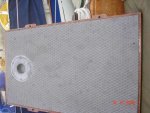
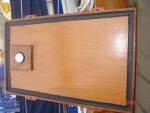
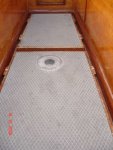
Cockpit hatches (6).jpg

Cockpit hatches (5).jpg

Cockpit hatches .jpg


But PU adhesives are very good and there are many glueing jobs I have carried out my boat where I used epoxy but I would have used a PU glue if it had been available at the time
 
I used pu glue externally and around 2 years all the joints started failing, just as the many youtube vids filmed and tested by proper craftsman show. For people to say it's b*ollox without any backup their opinion is more b*llox. I think I would trust a highly skilled carpenters tests than someone's non skilled opinion.
Have you actually done any long grain to long grain or long grain to end grain tests using various glues multiple times for accurate test results? I guess not as you still think pu glue works well outside.
The youtube carpenter spent two months using quality test equipment to get his results that even he was surprised by.
Watch any video showing shear strengths of various glues and you will see pu is consistently one of the weakest but super glue outperformed epoxy

I say b******x from personal experience ..... not just opinion .... as are so many others on this thread.

On my bench I have various PVA based ,,, Epoxies laminating and jointing .... solvent and solventless contact adhesives ..... PU glue ... Polyesters ... in fact I would need to get down ad read all labels to list. over 55 years of serious model making ... as well as repairing items on boats .... have shown me which glues to choose for which job ... and funny enough the two that have come up most wide use - PU and Epoxy.

Its easy for Youtubers to claim to be experts ...

Carpenters still use Cowgut glue on some jobs ... very few I know would even look at using Epoxy ... and even less so CA. They learn to joint by creating correct joints and then choosing glue to suit.

Sorry that your PU failed ...... obviously you dd something wrong -= interested to know what use you actually used it on ... others contrary to your view - have posted actual items glued with it ...
 
This is the good part about forums when there is no definitive answer but lots of opinions and Web links. It holds a lot of practical experience and learning :)
I still don't agree with you though. Lol.
 
Top