About Time
Well-Known Member
I have an issue that I should like to share with the exports in here.
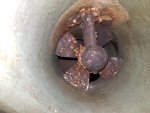
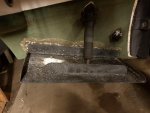
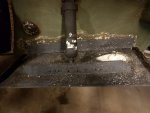
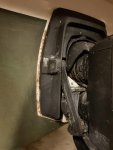
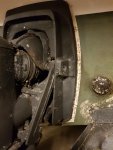
I have a Windy that is coppercoated (R) back in 2012. The is the true Coppercoat - non conductive. I got the boat right after the Coopercoat was applied and I have always used zincs and no issues. Last year I installed a galvanic isolator and changed from zinc to alloy anodes on all my underwater fittings/ drives as I have the boat moored in brackish water (salinity 28 - 33). I was told this would be the perfect protection for my boat. However after getting her into the barn for the winter this last weekend I see that there is some stange deposit next to the trimtabs and the thruster in front. Please see attached photo of one of the trim tabs. Same photo show one of the drive legs and here there is no deposit around. The only difference as I can see is that the Coppercoat is not painted up against the drive leg while this is the case with the thruster and trimtabs .... anyway. Important to mention is that none of the underwater fittings or drives seem to have corroded.
After speaking to my anode supplier he says that he sometime sees "pitting around the Coppercoat but usually in fresh water only".... and suggest that the isolator for sure is a good idea and that he will remain on alloy anodes. Nothing else to add.
Then I turned to Coppercoat and they said that it seems as cathodic chalking and that I should just remove this by acid/ cillit bang. He adds "From the pictures provided, I suspect that you are experiencing a process known as “cathodic chalking”. This is particularly likely to occur when skin fittings or trim tabs etc are bonded to an anode and if the boat is left static for some time. The skin fitting will be a cathode in the circuit that is set up and the end result is deposition of calcium from the water around the fitting. The affected area will gradually grow with time. It happens on any antifouling but is usually only visible on a hard surface (such as Coppercoat) as conventional eroding anti-fouls will break away (removing the chalking deposit in the process). Here's probably not really anything you can do to stop this from happening - all you can do is to clean it off as/when/if it does occur."
Of course I am concerned... If it is only deposit of calcium in the water and I can clean it off it is fine.... Just another work ... but since I installed the galvanic isolator and changed to alloy I of course get afraid that I have done something wrong that over time will cause a true corrosion.
I hope someone can assist me. Thanks.
I have a Windy that is coppercoated (R) back in 2012. The is the true Coppercoat - non conductive. I got the boat right after the Coopercoat was applied and I have always used zincs and no issues. Last year I installed a galvanic isolator and changed from zinc to alloy anodes on all my underwater fittings/ drives as I have the boat moored in brackish water (salinity 28 - 33). I was told this would be the perfect protection for my boat. However after getting her into the barn for the winter this last weekend I see that there is some stange deposit next to the trimtabs and the thruster in front. Please see attached photo of one of the trim tabs. Same photo show one of the drive legs and here there is no deposit around. The only difference as I can see is that the Coppercoat is not painted up against the drive leg while this is the case with the thruster and trimtabs .... anyway. Important to mention is that none of the underwater fittings or drives seem to have corroded.
After speaking to my anode supplier he says that he sometime sees "pitting around the Coppercoat but usually in fresh water only".... and suggest that the isolator for sure is a good idea and that he will remain on alloy anodes. Nothing else to add.
Then I turned to Coppercoat and they said that it seems as cathodic chalking and that I should just remove this by acid/ cillit bang. He adds "From the pictures provided, I suspect that you are experiencing a process known as “cathodic chalking”. This is particularly likely to occur when skin fittings or trim tabs etc are bonded to an anode and if the boat is left static for some time. The skin fitting will be a cathode in the circuit that is set up and the end result is deposition of calcium from the water around the fitting. The affected area will gradually grow with time. It happens on any antifouling but is usually only visible on a hard surface (such as Coppercoat) as conventional eroding anti-fouls will break away (removing the chalking deposit in the process). Here's probably not really anything you can do to stop this from happening - all you can do is to clean it off as/when/if it does occur."
Of course I am concerned... If it is only deposit of calcium in the water and I can clean it off it is fine.... Just another work
... but since I installed the galvanic isolator and changed to alloy I of course get afraid that I have done something wrong that over time will cause a true corrosion. I hope someone can assist me. Thanks.