Galley worktop materials

Sandy Bottom

Well-Known Member
Joined
11 Nov 2013
Messages
2,627
Visit site
Galley refit this year - is Corian still the bees or has the world once again moved on without me?
Needs to be a light colour (white/off white) and have deep sinks.
 
Corian is great for designer kitchens, but if you want or need a "working" kitchen then SS is tops. For a boat, Corian is expensive overkill. I prefer lightweight materials which for me has always resulted in marine ply, faced if possible with a SS drainer/sink. These are becoming difficult to get in appropriate sizes thanks to the caravan industry going over to preformed worktops.
 
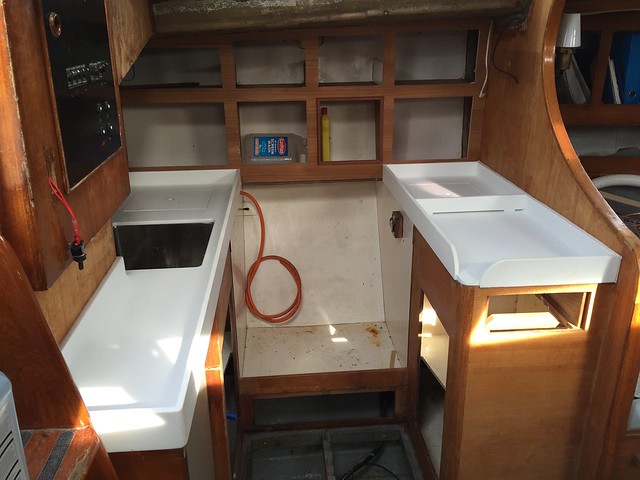
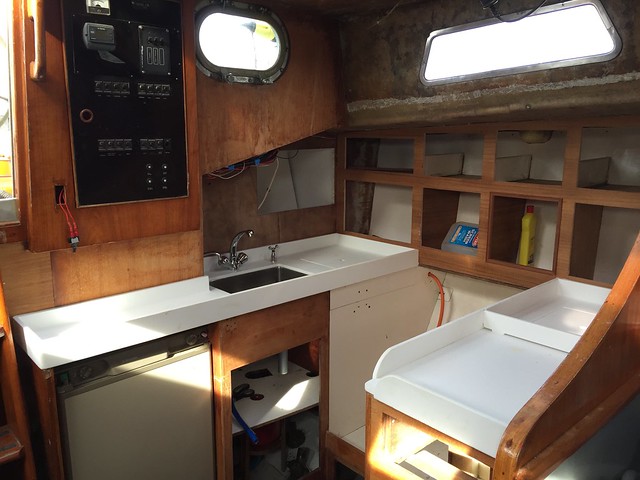
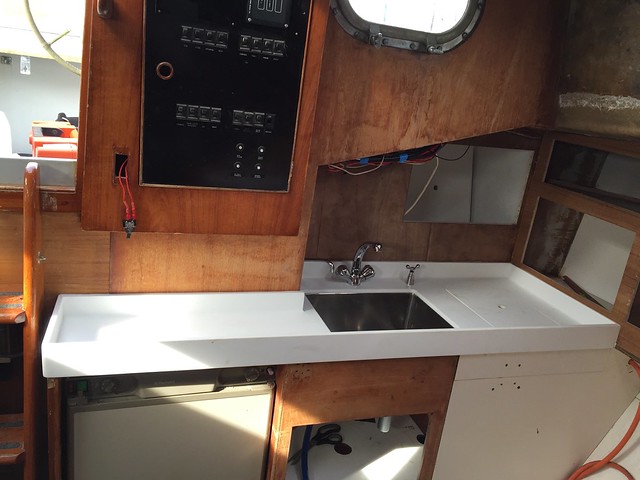
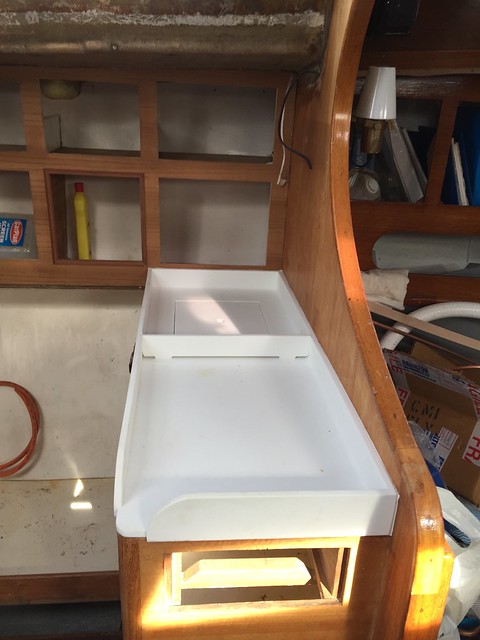
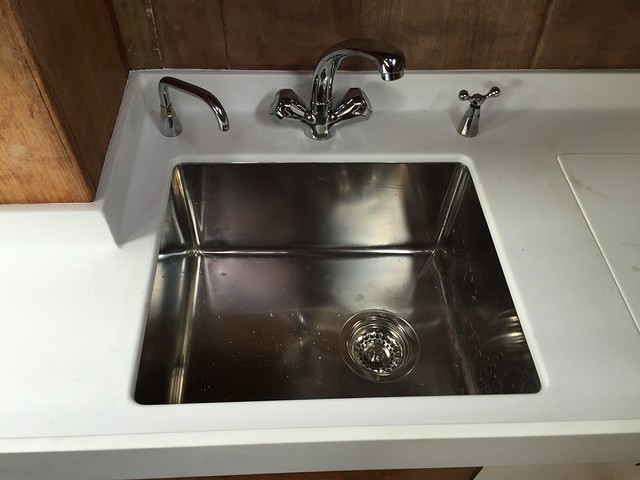
I have had Corian in two working kitchens (specified for the current kitchen upgrade) and find it is a fantastic material, but not as a moulded in sink, use stainless for sinks. Clean, rounded corners, no dirt traps, easy to keep clean, easy to polish out scratches, tough, heat resistant, hygenic. As a result of my use at home I have fitted it to my galley. I made templates and the fitter built it each side in one piece, moulded fiddles, removable fiddles, moulded edging to cover carcass edge, lids for the sink and under cover lockers. Relatively speaking it is not that heavy really. Mine is glued in place. I will try and post a picture later but I am on a slow connection. There are other materials similar to Corian of course. As my galley is quite visible I did not want stainless, personal preference. Cost my £500, fitter did it as interesting evening job, using offcuts, all in one mouldings, no joins, just dropped in.
 
Last edited by a moderator:
One material would be the laminate covered ply they use for lining shoewrs and wet rooms. I used an offcut from a bathroom shop to replace a small worktop in the heads. It works like ply and apparently does not need treatment of cut edges though i varnished mine on the boat and silicone in my house. As an epoxy like resin is used it is stiffer than most ply.
 
Corian Galley Tops Fitted To A Rival 41C

All pictures are hosted on Flickr at https://www.flickr.com

The Corian tops, dry fitted after final sanding to remove tight areas.

19239554233_f740ca94c8_z.jpg


19237840644_ca7224e86e_z.jpg


19673922459_296bb79777_z.jpg


19672460290_bff997ea8d_z.jpg


19672425210_4763deae84_z.jpg


I originally had two galley sinks but they were both small in size, shallowish and not really useful as a sink on a yacht. I therefore installed a larger single sink that was deeper and incorporated a locker in the area where the second sink was.
 
Try Apollo Quicktops.

Similar in appearance to Corian, except the price, but you would still need a 'sit in a hole' sink.

The fitter glued into the Corian special clamps for clamping the sink underneath instead of the clamps that came with the sink. I had enough space to fit the sink when the galley top was in the workshop and then lift the whole assembly over and into the carcass. The sink could have been assembled with the galley top in place but you would need a mirror and long screw driver for forward and aft clamps.

Another thing to consider is any protuberances on the cupboards such as 'd' shaped mouldings will get in the way. The sink top could not be slid in from front to back as the galley port side is tapered slightly, so we had to lift it at and angle, put it over the carcass, manipulate the sink horizontally and then lower straight down. The fitter stated that if he had to cut it in two to fit, the glue join could have been made invisible but as his power tools could not fit because of the bulkheads, then some blending by hand would be required.

The tops look to be moulded in one piece but each edge, fiddle is a separate section of Corian glued on, with fillets on the inside to make cleaning easy, not one join is visible. Just for interest sake the fitter has one router for every blade style he uses and about 4 belt sanders with different grades of sandpaper; productivity reasons, he doesn't faff about changing blades on a job.
 
Top