Fridge using lots of amps in the hot weather

Don't be swayed by comments which aren't relevant to your needs. Water cooling can be a big advantage in locations where the ambient air temperature is very high. However, for UK use, the benefit is questionable. If you compare the specs of these two similarly sized Isotherm systems, you'll see that the average consumption of the water-cooled unit is higher!

Compact Air-cooled Refrigeration System - 2501 - 200 L max | KENT Marine Equipment
Compact Water-cooled Refrigeration System - 2505 - 200 L max | KENT Marine Equipment
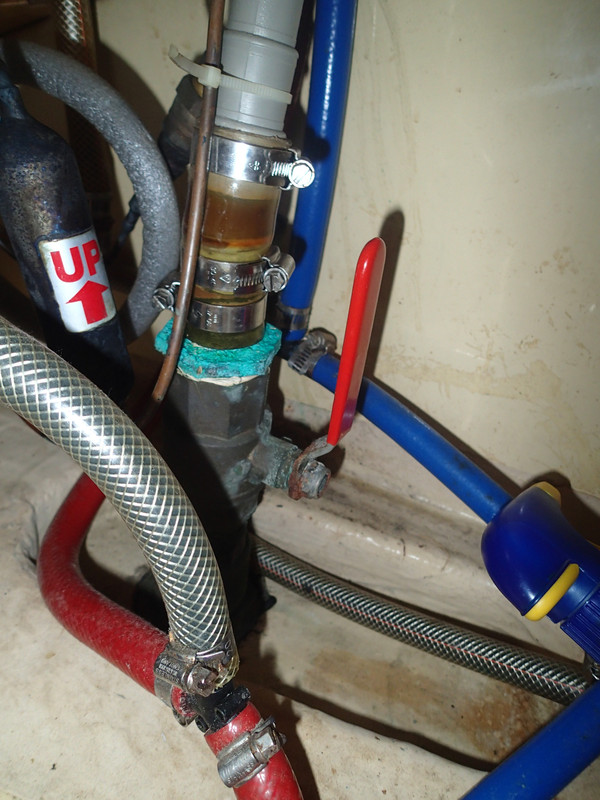
That is a huge unit by our standards, 200 litres. For boats of the size we are mostly talking about 100 litres would be a big fridge, mine is 65 litres. In these cases the condenser is normally passive, a copper nickel tube wrapped around a skin fitting. A friend also with a Sadler 34 has one of this type, his overall electrical consumption is very low. Water temperature was 28C when these were taken, air temperature in the galley area about 35C


That is a huge unit by our standards, 200 litres. For boats of the size we are mostly talking about 100 litres would be a big fridge, mine is 65 litres. In these cases the condenser is normally passive, a copper nickel tube wrapped around a skin fitting. A friend also with a Sadler 34 has one of this type, his overall electrical consumption is very low. Water temperature was 28C when these were taken, air temperature in the galley area about 35C

The 200 litres is a maximum fridge capacity for those particular compressor systems. They can be installed in smaller volume fridges. You appear to have the Isotherm SP system (the "self-pumping" type which has a condenser coil incorporated in a skin fitting). The smallest version of this is the 2051, suitable for fridges up to 125 litres, so if your fridge is 65 litres you're just demonstrating what I've said. The corresponding air-cooled version for up to 125 litres is the 2001. The manufacturer quotes average power consumption of 0.6A for the water-cooled version, and 0.65A for the air-cooled version.

Compact Air-cooled Refrigeration System - 2001 - 125 L max | KENT Marine Equipment
Compact Water-cooled Refrigeration System - 2051 - 125 L max | KENT Marine Equipment

Your fridge is a holdover plate evaporator, which is usually supplied with the ASU (auto speed up) control box, which maximises efficiency. If yours is the 3251 the power consumption is quoted at an average of only 0.35A, which is impressively low although the specs talk about a minimum voltage of 13.2v. Regardless, it's a great fridge system, but it does cost 2.5x the cost of the air-cooled system!

Compact Water-cooled Refrigeration System - 3251 - 125 L max | KENT Marine Equipment
 
My previous boat I purchased 2 danfoss compressor from the South African Danfoss agent.

The condensers for both the fridge and freezer was made using a tube in a tube hear exchanger.

The freezer evaporator was small bore tube silver soldered to the case of the chest/top opening freezer

The fridge eveperator is one of these.

b75d49d3-1dc3-4f95-c7fd-3f9cc4eabbb0.jpg


The fittings were then all brazed together and gassed as a normal fridge/freezer would be/

My current boat I purchased a frigoboat kit again using a danfoss compressor, Keel cooler and evaporator as above.

This was pre gassed so I just fitted the components and connected it all up

Vyv's idea of brazing copper tube to a skin fitting would remove the need for a pump to pup water through the tube in tube heat exchanger

The only real cost for a PBO would be the compresser all the rest can me made by a practical artisan or engineer
 
The 200 litres is a maximum fridge capacity for those particular compressor systems. They can be installed in smaller volume fridges. You appear to have the Isotherm SP system (the "self-pumping" type which has a condenser coil incorporated in a skin fitting). The smallest version of this is the 2051, suitable for fridges up to 125 litres, so if your fridge is 65 litres you're just demonstrating what I've said. The corresponding air-cooled version for up to 125 litres is the 2001. The manufacturer quotes average power consumption of 0.6A for the water-cooled version, and 0.65A for the air-cooled version.

Compact Air-cooled Refrigeration System - 2001 - 125 L max | KENT Marine Equipment
Compact Water-cooled Refrigeration System - 2051 - 125 L max | KENT Marine Equipment

Your fridge is a holdover plate evaporator, which is usually supplied with the ASU (auto speed up) control box, which maximises efficiency. If yours is the 3251 the power consumption is quoted at an average of only 0.35A, which is impressively low although the specs talk about a minimum voltage of 13.2v. Regardless, it's a great fridge system, but it does cost 2.5x the cost of the air-cooled system!

Compact Water-cooled Refrigeration System - 3251 - 125 L max | KENT Marine Equipment
It isn't mine. Mine is a custom once-through pumped unit built by my son.
 
I was once advised that the fridges they sell in Saudi Arabia have better compressors, But in the UK manufacturers use the weakest compressor they can get a way with.
 
I had similar problems on my Moody, and replaced the compressor, cold plate, increased the insulation and reduced the capacity. A few months ago, I replaced all by a Dometic Coolfreeze camping fridge/freezer. Despite having very little insulation, it is vastly superior to the built in fridge with a fraction of the power draw. Totally recommended, even in a Greek summer, it really is superb.
 
I was once advised that the fridges they sell in Saudi Arabia have better compressors, But in the UK manufacturers use the weakest compressor they can get a way with.
I think you may be getting confused with the capacity of a compressor sold for use in the high ambient areas such as the middle east, one for the uk would have smaller capacity and most likely a small condenser, there are not actually many compressor manufactures and a big proportion are likely to be danfoss compressors just like domestic fridges
 
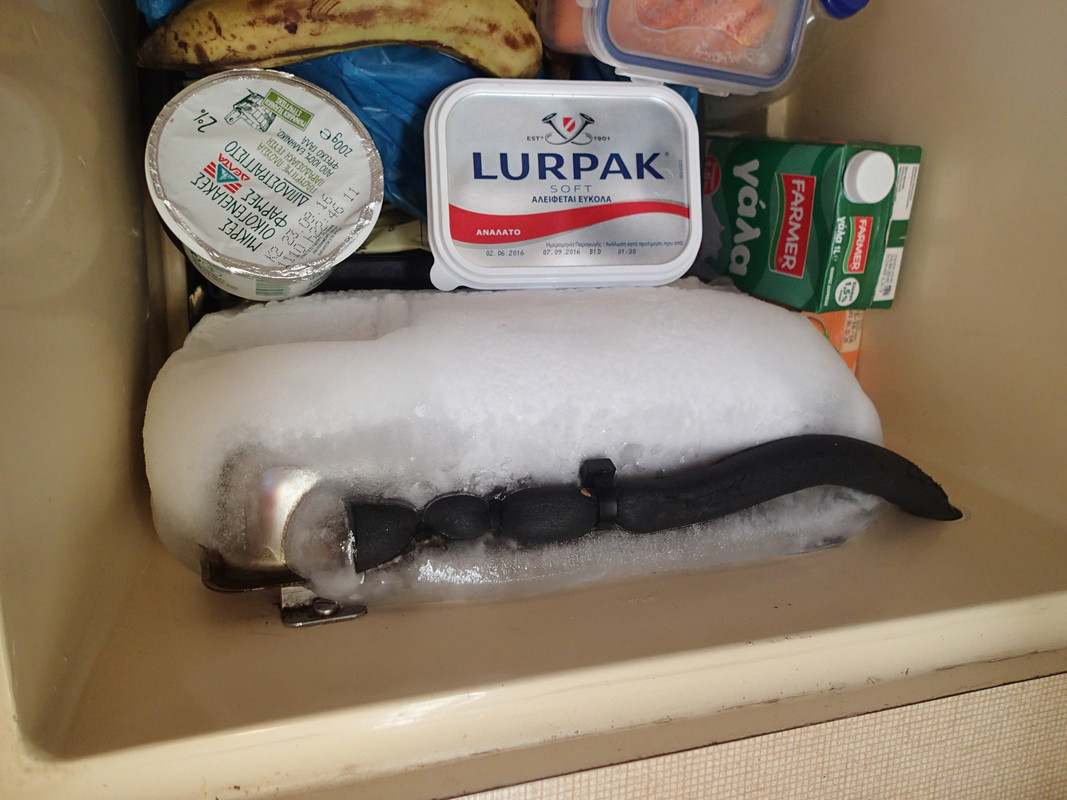
I have a Dometic/Waeco CRX 50, up until the weekend I thought it was fairly frugal with amps. But the weekend was hotter than usual, and the fridge compressor seemed to be on most of the time, even when turned down to the minimum setting.

View attachment 96923

Would adding insulation to the sides, back and top help?

Is there anything else, other than insulation, that I should be looking at?

Would a top loader with plenty of insulation perform better?

TIA
Missed this one, so here's my tenpeneth.

As the ambient increases this has three negative affects on a fridge, all of which can have a dramatic affect upon the power consumption. At home the fridge is a mnor load, but on the typical medium size boat it is normally the heaviest load.

1 The discharge pressure is controlled by the condensing condition, i.e. the actual temperature at which the condensing is happening at, so as the ambient temperature increases so does the compressor discharge pressure. Higher discharge pressure = Higher compressor amps.

Anything to increase the heat rejection at the condenser will improve the situation - better ventilation using cooler air from the bilges, maximising air flow provision, consideration of water or keel cooling, etc.

2 Higher ambient temperature outside the fridge = higher heat flow into the fridge, meaning the fridge system has to shift more heat energy. Clearly increasing the insulation and reducing the door openings will help, and once cold, liquid or solid mass in the fridge wil increase the cold thermal mass. But inserting warmer goods will increase the load as the fridge system has to remove the heat contained in anythign placed in the fridge. Any time the door is opened can make a difference, so minimse the door openings. Make sure the door seal is effective.

3 Higher cabinet temperature affects the evaporating condition, so as the interior and hence evaporator increase in temperature so does the suction pressure to the compressor. High Suction pressure = more gas entering the compressor = higher amps to compress

The affects of 1 & 3 combine to increase the load on the compressor. 2 requires the compressor to run for longer to acheive the desired cabinent temperature.

So getting the fridge as cold as possible before the ambient temperature gets up will help, so place the fridge on minimum when the day is cooler, or overnight, and load the fridge with plenty during this cooler period, then as the temperatures increase adjust the fridge stat temperature setting to a higher temperature and allow the cold mass created to help keep the temperature down, which will reduce the compressor load during the peak of the day.

A worn fridge compressor or system low on gas will also struggle far more in arduous conditions, and so a system say > 5 or 10 years old is going to find it tougher when the ambient may reach say 25oC, but which would easily cope with 15oC. Indeed a fridge charged in colder weather may end up undercharged because the person charging thinks it is adequately charged when it could do with a few more grammes adding. Few fridge engineers weigh in the charge indiicated on the unit data plate, and for installed systems, there will be no plated weight, and few know how to measure or understand how to charge a fridge by the sub-cooling level, which is the only way to accurately charge an unplated system. Watching the sweat line close to the evaporator outlet works quite well, but is still not as accurate as a properly measured charge level.
 
I have a Dometic/Waeco CRX 50, up until the weekend I thought it was fairly frugal with amps. But the weekend was hotter than usual, and the fridge compressor seemed to be on most of the time, even when turned down to the minimum setting.

View attachment 96923

Would adding insulation to the sides, back and top help?

Is there anything else, other than insulation, that I should be looking at?

Would a top loader with plenty of insulation perform better?

TIA
Put a frozen chicken in it. Cook and eat when thawed out, and repeat!
 
Top