French canals

Last edited:
I did the lower loop from the Seine to Saone to Rhone, mostly solo, what now seems a lifetime ago!
Whatever you might plan for you could get stuck with a slow boat because the lock keepers will wait for that boat and let a group through to conserve water, also the locks close for lunch.
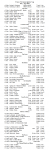
This is the log of my Times, distance and Locks per day. You should note that to get through Down Locks is a lot faster and easier than the Up Locks.

France ‘Circumnavigation’ Log.png
 
I was wondering, how these passage times were calculated? Non-stop or "easy" (i.e. 8-10hours a day)?

They're based on our own passage times, over the course of 10,000+km and the last 15 years. In that respect they weren't 'calculated' and as Lady in Bed suggests, it's a bit faster going down a lock than up, but not much. It 'all depends'.
Above the map it says, quite clearly
"This is an approximate, rule of thumb, comparison, guide. It may be possible to do these passages faster or be obliged by circumstances to do them slower. Distances are approximate. No allowance for un-masting or re-masting or similar operations. No allowance for sightseeing stops, which are of course, almost essential . . ."

FWIW The Briare/Loire/Centre route is now severely restricted as to available depth.
 
I did the lower loop from the Seine to Saone to Rhone, mostly solo, what now seems a lifetime ago!
Whatever you might plan for you could get stuck with a slow boat because the lock keepers will wait for that boat and let a group through to conserve water, also the locks close for lunch.
This is the log of my Times, distance and Locks per day. You should note that to get through Down Locks is a lot faster and easier than the Up Locks.

View attachment 78642

Thank you, very nice summary! Two months realistically - about the same as going around, especially if we add a season worth of stop in Southern Brittany and start the route from Morbihan...
 
Last edited:
Having worked on the French Canals, all I can say is it's a magical not-to-be-missed experience; I'd go through them on the way down then if needing to return to UK and time of year suited, do Biscay for the return.
 
So would it be easy to buy a canal boat in France, will it be licenced etc, will I need a cert of comp? Can I just turn up and go? The idea is to come and go ferry foot passenger/plane/train/hire car as and when time allows.
 
I saw a few fanciable boats - some British origin - either for sale or abandoned in my time on the Burgundy canals and rivers, esp the lovely Canal du Centre.

That was in 1994 though - my yotmaster ticket and schoolboy French was sufficient then - our hotel barge despite charging mainly elderly punters a fortune had no VHF, no cell phone, no first aid apart from my basic training, no life raft, in the middle of nowhere - I organised with the unqualified skipper if anyone went overboard I'd jump in with the only lifering.

I think things are different now and you'd need a certificate of some kind, well worthwhile as the canals and rivers have their own signal system.
 
We did Canal du Midi with 1.4 metres and only touched a few times, all on the downhill side to the Mediterranean. This was early April 2005, since when we understand the depth may be less. Grehan's info is far more up to date.
 
So would it be easy to buy a canal boat in France, will it be licenced etc, will I need a cert of comp? Can I just turn up and go? The idea is to come and go ferry foot passenger/plane/train/hire car as and when time allows.

All the details - https://www.french-waterways.com/practicalities/competence/

And to respond to Vyv's 1.4m draft is indeed what we advise as the maximum draft for the C du Midi, so should get through, maybe with some glitches as Vyv notes. The book depth is 1.5m, maybe that is possible but we prefer the safe side. The Midi is reasonably reliably supplied with water to maintain depths - all the self-drives and the hotel barges would be in trouble if it wasn't.
 
CEVNI cert is needed, YM / Colregs don't cover lots of the lights and signals you need to know. (eg a blue light or blue board sticking out of a barge's wheelhouse, in a head-on situation, means 'pass me green to green' ).
The Dutch Barge Association is probably worth joining, at least once.
The commercial barges all chat on VHF, if you can decypher it you will know their locations..(does anyone know what travelling 'en fleche' means? Never quite worked it out.)
 
Top