Flexiteek Flexibility

JumbleDuck

Well-Known Member
Joined
8 Aug 2013
Messages
24,165
Location
SW Scotland
Visit site
I asked this in another thread whose title, I realise, is unlikely to attract anyone who knows the answer, so ...

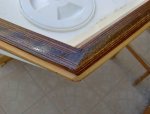
Can anyone tell me how flexible Flexiteek nosing section is? I'm thinking of taking up a suggestion to use it as a replacement rubbing strip for a dinghy I am restoring, but really need to know what sort of minimum radius it's happy with. Its coming in a coil sounds hopeful ...

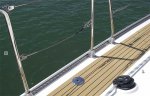
O8Mp9re.png
 
Must be pretty flexible if they sell it in a coil?
Surprised a man of your taste and acumen is using plastic imitation wood for a job like this, have you no shame?
Imitation wood is a bit of an exaggeration, I have it on my cockpit seats and while I admit it is brown and stripey it looks nothing like wood, a failed attempt at imitation, a plain colour would be much more acceptable.
 
Must be pretty flexible if they sell it in a coil?
Surprised a man of your taste and acumen is using plastic imitation wood for a job like this, have you no shame?

I know, I know but - see other thread - experiment has shown that even 1/4" teak can't be forced cold round the requisite bend without inordinate force and (b) it's going to be hidden, mostly, by a nice big rope anyway. Normally I find teak substitutes as unconvincing as American teeth, but I may have to be pragmatic, just this once.
 
Must be pretty flexible if they sell it in a coil?
Surprised a man of your taste and acumen is using plastic imitation wood for a job like this, have you no shame?
Imitation wood is a bit of an exaggeration, I have it on my cockpit seats and while I admit it is brown and stripey it looks nothing like wood, a failed attempt at imitation, a plain colour would be much more acceptable.

After living with a teak deck for 20 years, I specified "plastic imitation wood" for everywhere on my new boat. Looks OK, almost zero maintenance.
 

Attachments

  • deck1.jpg
    deck1.jpg
    71.9 KB · Views: 1
Teak is not the easiest to bend. Have looked at photos of the boat and don't think you will have any problem dry bending douglas Fir for both the inners and outers. You need them in one length with about 30cm excess. Attach firmly at the bow both sides for the outers and use a Spanish windlass at the stern to pull them in, clamping from the bow as you go. Then do the inners, again starting from the bow, clamping and fastening as you go. Make them a bit overlong so that when you are about half way down you can determine the final length and trim to fit at the stern.

However, if you want to use the fake stuff that will be easy as you can heat it up locally with a hot air gun as you fit it.
 
Plastic fendering that is sold in coils would not add any strength to the gunwale. Laminating marine ply in situ would (1) look better and (2) would also add rigidity to the gunwale. It would probably even be less expensive.
This shows the effect on Murphy, my home designed and built 205cm tender:
bJQhcf0.jpg


Next is a close-up. The GRP is sandwiched between two strakes of 6mm ply on the outside and on the inside. The shallow gap between them, where there is the GRP, is filled with a mixture of epoxy and sawdust. At the top of the outside strake I screwed a thin strip (8x10mm) below which I installed a length of rope fendering. Easy to do and goes well with the dinghy.

Kuam3L3.jpg
 

Attachments

  • Kuam3L3.jpg
    Kuam3L3.jpg
    49 KB · Views: 0
Last edited:
Teak is not the easiest to bend. Have looked at photos of the boat and don't think you will have any problem dry bending douglas Fir for both the inners and outers.

Thanks. She has a surprisingly tight radius of curvature at her widest point, but I shll do some investigation with more flexible wood. Although teak is pretty stiff, I had hopes that 1/4" would be thin enough to go round, but it ain't.

This shows the effect on Murphy, my home designed and built 205cm tender:

Very nice! I am still not convinced that even 6mm ply would go round my curves, but I'll look for some scrap to experiment with ...
 
Very nice! I am still not convinced that even 6mm ply would go round my curves, but I'll look for some scrap to experiment with ...

Thanks.
One tip if I may. Make sure that the 6mm plywood that you find has as many plies as possible, as in 3 is hopeless, 5 is good, 7 is better. If experimenting with 'ordinary' ply be aware that cheap ply very often has the top (outer) veneers paper thin. LITERALLY paper thin. This means that the first veneer of real thickness would have the grain crosswise and thus be more prone to fracture. This is easily checked by inspecting the cut ends of what appears to be the surface ply; you should see end-grain. There shouldn't be this problem with marine ply.
 
One tip if I may. Make sure that the 6mm plywood that you find has as many plies as possible, as in 3 is hopeless, 5 is good, 7 is better.

Good point. I think I may have some nice 6mm which I acquired from my Dear Old Dad, so will have a look at that. The biggest issue with the Ply Possibility - I should have spotted this before - is that the boat is 10' long, so I would need a join, which I'd really like to avoid.
 
The biggest issue with the Ply Possibility - I should have spotted this before - is that the boat is 10' long, so I would need a join, which I'd really like to avoid.

It is possible to find longer sheets but you'll probably only get them through special order and they won't be cheap. Scarphing narrow strips of ply, or most any wood, is no big deal especially if you have a router. The scarphing jig is easily made and, like most other things, you'll probably find clips on YouTube that explain them.
Good luck with whatever you decide to do! :encouragement:

Here's one https://www.youtube.com/watch?v=s4QWXFqtsTQ
 
Last edited:
It is possible to find longer sheets but you'll probably only get them through special order and they won't be cheap. Scarphing narrow strips of ply, or most any wood, is no big deal especially if you have a router. The scarphing jig is easily made and, like most other things, you'll probably find clips on YouTube that explain them.
Good luck with whatever you decide to do!

Thanks - I am very much obliged to you.

I have just spent a pleasant if messy afternoon with my young assistant - who will, when she is finished, be Master of the dinghy - removing all the old rubbing strip. Dear Lord, but it was rotten. Now that it's gone, I have a clearer idea of what's involved. The old one was 35mm high by 15mm thick, which I suspect means 1 1/2" x 3/4" before planing, and looks to have been nice mahogany. It wasn't glued in place, which surprises me, but fastened at roughly 6" intervals with M6 bolts: countersunk heads on the inside, nuts recessed and covered with filler on the outside. Quite neat, but there were numerous breaks or suspicious angles at the bolts - I think the mahogany wasn't really flexible enough and the reduction in strength at the holes too much for it.

So ... in case anyone is still reading this ... my first hunt is for something 1 1/2" x 3/4" and bendier than mahogany, in four 245cm lengths, which is shorter than I though because the boat turns out to be 9', not 10'! I could do it with an 8x4 sheet of 6mm marine ply if I cut it on the diagonal, and I'm not sure I can see any reason not to do that. Otherwise I have had lots of good suggestions for wood, and it will probably come down to what I can get reasonably locally. I'm not sure how my builders' merchant will respond to a request for a single plank of western red cedar, but there is only one way to find out ...

Further updates will follow as this exciting project progresses. Sorry about that.
 
Now you've got me hooked! ;)

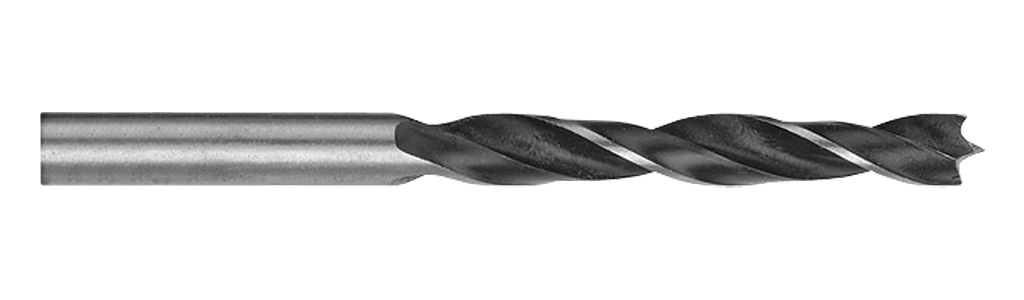
Do NOT use countersunk screws! I use pan-headed self tappers. Start by drilling a shallow hole using a spur-point wood bit. This will give you a flat-bottomed hole on which the pan head will bear; a countersunk screw would tend to split the wood when tightened. (Stainless self-tappers are a fraction of the cost of SS woodscrews here in Malta).
brad%20point.jpg

Use the 'pip' left by the spur point as a centre and continue drilling with a regular bit just under the core diameter of the screws. If you have the inside and the outside gunwales clamped in place (which would help) continue through the GRP and into the inner strake without going right through. Open up the hole in the outer strake to a clearance diameter and drive home the screw. Continue for the other holes, preferably working on both sides of the boat so that you don't alter the symmetry of the shape.
The next day you can remove the clamps if you must; I would leave them in place until I have covered the screw heads with plugs. If you have access to a pillar drill you can cut your own plugs from scrap wood and get a .professional finish. ;)
5425.jpg


Warning: At the age of 71 I am still buying tools! ;)
 
Do NOT use countersunk screws! I use pan-headed self tappers. Start by drilling a shallow hole using a spur-point wood bit. This will give you a flat-bottomed hole on which the pan head will bear; a countersunk screw would tend to split the wood when tightened.

Thank you, again. I was planning to avoid thread altogether and glue everything together with Sikaflex. Is that a bad idea?
 
Thank you, again. I was planning to avoid thread altogether and glue everything together with Sikaflex. Is that a bad idea?

"Nail where you can, screw if you must, glue when you have to".
That is a basic principle that has been followed by shipwrights in their daily work since time immemorial. OK, since well before my time anyway. ;)

The 'bad' thing about using Sikaflex for such a purpose is the language that is likely to be sputtered by whoever is removing it later!
Personally I wouldn't use it for a rubbing strake. I look at such a part as a 'sacrificial item' that is intended for protection of the hull and which is bound to be replaced after some years of use. For that reason I would use screws because the process is easily reversible... but it is not my boat. Just my opinion.
 
"Nail where you can, screw if you must, glue when you have to".
That is a basic principle that has been followed by shipwrights in their daily work since time immemorial. OK, since well before my time anyway. ;)

The 'bad' thing about using Sikaflex for such a purpose is the language that is likely to be sputtered by whoever is removing it later!
Personally I wouldn't use it for a rubbing strake. I look at such a part as a 'sacrificial item' that is intended for protection of the hull and which is bound to be replaced after some years of use. For that reason I would use screws because the process is easily reversible... but it is not my boat. Just my opinion.

Thanks. The way I look at it is that I am fitting a gunwale, the purpose of which is to strengthen the hull, and which is best glued. The gunwale will have fendering (a nice big rope) attached, in a much more removable way. I'm averse to bolting the gunwale because I don't want to weaken it at regular intervals ... even where the old one was reasonably sound (not much!) it was still kinked like the edge of 50 piece. I might use something a little less vicious than Sikaflex, though ...
 
I would laminate 2*6mm both inside and out, probably using epoxy. Put 2 or 3 strongbacks across the beam to keep the shape while you do the outside then cut them down to take account of the thickness of the inner and do the inside. If the thickness of the hull is fairly even, you can make the whales a bit higher and fill the gap with a spline so the top is finished with wood. Would look good and be stronger than your current bolted setup.
 
I would laminate 2*6mm both inside and out, probably using epoxy. Put 2 or 3 strongbacks across the beam to keep the shape while you do the outside then cut them down to take account of the thickness of the inner and do the inside. If the thickness of the hull is fairly even, you can make the whales a bit higher and fill the gap with a spline so the top is finished with wood. Would look good and be stronger than your current bolted setup.

Ta. I have spent today trying to find wood, with lack of success. A local timber place will do me a 3m plank of douglas fir for £150 in two weeks, nobody else nearby has anything suitable and Galgael (suggested previously) don't have anything either. Robbins have suggested some sapele, though at £4.50 (est) per metre for 35 x 15mm planed it ain't cheap. I'll do a bit of ringing round Clyde suppliers tomorrow then, if necessary, call Robbins back.

Although laminating has its attractions, I think I'll bite the bullet and steam. After this one is done I have another to do, with a rounded bow of < 1' radius, so I will definitely have to steam that and I may as well learn now. I have ordered a steam wallpaper stripper and will look through my stocks of plastic drain pipe and insulation. I'm doing all this at the local Men's Shed, where my fellow members seem to welcome a bit of Heath Robinsonry!

Today's other job was stripping the last of the gunwales (the last six inches were in position while the boat was strapped onto its trailer) and having a Good Hard Stare at the wood across the stern. Which, I am happy to say, seems to be in pretty good nick and should come up nicely with stripping, sanding and some varnish. Quite surprising, since less than a foot away I was able to remove some of the gunwales with a pressure washer ...
 
Top