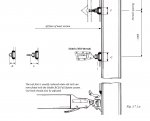
Fitting a helicoil to a Selden batten car.

Concerto

Well-Known Member
Joined
16 Jul 2014
Messages
6,521
Location
Pwllheli Marina, N Wales
Visit site
Whilst sailing round Britain I had a problem with the full battens separating from the car on the mast. The first 2 I had repaired with helicoils in Stromness for £15. On the final days of the trip a 3rd car became detatched and a temporary repair of electrical tape worked acceptably.

IMG_4812 1000pix.jpg
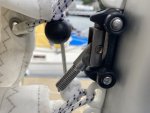
This shows the problem, the luff pulls away from the mast and makes the sail baggy.
IMG_4929 1000pix.jpg
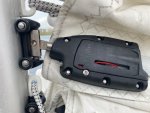
This si how it should look.

IMG_4931 1000pix.jpg
This shows the screw thread that had worn the plastic thread away.

After I arrive back home in Chatham, I decided I would check out getting a helicoil kit. On eBay I found a metric kit for under £30.
131Pc Thread Repair Kit HSS Drill Helicoil Metric Set Heli Coil Tap Insert Case | eBay
IMG_7029 1000pix.jpg
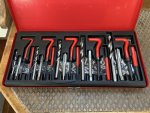
Everything you need to fit helicoils from the correct drills, the tread cutter, tool to wind the helicoil into place and a punch to break the tab off, plus stainless steel helicoils as well.
IMG_7022 1000pix.jpg
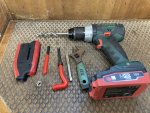
This shows all the tools required. The red tape on the car is to hold the nuts in place.
IMG_7027 1000pix.jpg
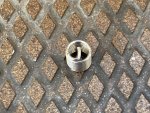
This is a helicoil showing the tab to turn it into the threaded hole. Notice the break mark to ensure the tab breaks in the right place.
IMG_7023 1000pix.jpg
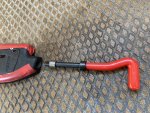
After drilling the hole out to correct size and the thread having been cut, the helicoil is on the turning tool with the tab to enter first.
IMG_7024 1000pix.jpg
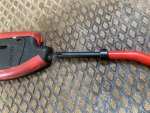
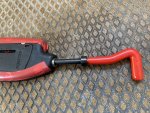
The helicoil partly fitted.

IMG_7025 1000pix.jpg
The turning tool removed.

IMG_7028 1000pix.jpg
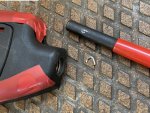
The punch has been used and the tap has been broken off. Job completed.

Hopefully some of you might find this useful and a kit worth keeping onboard.
 
Well done for the repair.
Must say though I'm a bit surprised that such damage can occur. Seldén is not known for making rubbish equipment generally.
Then noticed in the first few pictures what appears to be shock cord used between the eyelets along the luff and the normal sail sliders. Seems odd.
If this is correct, might it explain why there was increased strain on the threads inside the receptacle?
 
Whilst sailing round Britain I had a problem with the full battens separating from the car on the mast. The first 2 I had repaired with helicoils in Stromness for £15. On the final days of the trip a 3rd car became detatched and a temporary repair of electrical tape worked acceptably.

View attachment 145198
This shows the problem, the luff pulls away from the mast and makes the sail baggy.

View attachment 145199
This si how it should look.

View attachment 145200
This shows the screw thread that had worn the plastic thread away.

After I arrive back home in Chatham, I decided I would check out getting a helicoil kit. On eBay I found a metric kit for under £30.
131Pc Thread Repair Kit HSS Drill Helicoil Metric Set Heli Coil Tap Insert Case | eBay

View attachment 145201
Everything you need to fit helicoils from the correct drills, the tread cutter, tool to wind the helicoil into place and a punch to break the tab off, plus stainless steel helicoils as well.

View attachment 145209
This shows all the tools required. The red tape on the car is to hold the nuts in place.

View attachment 145203
This is a helicoil showing the tab to turn it into the threaded hole. Notice the break mark to ensure the tab breaks in the right place.

View attachment 145204
After drilling the hole out to correct size and the thread having been cut, the helicoil is on the turning tool with the tab to enter first.

View attachment 145205
The helicoil partly fitted.

View attachment 145206
The turning tool removed.

View attachment 145208
The punch has been used and the tap has been broken off. Job completed.

Hopefully some of you might find this useful and a kit worth keeping onboard.
Well done, a geat fix to remember for future repairs. I might get one of those kits "just in case"
Are the Helicoils stainless? I can't see where the kit says so.
 
Well done for the repair.
Must say though I'm a bit surprised that such damage can occur. Seldén is not known for making rubbish equipment generally.
Then noticed in the first few pictures what appears to be shock cord used between the eyelets along the luff and the normal sail sliders. Seems odd.
If this is correct, might it explain why there was increased strain on the threads inside the receptacle?
I am also surprised to see shock cord on the intermediate attachment points. Ours our stitched on using webbing. Very robust. We have Selden cars but on Kemp supplied batten receptacles. The Selden cars and batten kit was all in such good condition after 20, 000 nm that we reused them on the new mainsail. So those cars and batten parts have no done over 25,000 nm and no similar issues as you have experienced. I would suggest that the bungy cord is not helping. Our intermediate sail attachment also uses Selden cars rather than sliders. A lot let friction
 
Last edited:
Well done for the repair.
Must say though I'm a bit surprised that such damage can occur. Seldén is not known for making rubbish equipment generally.
Then noticed in the first few pictures what appears to be shock cord used between the eyelets along the luff and the normal sail sliders. Seems odd.
If this is correct, might it explain why there was increased strain on the threads inside the receptacle?
I've never seen shockcord used on the slides either. On my boat its been stitched webbing or a clamp type fitting on the sail. As you say it must increase the loads on the 'cars' and associated fittings.
 
Shockcord for slide attachment seems like a very "cheap and cheerful" method, quick and simple to fit. A number of people mentioned this in the OP's thread from Stromness, and its interesting to see it echoed here. The first time I came across it (in around 50 years of cruising boat ownership and sailing) was in the Stromness thread.
 
Sorry for the slow reply but just done 250 miles driving today. This is to answer all the questions.

The damage occured to the Selden car as I believe the batten was screwed in to far and the rotation required when flaking caused the plastic thread to strip. As this is critical, I have to ask why was no message moulded in the plastic or instructions provided with the sail? The loading in strong winds can be quite high high and the shock cord does not take any loading, despite the halyard being on a Lewmar 40ST winch.

The shock cord has proved to be a very poor method of securing the mainsail sliders. The shock cord does not last very long and needs replacing on a regular basis. They are all going to be changed to tapes this winter, along with fitting a 3rd reef.

The helicoils in the kit were claimed to be stainless steel, but not what grade of stainless. They certainly look to be stainless, but additional helicoils are easy to order from engineering suppliers.

Having a helicoil kit on board should prove a useful addition. This should be easy to use on plastic, glassfibre and alloy (with Duralac). It might be possible to use on iron and steel, but might need additional thread cutters.
 
  • Like
Reactions: srm
The damage occured to the Selden car as I believe the batten was screwed in to far and the rotation required when flaking caused the plastic thread to strip. As this is critical, I have to ask why was no message moulded in the plastic or instructions provided with the sail? The loading in strong winds can be quite high high and the shock cord does not take any loading, despite the halyard being on a Lewmar 40ST winch.

The shock cord has proved to be a very poor method of securing the mainsail sliders. The shock cord does not last very long and needs replacing on a regular basis. They are all going to be changed to tapes this winter, along with fitting a 3rd reef.

Thanks. Good move to get rid of the shock cord.
If the threads were indeed stripped by the force of the sail trying to flake (screwing into the receptacle), it seems the design and/or choice of materials is not really up to the task.
I would have thought it more likely they were stripped by a force pulling the two parts away from each other.
 
Thanks. Good move to get rid of the shock cord.
If the threads were indeed stripped by the force of the sail trying to flake (screwing into the receptacle), it seems the design and/or choice of materials is not really up to the task.
I would have thought it more likely they were stripped by a force pulling the two parts away from each other.
They shouldn't be screwed in all the way. I always leave a couple of turns spare to allow some rotation. See post #4 25,000 nm on mine with no trouble
 
They shouldn't be screwed in all the way. I always leave a couple of turns spare to allow some rotation. See post #4 25,000 nm on mine with no trouble
Chatting with the sailmaker at the boat show, he confirmed I had screwed the car too far into the batten part. Hence my comment about no instructions on advice as how to fit them. The mainsail had been removed a number of times since being made and I expect I screwed the cars in to stop them unscrewing. With no information about how they should be set meant I made the error that caused their failure. In my defense I should say these batten cars were totally different from those on the old mainsail, as my memory from 8 years ago, these were not screwed in.
 
The shock cord has proved to be a very poor method of securing the mainsail sliders. The shock cord does not last very long and needs replacing on a regular basis. They are all going to be changed to tapes this winter, along with fitting a 3rd reef.

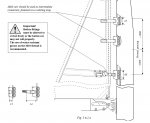
Since you mention Selden.... Assuming your mast and intermediate luff slides are also Selden, bear in mind that in their Sailmaker Guide (extract below) they recommend sail shackles rather than tape as a method of fixing. They also give the reason.

Screenshot_20221029-002121_Drive.jpg

PDF easy to find online.
 
Since you mention Selden.... Assuming your mast and intermediate luff slides are also Selden, bear in mind that in their Sailmaker Guide (extract below) they recommend sail shackles rather than tape as a method of fixing. They also give the reason.

I don't interpret their recommendation as shackle over tape – only that the attachment should allow flexibility. This can be achieved also with stitched on tape, as can be seen in this photo:
IMG_1176.jpeg

BTW, I think that is the same car as the OP's (Rutgerson), but mated to a different receptacle. This one is aluminium, so hopefully less prone to stripped threads. But I will certainly make sure it is free to rotate next time the mainsail goes on.

The importance of this is actually highlighted on page 18 of the the guide mentioned above. Of course, the sailmaker should have passed that piece of information on to his customer.

https://support.seldenmast.com/files/595-542-E.pdf
 
Thank you all for the Selden information. It is definitely for sailmakers, but very interesting for someone like me who likes to increase his knowledge above the average sailor.

The idea of the special shackle is one I had not thought of, but a flexible webbing is certainly acceptable. A stiff or rigid webbing must be avoided.

Even within this guide there is information missing from some diagrams about the cars. The diagrams for the MDS and IDS cars show the warning about them being able to freely move, but the RDS system does not have this warning.

Selden MDS cars.jpg

Selden RCB batten.jpg

If the supplied information to sailmakers is poor, how should an owner know this is so important. If no information is moulded on the Selden fitting as a warning and the sailmaker does not provide any information, how should an owner know this is critical - especially many years later and possibly with several changes of yacht ownership.

At least this thread is making the point that there can be a problem that can be solve quite easily and hopefully a number of you will check your full length batten cars are fitted correctly.
 
Since you mention Selden.... Assuming your mast and intermediate luff slides are also Selden, bear in mind that in their Sailmaker Guide (extract below) they recommend sail shackles rather than tape as a method of fixing. They also give the reason.

View attachment 145272

PDF easy to find online.
Interesting. We don't have any sliders. Every connection is on a Selden car but we had those plastic shackles on our old main. They caused a lot of chafe when the sail was reefed. They need chafe protection if you go that route
 
Having a helicoil kit on board should prove a useful addition. This should be easy to use on plastic, glassfibre and alloy (with Duralac). It might be possible to use on iron and steel, but might need additional thread cutters.
They are intended for use with any material you might tap a thread into, no need for anything other than what comes in the kit.
 
...
The damage occured to the Selden car as I believe the batten was screwed in to far and the rotation required when flaking caused the plastic thread to strip. As this is critical, I have to ask why was no message moulded in the plastic or instructions provided with the sail?...

I guess they thought it was obvisous (which it kind of is--must be free to rotate), but you are correct, it is not mentioned in ANY of the manuals and should be. I thought it was an odd mechanism, but I always left a 1/2 turn free.
 
Top