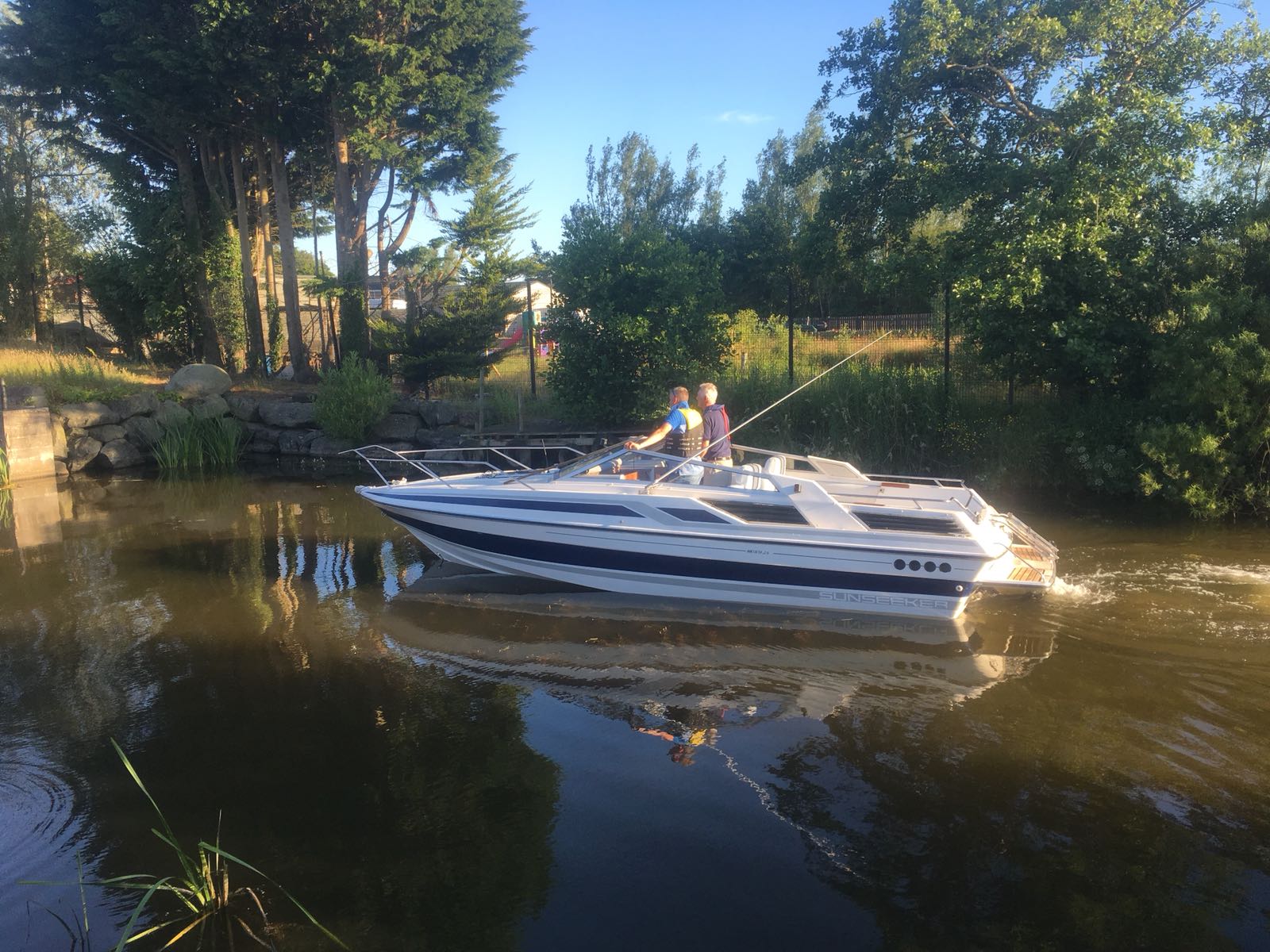
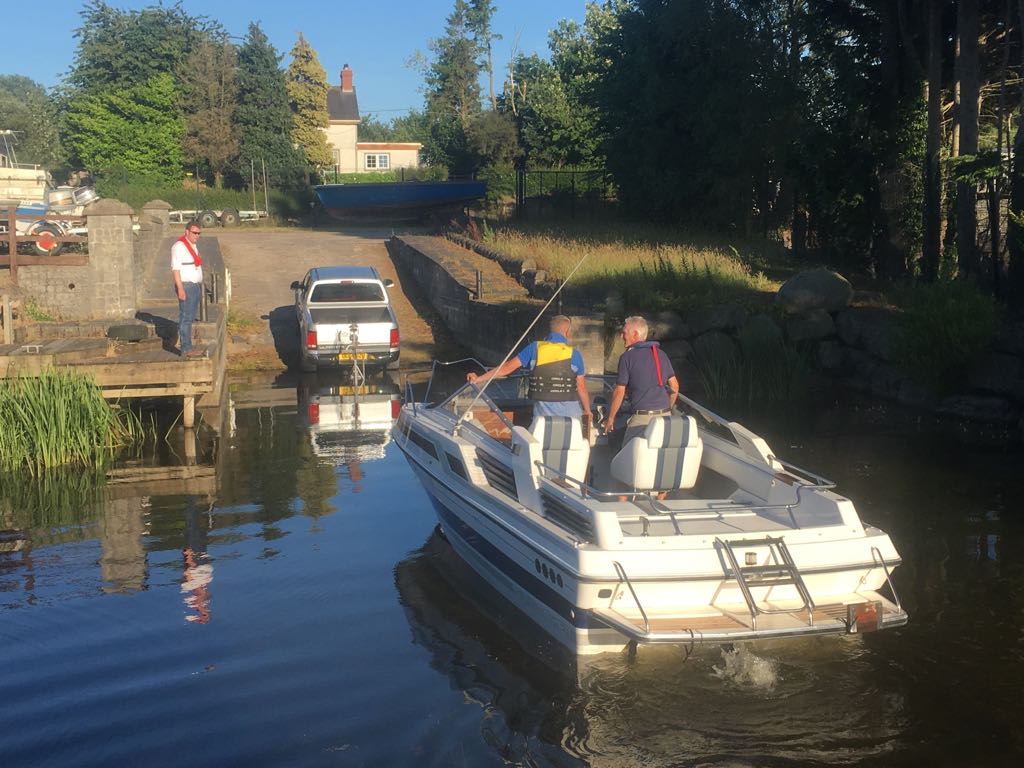
First Boat: Sunseeker Mexico 24

neil-c-8

New Member
Joined
2 Jul 2018
Messages
20
Visit site
Hey everyone, this is my first post and also my first boat. I'm a fairly active member of a car forum online which has a members cars section but this forum doesn't seem to have that. I've started the thread so that I can get as much info as possible from people with a lot more knowledge than me and share a bit of my journey. So from the start...

Two weeks ago a friend sent me a message asking if I'd go 'halfers' on a boat for sale on gumtree. Before that I had no intention of buying a boat and this was he first one we looked at. Yes I know we probably broke all the rules... but we did a lot of research in a few short days. The boat in question was a Mexico 24 with a single 5.7l Mercruiser 350 Magnum (with a carburetor), 700 hours and Alpha drive. We first went down for a good look around on the dry and the hull was in reasonably good shape with limited signs of damage expect for a few gel coat chips and one area with crazing which indicated that here could be some cracking in the fibreglass behind it on the bow. All in all it was in very good shape, as far as I could tell. While I don't have a huge amount of boat hull experience I am a material scientist and structural engineer by trade so was happy to trust my gut and we put down a deposit on the boat subject to water trial. The boat had no paperwork what so ever and no service history but the price negotiated reflected this. It has just had a full service and had the rear leg of the alpha drive rebuilt after it chewed the gears.

For the water trial we asked along an experienced friend who used to own a Sealine and Ribeye dealership as well as having a number of ribs for most of his life. In the time between putting down the deposit and the sea trial I had 50 odd detailed engine photos emailed to our local mercruiser expert, who my father happens to be friends with. He gave it the once over as well a list of everything that he would check in person during the water trial.

So this post is a bit long... skipping to the chase the water trial went well and we now own a boat. We collected it the next day and sent it to our local marina. We've bought a Raymarine Firefly 7 Pro and VHF radio which is getting installed on Monday along with the needed gel repairs. Engine wise it has just been serviced but we've asked the marina to replace the impeller in case it wasn't done, check belt tensions, check bilge pump, check the aftermarket engine bay air inflow pump etc.

The rest of our purchase list is full tool kit for the boat including hose clips, bungs, putty, pipe repair tape etc. new life jackets, fire extinguishers, mooring ropes and fenders.

The plan is to keep the boat at first in Lough Neagh (Northern Ireland) and by the end of the summer travel up the Lower Bann to Coleraine and a few trips round the north coast when conditions allow.

My first question- FE36 automatic extinguisher for the engine bay or a foam one?? I'm nervous that the air inflow pump for the engine bay could limit its effectiveness in an emergency. And if the foam wrecks the engine surely it'll be an insurance claim anyway so no real loss??

PS can you upload photos directly to ybw forum posts?
 
Fe36 or dry powder for engine bay. Size the extinguisher accordingly, allowing for some leakage from vents etc

Photos can't be uploaded by new users afaik. Need to make a few more posts first.
 
Thanks for the reply. I did mean dry powder, slip of the tongue. I have read some people say that the dry powder can damage the engine, obviously it wouldn’t do the carb any good! Are the reasons for FE36 being preferable due to its extinguishing ability or is clean discharge the main FE36 advantage? The dry powder is significantly cheaper.
 
Last edited:
Fe36 is clean so is the preferred choice. Lots of people think dry powder will be ingested by the engine and cause damage. My thoughts on that are that in the event if a real fire, this will be the least of your concerns. I also hapen to think that a well specified air filter will stop it happening. It will be a right mess to clear up after an accidental discharge, but this is quite rare, and it can damage electrical components in the longer term.
 
Thanks CLB. I think we'll go for the powder- I also have more confidence in its performance due to the aftermarket forced air inflow to the engine bay.

Does anyone he have specific experience of the Mercruiser 5.7l carb engine? Apart from it's thurst I think it's meant to be reliable enough and being a v8 carb it's something that would be easily worked at compared to modern injection engines.

Anyone have any experience of the older sunseeker hulls in the Mexico or XPS? We're hoping to get a few runs to Scotland and perhaps the Isle of Man if we launch from strangford. One of things that attracted us to the boat was that it has a reputation for being good handling. I'll get some photos up once I have the appropriate permissions granted by the higher powers at ybw!
 
With the gm block v8's ( which you 5.7 is one of) , check the exhaust manifolds and risers are sound, specifically the joins between risers and manifolds, on the older engines ( the ones witha wet joint) the cooling water can find its way into the exhaust and into the cylinders causing hydrolocking and significant damage. In salt water these should be replaced every few years,in fresh water you can get away with it less often. If you dont k ow when yours were last replaced , take them apart and have look to see if everything looks corrosion free.
 
Strangford to Peel, IOM is 37 miles. Defo possible in calm weather of course. One issue you may have is the availability of petrol at marinas. IOM for example has no petrol available. Not even allowed to have it delivered via bowser. Jerry cans and a long walk is the only option (which is more dangerous surely but what do I know!)
 
Fe36 is clean so is the preferred choice. Lots of people think dry powder will be ingested by the engine and cause damage. My thoughts on that are that in the event if a real fire, this will be the least of your concerns. I also hapen to think that a well specified air filter will stop it happening. It will be a right mess to clear up after an accidental discharge, but this is quite rare, and it can damage electrical components in the longer term.

As someone who had an accidental discharge a few weeks ago I am very glad I didn't have powder which could have ruined my electrics in the long term (at my cost).
 
I own a recently splashed 25' Wellcraft Sportsman with a 5.7 Mercruiser V8. Mine is, I suspect a tad older than yours, being circa 1990, but had extensive work done to it before I purchased it. if you do have the risers off for inspection, it might be worth your while to look down the exhaust tube and check that your exhaust flaps are intact, or even present. These help to prevent water making its way back up the exhaust and into the cylinders, which is very bad news. Very important when reversing, or if you down throttle quickly, causing a sort of "following wave" effect to hit the transom, and thus, into the exhaust. Looking forward to some pics! Best of luck with it and enjoy.
 
As someone who had an accidental discharge a few weeks ago I am very glad I didn't have powder which could have ruined my electrics in the long term (at my cost).

What caused your accidental discharge?
 
Thanks CLB. I think we'll go for the powder- I also have more confidence in its performance due to the aftermarket forced air inflow to the engine bay.

Does anyone he have specific experience of the Mercruiser 5.7l carb engine? Apart from it's thurst I think it's meant to be reliable enough and being a v8 carb it's something that would be easily worked at compared to modern injection engines.

Anyone have any experience of the older sunseeker hulls in the Mexico or XPS? We're hoping to get a few runs to Scotland and perhaps the Isle of Man if we launch from strangford. One of things that attracted us to the boat was that it has a reputation for being good handling. I'll get some photos up once I have the appropriate permissions granted by the higher powers at ybw!

If Strangford to IOM is 37 miles one way = 74 miles total at maybe 2 litres per mile if you are lucky = 148 litres of fuel @ 128p/l = £189 in fuel and if it isn't dead calm both ways its not even going to be fun.

I think you are going to be far better off just messing around close to where you are going to launch, doing some fishing, lazing around on the boat and towing water toys etc - that will be great fun with your new boat.

If you already have photos of the boat somewhere, you can include them in your post like this:-

6755871_0_240620180900_0.jpg
 
What caused your accidental discharge?

Good question! Answer is that I don't know, the (Spanish) fire extinguisher people were removing it for servicing when it went off. Their English wasn't good enough to explain what happened.

As others have said, with powder the engines don't have to be running for damage to occur; the powdery residue is impossible to remove completely and can hold onto moisture causing issues with electrics in the future.
 
Great Boat,

I had one for 3 years. One of the latest hulls made but with a new Volvo 5.7gli. I loved it, seakeeping epic, sure footed, bigger boat feel. Happy to help with any boat questions, engine less useful I am afraid.

Cheers

Paul
 
So I think I've worked out that you need to link photos from other websites via URLs rather than upload directly to here. So I've set up an imgbb account which will hopefully link back to the forum....
So here is the first images from our water trial in Lough Neagh, down at a little place called Sands Marina.
6aa3fcf7_559b_4c87_b33d_fa2a2593271f.jpg

0e2b68e7_5b77_4bb0_8931_f180be308b09.jpg

IMG_0585.jpg
 
With the gm block v8's ( which you 5.7 is one of) , check the exhaust manifolds and risers are sound, specifically the joins between risers and manifolds, on the older engines ( the ones witha wet joint) the cooling water can find its way into the exhaust and into the cylinders causing hydrolocking and significant damage. In salt water these should be replaced every few years,in fresh water you can get away with it less often. If you dont k ow when yours were last replaced , take them apart and have look to see if everything looks corrosion free.

We don't know when the risers and manifolds were last changed so this is something we need to look into. From the outside there is some surface corrosion which would be consistent with the fact that the boat has been sitting up for 3 years or more before we have bought it. We did have a good check around the risers and manifold for leaks before and after the water trial and couldn't see anything. The internal condition could obviously be very different... Here is an image of the general condition of the boats engine

IMG_0514.jpg


Strangford to Peel, IOM is 37 miles. Defo possible in calm weather of course. One issue you may have is the availability of petrol at marinas. IOM for example has no petrol available. Not even allowed to have it delivered via bowser. Jerry cans and a long walk is the only option (which is more dangerous surely but what do I know!)

I own a recently splashed 25' Wellcraft Sportsman with a 5.7 Mercruiser V8. Mine is, I suspect a tad older than yours, being circa 1990, but had extensive work done to it before I purchased it. if you do have the risers off for inspection, it might be worth your while to look down the exhaust tube and check that your exhaust flaps are intact, or even present. These help to prevent water making its way back up the exhaust and into the cylinders, which is very bad news. Very important when reversing, or if you down throttle quickly, causing a sort of "following wave" effect to hit the transom, and thus, into the exhaust. Looking forward to some pics! Best of luck with it and enjoy.

My boat is probably slightly older than yours actually- we think its 1987 based on the colour scheme of the leather, but I'm not sure as this is what the vendor told us and he was just told that by someone else as well. Thanks also for the exhaust advice, it wasn't on my list of items for the mechanics to check. The marine guys are starting on the engine today so I'll give them a ring to speak to them about this too.

If Strangford to IOM is 37 miles one way = 74 miles total at maybe 2 litres per mile if you are lucky = 148 litres of fuel @ 128p/l = £189 in fuel and if it isn't dead calm both ways its not even going to be fun.

I think you're being a bit too harsh on the fuel usage prediction are you not? I found a forum post were a few guys were discussing their 5.7 Mercruiser engines and the different cruising speeds they were achieving. The three guys said that they were getting 33-35 litres per hour usage when cruising at approx 2250 rpm which corresponded to 20-25 knots. Running hard I would expect this to increase to around 50-60 liters per hour though. If we achieved a cruising speed of around 25 knots at about 2250rpm using 33-35l I'd be pretty happy.
 
I think you're being a bit too harsh on the fuel usage prediction are you not? I found a forum post were a few guys were discussing their 5.7 Mercruiser engines and the different cruising speeds they were achieving. The three guys said that they were getting 33-35 litres per hour usage when cruising at approx 2250 rpm which corresponded to 20-25 knots. Running hard I would expect this to increase to around 50-60 liters per hour though. If we achieved a cruising speed of around 25 knots at about 2250rpm using 33-35l I'd be pretty happy.

35 l/h at 25 knots works out at 1.4 litres per mile, so not far out from my guess - the only way to find out for real is to take the boat out and find out, although that is partially guesswork at first as you can't really be sure how much fuel you have used.

Looking at the engine, I think I would be changing all the HT side of the ignition; coil, distributor, HT leads and keep them as spares on the boat.

Lovely looking boat btw.
 
We don't know when the risers and manifolds were last changed so this is something we need to look into. From the outside there is some surface corrosion which would be consistent with the fact that the boat has been sitting up for 3 years or more before we have bought it. We did have a good check around the risers and manifold for leaks before and after the water trial and couldn't see anything. The internal condition could obviously be very different... Here is an image of the general condition of the boats engine

IMG_0514.jpg


My boat is probably slightly older than yours actually- we think its 1987 based on the colour scheme of the leather, but I'm not sure as this is what the vendor told us and he was just told that by someone else as well. Thanks also for the exhaust advice, it wasn't on my list of items for the mechanics to check. The marine guys are starting on the engine today so I'll give them a ring to speak to them about this too.


I think you're being a bit too harsh on the fuel usage prediction are you not? I found a forum post were a few guys were discussing their 5.7 Mercruiser engines and the different cruising speeds they were achieving. The three guys said that they were getting 33-35 litres per hour usage when cruising at approx 2250 rpm which corresponded to 20-25 knots. Running hard I would expect this to increase to around 50-60 liters per hour though. If we achieved a cruising speed of around 25 knots at about 2250rpm using 33-35l I'd be pretty happy.

My feeling is that you won't get that speed at those revs. I had a v8 with carb in a 25ft hull and ran at around 3500rpm for 25 knots. At this speed I was burning around 12gph (55lph). I might have reduced fuel to 10gph by dropping to 3000rpm and around 20 knots, but that is still 45lph. I had a fuel flow guage so am pretty confident in these Figures.
 
Sorry I did mean 3250 rpm in the above post, but I take on board your reference the fuel usage that you achieved when measuring off a gauge. Whatever it uses we'll have to just suck it up and pay for it I suppose! It's the lugging of jerry cans that concerns me more to be honest than the fuel usage. I hope that we can do a few trips to Scotland in it. We have done it before in a petrol rib (Ballycastle, NI to Tobermorey, Isle of Mull) and it was possible to refuel but it was a jerry can job with the lads. I also run a petrol V8 car so I'm well accustomed to holding the fuel nozzle and punching in my card details!

At the moment our plan is to do the minimum possible to the boat to get it on the water safely and reliably to get this summer out of it. Over the winter we plan to refurbish the cabin with a new headliner, reupholster the cushions and fit new carpets throughout. We're also going to strip the engine fully to examine pistons etc. and rebuild. We don't have any scotland trips planned for this year, just Lough Neagh, travel up the Lower Bann to Coleraine and few coastal runs before taking the boat out for winter. We're hoping to keep it in the water for 8 weeks solid this summer so that we can use it in the evenings after work without the hassle of towing/launching.

We picked the boat up at a decent price and we have the head room in its worth to spend a bit on the engine and the interior. Saying that £1,000 doesn't go far with a boat! Just getting it into the water this summer will cost over £2,000 and we'll not be long burning £1,000 in fuel. I've spend quite a bit of time on my father in laws Fairline Phantom 50 (sold last year) and over the past few weeks I've gained a new level of appreciation for his generosity taking us out often for nothing more than a few bottles of wine.
 
Can anyone tell me what the difference is between a Sunseeker Mexico 24, a Portofino 25 and an XPS 21? Is there anything more too it than size? Or was one brought out to replace the other etc?
 
Top