First Aid kit

I have some aboard but when I asked for them at the chemist they said they did not stock them so I had to wait 3 days whilst they ordered them for me. Seemed a bit strange at the time. The RYA first aid course included a bit on how to use them, which is why I included them in the kit.
As for defibulators, a doctor once said that in the hands of the public they were there to make people think that they had tried to do something. But little use otherwise.
We have one on the building at the club, plus a couple somewhere around the village. Although I doubt if many know where. By the time one has called the number & a qualified operator has turned up with the key etc. I would imagine it would be far too late for anything. Perhaps not. Personally I think the £6K spent installing them was probably a waste of money & could well have been better allocated, Although I do not know on what. Perhaps filling in the trip hazards on the pavements.

Triangular bandages still have their uses, from the traditional sling, to packing around an open fracture to prevent pressure on the protruding bone end.

As regards defibs, they work very well in a few specific cases. Contrary to popular belief, they won't restart a heart that's stopped altogether, but they're very effective if a heart is beating out of sync, and not pumping blood. If that's the case the defib actually stops the heart, which hopefully will then restart beating in the correct rhythm.

With the public access defibs, the 999 operator will give you the location and access code for the nearest one. They're totally idiot-proof, and don't need a trained operator, as the device talks to you at every stage.

You just stick the pads to the casualty, press the start button, and let the defib do its thing. It analyses the heart beat, and only if it's a shockable rhythm will it charge itself up and invite you to press the red button to administer the shock.

However, time is of the essence. The chance of the casualty surviving drops by 10% for every minute that the heart is not beating effectively.
 
As for defibulators, a doctor once said that in the hands of the public they were there to make people think that they had tried to do something. But little use otherwise.
I'd be interested to know your acquaintance's view on the studies which double or triple the cardiac arrest survival rate.

A study conducted in the US showed that the chance of survival was nearly double in the group that received CPR and were treated with a public access defibrillator compared to the group that received CPR alone.​

and:

The UK survival rate is around 8%, which is lower than in other developed countries. This review found that bystander assistance through cardiopulmonary resuscitation and attaching a defibrillator increased it to 32%, compared to 12% for police or firefighters. Survival rates were even higher for people who had a rhythm that could be treated by a shock from the defibrillator, at 53% following intervention by bystanders. The higher survival rate seen following bystander assistance was probably due to the shorter time response time, although time to intervention was not reported by the researchers.​

Sources:

These are top hits on Google.

I don't pretend to know anything about this subject, which is why I'd genuinely like to know if your acquaintance knows better.
 
Irish Sailing has also recomended removing analgesics from the kits.
Do you know why? It seems a weird thing to do, and possibly the sort of thing that's based on misinformation or miscommunication. Not having paracetemol in your office first aid kit may be logical when you can pop out to the local tesco extra and get some for your sore head. It seems unlikely to stop anyone who is allergic from somehow not knowing and taking the medicine or from someone who is keen to overdose from taking too much. There are some contraindications against use of NSAIDs like ibuprofen but mostly from regular rather than urgent use, and still easy to access on land. The only other reason for being ultra cautious with administering over the counter analgesia is that people may not realise that two medicines contain the same active ingredient and accidentally overdose. That is not a good reason to remove analgesia from people who may be several hours from help.

IIRC, first aid kits won't contain much, if anything, in the way of pills and potions because of the risk that someone may be allergic. That's no reason for not carrying what common sense suggests. There's also a world of difference between the kind of first aid taught on shore, when expert, well-equipped help can be there in minutes, and offshore sailing, when it's hours or days away.
There's also a total difference between what you might want in your first aid kit and what you might want in some general public first aid kit. What you might want in the back of the car with help minutes away and what you might want when even the most serious call is probably going to take an hour or more for the cavalry to arrive are rather different. A GOOD first aid course, appropriate to the environment you will be operating in will teach you everything you need to improvise a lot - we've all used a bit of kitchen roll to cover a cut, we could all add insulating tape to keep that in place*, we could all make a sling from a bit of rope or clothing. You will likely have loads of spare blankets and clothing - a flimy foil blanket will achieve little. None of us can synthesise drugs on board! Proper tourniques are more effective than improvised ones (if trained to use it) and can save lives.

*I'd actually recommend carrying the trivial stuff like good water proof plasters and cleaning wipes anyway - not because it will save a life but because it makes for a more comfortable experience on the far more common silly trivial accidents.

As for defibulators, a doctor once said that in the hands of the public they were there to make people think that they had tried to do something. But little use otherwise.
your doctor friend is mostly wrong. They are there because in some cases quick access to a defib saves lives. His comments are possibly true for out of hospital CPR without access to a defib, especially in inexperienced hands.
We have one on the building at the club, plus a couple somewhere around the village. Although I doubt if many know where. By the time one has called the number & a qualified operator has turned up with the key etc. I would imagine it would be far too late for anything. Perhaps not. Personally I think the £6K spent installing them was probably a waste of money & could well have been better allocated, Although I do not know on what. Perhaps filling in the trip hazards on the pavements.
Generally they don't need you to wait for someone with a key they use a combination code provided by a 999 operator to one member of the public whilst another starts CPR. Some are not even locked and the resuscitation council had data showing theft/vandalism of unlocked ones was very low (if your club is keeping its one locked its probably adding unnecessary delay for no good reason). If someone has a witnessed "cardiac arrest" at your sailing club this weekend, there's a very good chance that the emergency service and NHS response to that one casualty will cost >£6K.
 
I have some aboard but when I asked for them at the chemist they said they did not stock them so I had to wait 3 days whilst they ordered them for me. Seemed a bit strange at the time. The RYA first aid course included a bit on how to use them, which is why I included them in the kit.
As for defibulators, a doctor once said that in the hands of the public they were there to make people think that they had tried to do something. But little use otherwise.
We have one on the building at the club, plus a couple somewhere around the village. Although I doubt if many know where. By the time one has called the number & a qualified operator has turned up with the key etc. I would imagine it would be far too late for anything. Perhaps not. Personally I think the £6K spent installing them was probably a waste of money & could well have been better allocated, Although I do not know on what. Perhaps filling in the trip hazards on the pavements.
The ones I've seen have a combination lock which the operator tells the code when you ring up so access is pretty quick.
 
Have you used this, please?

The same supplier offers a few alternatives and I didn't know which was best to choose.
Carried two and was prepared to use it. Never came to that though just took it out of the wrapper to see what it was like. Why two? Well I'm that sort of a sailor.

Also something else for the kit - suppositories and pain killer suppositories. Trust me they are a good idea
 
Triangular bandages still have their uses, from the traditional sling, to packing around an open fracture to prevent pressure on the protruding bone end.

As regards defibs, they work very well in a few specific cases. Contrary to popular belief, they won't restart a heart that's stopped altogether, but they're very effective if a heart is beating out of sync, and not pumping blood. If that's the case the defib actually stops the heart, which hopefully will then restart beating in the correct rhythm.

With the public access defibs, the 999 operator will give you the location and access code for the nearest one. They're totally idiot-proof, and don't need a trained operator, as the device talks to you at every stage.

You just stick the pads to the casualty, press the start button, and let the defib do its thing. It analyses the heart beat, and only if it's a shockable rhythm will it charge itself up and invite you to press the red button to administer the shock.

However, time is of the essence. The chance of the casualty surviving drops by 10% for every minute that the heart is not beating effectively.

You should have a razor handy to defluff hairy chested types or the defib pads won't stay put.
 
You should have a razor handy to defluff hairy chested types or the defib pads won't stay put.
And scissors to remove clothing to expose chest.
As said a defib when attached to a person can do no harm and in fact will analyse and tell you what to do. Continue CPR or place on their side in recovery position or if appropriate actually fibrillate. A defib an be especially useful in drowning cases (after you get air into lungs) electrocution and gas inhalation. But essentially you have to remove reason for heart stopage so not always helpful in heart attack or similar artery blockage failure. But try anyway. ol'will
 
Forty years ago I had to give CPR/Mouth to mouth resuscitation. Apparently I was doing it OK as the Ambulance Officer said "If he lives he will have you to thank".

But these days I thought "Mouth to mouth" (Rescue breaths) was an outmoded technique but apparently not?

Here is a video clip posted on YouTube in 2021

 
Forty years ago I had to give CPR/Mouth to mouth resuscitation. Apparently I was doing it OK as the Ambulance Officer said "If he lives he will have you to thank".

But these days I thought "Mouth to mouth" (Rescue breaths) was an outmoded technique but apparently not?

Here is a video clip posted on YouTube in 2021


Rescue breaths were discontinued at the start of the pandemic; they seem to have been reinstated. See https://www.resus.org.uk/sites/default/files/2021-04/Adult Basic Life Support Algorithm 2021.pdf
 
I was a qualified first aider (now lapsed) and always carry two first aid kits on my boats which are standard car kits with a few additions. It's important to top up after use otherwise frequently used items like plasters and paracetamol (neither of which are in the standard kit) won't be there when needed.
 
It's not really the thing these days to give mouth to mouth, without some kind of face mask with a one-way valve as a minimum. I had to do it without, back in the day, and it wasn't pleasant.

Even if the casualty doesn't actually vomit, there's often froth and stuff coming up out of the lungs, especially if they've been in water any length of time.

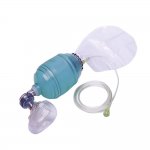
The ideal is a bag/valve/mask, as per the photo.

The reservoir bag and tubing is to attach an oxygen cylinder, so disregard that bit for the purposes of this discussion.

Don't forget that if someone is unconscious and lying on their back, their tongue will drop back and block their airway.
You need to tilt the head back to pull the tongue forwards, before your can get any air into them.
And maintain the airway in that position throughout.
 

Attachments

  • merlin-disposable-bag-valve-mask-p229-215_image.jpg
    merlin-disposable-bag-valve-mask-p229-215_image.jpg
    30.8 KB · Views: 0
Last edited:
It's not really the thing these days to give mouth to mouth, without some kind of face mask with a one-way valve as a minimum. I had to do it without, back in the day, and it wasn't pleasant.

Even if the casualty doesn't actually vomit, there's often froth and stuff coming up out of the lungs, especially if they've been in water any length of time.

The ideal is a bag/valve/mask, as per the photo.

The reservoir bag and tubing is to attach an oxygen cylinder, so disregard that bit for the purposes of this discussion.

Don't forget that if someone is unconscious and lying on their back, their tongue will drop back and block their airway.
You need to tilt the head back to pull the tongue forwards, before your can get any air into them.
And maintain the airway in that position throughout.

Well I didn't have a choice - there was no mask with one way valve.
I knew I had to act immediately so I didn't cross my mind as to whether it was unpleasant or not.

"the ideal is a bag/valve/mask, as per the photo. "
How often would you have that immediately to hand?

"For every 60 seconds that pass, chances of surviving drops by 10% without CPR or defibrillation. After just 4 minutes, brain damage begins to occur"
 
Last edited:
Well I didn't have a choice - there was no mask with one way valve.
I knew I had to act immediately so I didn't cross my mind as to whether it was unpleasant or not.

"the ideal is a bag/valve/mask, as per the photo. "
How often would you have that immediately to hand?

"For every 60 seconds that pass, chances of surviving drops by 10% without CPR or defibrillation. After just 4 minutes, brain damage begins to occur"

Mouth to mouth used to be expected of us a few years ago, but these days, rightly or wrongly, it's not considered reasonable to ask someone to do it. Well done though for jumping in when you had to.

I carry a pocket mask with me nearly all the time, in case the need arises. And on the lifeboat, when I'm most likely to have to do CPR, we've got a BVM and oxygen.

But even without ventilations, just carrying out compression-only CPR is going to be beneficial. It will move a certain amount of air in and out, as long as an open airway is being maintained.
 
Mouth to mouth used to be expected of us a few years ago, but these days, rightly or wrongly, it's not considered reasonable to ask someone to do it. Well done though for jumping in when you had to.

I carry a pocket mask with me nearly all the time, in case the need arises. And on the lifeboat, when I'm most likely to have to do CPR, we've got a BVM and oxygen.

But even without ventilations, just carrying out compression-only CPR is going to be beneficial. It will move a certain amount of air in and out, as long as an open airway is being maintained.

Well you are a professional and not one of us rank amateurs.
if that is your work environment you'd equip yourself with all the necessary gear(y)
 
It seems that in some situations heart compressions will as said tend to ventilate the lungs as well. However I would imagine in the case of drowning or perhaps gas asphyxiation where initial problem is caused by lung congestion, then mouth to mouth would be most efficient way to get lungs clear. On the other hand electrocution might not need lung ventilation so much as heart compressions. Unfortunately First Aid teachers tend to be told to dumb the instruction down to most likely situation so you can remember simple rules. As for needing protection with mouth to mouth I think in most cases I would disregard. ol'will
 
It seems that in some situations heart compressions will as said tend to ventilate the lungs as well. However I would imagine in the case of drowning or perhaps gas asphyxiation where initial problem is caused by lung congestion, then mouth to mouth would be most efficient way to get lungs clear. On the other hand electrocution might not need lung ventilation so much as heart compressions. Unfortunately First Aid teachers tend to be told to dumb the instruction down to most likely situation so you can remember simple rules. As for needing protection with mouth to mouth I think in most cases I would disregard. ol'will
What you say makes perfect sense: I'll keep that in mind.(y)
 
Top