Fibreglass and Wooden Boats

Jomac

Member
Joined
12 Apr 2017
Messages
31
Visit site
I was reading a PDF on a website about fibre glassing wooden boats. The author is a recognised expert in the field of wooden boats. Basically he divided wooden boats into two sections. New boats with bare wood he accepted could be fibre glassed inside and out without ill effect, however older boats he could accept fibre glassing but only if there was no other alternative because the wood was so rotten.

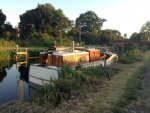
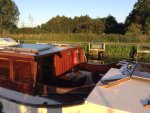
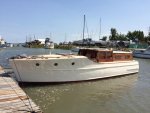
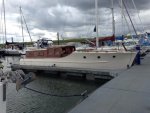
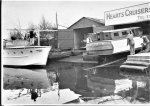
I'm looking at buying a wooden boat built in 1947 and the hull below the waterline is pretty sound, but there are some sections above the deck that need re-planking. The boat has been out of the water for over 3 years and stored in dry conditions.

My question is simply, would by boat benefit from fibre glassing whilst its still out of the water?
 

Attachments

  • 6 of Hearts 1947.jpg
    6 of Hearts 1947.jpg
    95.5 KB · Views: 38
  • 4594813.jpg
    4594813.jpg
    47.7 KB · Views: 39
  • 4594826.jpg
    4594826.jpg
    55 KB · Views: 39
  • 4594827.jpg
    4594827.jpg
    48.4 KB · Views: 42
  • 4594828.jpg
    4594828.jpg
    43 KB · Views: 42
  • 4594831.jpg
    4594831.jpg
    45.6 KB · Views: 40
If you just want to squeeze a few last years out of a dying wooden boat, fibreglass could be a solution. But it will condemn the boat for sure. The rot will be encapsulated, not cured, and fairly soon it will all be over. Wooden boats are amazingly forgiving, and can be repaired bit by bit, plank by plank. If the repairs needed are above the water, she’s not going to sink. Take your time, give it some thought, talk to people, and stay away from the resin pot.

Nice boat. Congratulations and enjoy! Where is she?
 
If you just want to squeeze a few last years out of a dying wooden boat, fibreglass could be a solution. But it will condemn the boat for sure. The rot will be encapsulated, not cured, and fairly soon it will all be over. Wooden boats are amazingly forgiving, and can be repaired bit by bit, plank by plank. If the repairs needed are above the water, she’s not going to sink. Take your time, give it some thought, talk to people, and stay away from the resin pot.

Nice boat. Congratulations and enjoy! Where is she?

+1.
 
If you just want to squeeze a few last years out of a dying wooden boat, fibreglass could be a solution. But it will condemn the boat for sure. The rot will be encapsulated, not cured, and fairly soon it will all be over. Wooden boats are amazingly forgiving, and can be repaired bit by bit, plank by plank. If the repairs needed are above the water, she’s not going to sink. Take your time, give it some thought, talk to people, and stay away from the resin pot.

Nice boat. Congratulations and enjoy! Where is she?
She's currently in Rochford UK. I fell in love with it because of the style, very reminiscent of the 1920's 'Gentleman's Launch' Inside still has many of the original fittings going back to the 1940's
 
Below the waterline is 100% solid. She came out of the water 3 years ago and for 11 years before that the hull was maintained by a professional shipwright. I had simply wondered about glassing the hull below the waterline on the outside only which is pretty dry. The hull was re-caulked about 5 years ago, filled and painted with epoxy paint.
 
No, and no again. First, nobody would dream of using "fibreglass" these days. It does not stick to wood, especially wood that will move like that boat will. Epoxy glass is a recognised sheathing technique but ONLY on new modern glued construction, not plank on frame.

From your earlier photos it seems clear that the boat is rotten just from the visible bits, and will be even more rotten when you take the outer rotten bits off. The bottom may seem sound, and if it is then no reason to do anything other than keep the caulking up to scratch and paint it. The topsides and deck require replacing in the traditional way, but as suggested on your earlier thread you have no idea what you will find when you take it apart. Take heed of what people have said and walk away. It may be stylish and have nice interior features but it is past it as a functioning boat.
 
Last edited:
It’s hard if you’ve fallen in love…. But really do some serious research. And be realistic about your own resources, ambitions and expectations. To have professional shipwrights ‘restore’ your boat to its original glory will almost certainly cost tens of thousands of pounds. It could reach six figures. And to maintain a boat in pristine condition is also not trivial…

But maybe you are a competent wood worker with space, time and tools and are ready to learn and enjoy. You could use the boat as she is, maybe. And then work on her in the winter. It will be a process that never ends but it can be strangely enjoyable. It will still be surprisingly expensive! But lots of people do this.
The trick I think is not to be over ambitious and to use the boat, at least a bit, while you work on her. It can be hard to maintain momentum once she’s propped up, stripped out and covered in tarpaulins. The river will seem a long way off
 
Jomac, if you can get hold of the lines plan and construction drawings (unlikely though), it would be much easier in the long run to build a new boat from scratch, rather than try to re-build this one.
As you would probably find that as you start to strip timber away, you have to replace more and more.
Rather like what Leo did / is doing with Tally Ho - by the time he has finished his re-build he will have replaced pretty much everything.
https://www.youtube.com/channel/UCg-_lYeV8hBnDSay7nmphUA

Boat restoration is a bit like gambling - once you get into it, you just have to keep on going, in the hope of that elusive win, or reaching that finish date on the horizon which never seems to get closer.

Has this 1947 motor boat got any significant historic value, or is it mainly sentimental value to you?
If she was pre-war, and if she had been (for example) a Dunkirk little ship, then there would be more of an incentive to save her.
But she was probably built cheaply, and maintained on a shoestring over the years, and this has all caught up with her now.
 
Jomac, if you can get hold of the lines plan and construction drawings (unlikely though), it would be much easier in the long run to build a new boat from scratch, rather than try to re-build this one.
As you would probably find that as you start to strip timber away, you have to replace more and more.
Rather like what Leo did / is doing with Tally Ho - by the time he has finished his re-build he will have replaced pretty much everything.
https://www.youtube.com/channel/UCg-_lYeV8hBnDSay7nmphUA

Boat restoration is a bit like gambling - once you get into it, you just have to keep on going, in the hope of that elusive win, or reaching that finish date on the horizon which never seems to get closer.

Has this 1947 motor boat got any significant historic value, or is it mainly sentimental value to you?
If she was pre-war, and if she had been (for example) a Dunkirk little ship, then there would be more of an incentive to save her.
But she was probably built cheaply, and maintained on a shoestring over the years, and this has all caught up with her now.
To be fair, Broads cruisers were often built to a high standard - it's just subsequent maintenance that decresaed in quality as time passed, descending to "keep her going for a season" bodges at the end.
 
One option could be to buy her (for £1) and take the lines off her yourself. You would then be able to build anew which would be quicker and cheaper. Then use her to heat your workshop (after removing anything of value).
+1 and Guy Fawkes night isn't far off.
 
Top