Exhaust temperature Alarm

Silvercloud

Well-Known Member
Joined
10 May 2020
Messages
123
Visit site
Hello
Has anyone fitted an exhaust temp.alarm to indicate failure of the water injection into the exhaust system and if so what was your experience in fitting and using one?

Thanks
 
Hi silvercloud

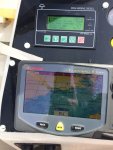
I have recently fitted a double exhaust monitor on my twin cummins 6bta's after we spun an impeller earlier this year. I looked around extensively and decided on one made in Blighty by a company called silicon marine Home: Silicon Marine its a well thought out product in most areas.
  • The sensors are drilled into the exhaust hose so reaction time is quick.
  • The sensors are connected to a junction box which is connected to the display with a Rj12 cable - makes routing to the display easy
  • The junction box also has NMEA out.
  • The junction box is not waterproof - Mines mounted near the engines so will find out how resistant to corrosion it is. It should be ok as it is covered. Not open
  • The display is clear and consise
  • The display unit can set individual alarms per side, if one tends to run hotter than the other
  • An external alarm can be used (and was supplied) if the internal one isnt loud enough - the internal is loud on our flybridge
  • The display is surface mount - which I think is a negative point as the jbox cable enters the display from the bottom rather than the rear making mounting interesting and hiding the cable harder. I'm looking at buying 3d printer and if I do I'll make a semi recessed box for it with rear entry for the cable. I understand its built using an off the shelf box - probably due to low volumes and its functional so no big deal breaker.
Overall i'd recommend it.. it works well.. it reacts fast and hopefully can let me know if we spin another impeller hub!

Steve
 
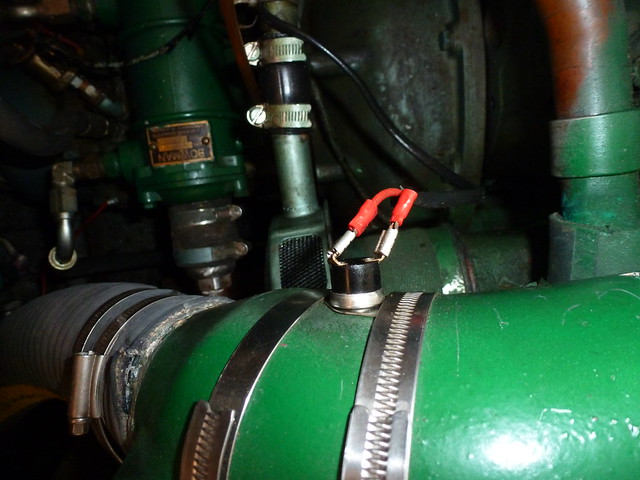
or you could clamp a temperature sensing switch to the face plate of your raw water pump. If you loose seawater, the pump face gets incredibly hot really really quickly. (I learnt this when I forgot to open a seacock). Depending on your engines you may be able to just use a Normally Open switch and wire it in parallel with you engine temp sensor.
5x KSD302 40~180 Degree Thermostat Temperature Thermal Control Switch NO/NC | eBay
 
Or place a seawater pressure sensor on the pipage around the pump , or better the pump body .
Thats what MAN do . Here 2.8 bar ....but you can configure the units .886E2454-AB82-4335-B84D-55E6EB916BFC.jpeg
 
Hello
Has anyone fitted an exhaust temp.alarm to indicate failure of the water injection into the exhaust system and if so what was your experience in fitting and using one?

Thanks
I believe some form of early warning that the raw water flow has been interupted is a must. A temperature sensor at the water injection point is the most common method.

www.solocoastalsailing.co.uk
 
I have an Index Marine exhaust warning when I bought the boat:

P1040665 by Roger Gaspar, on Flickr

As Colin says (Plum) a sensor at the injection point is commn as this is. I have tested the test - it works but it has never been asked in anger. This is the old model but the current is similar.
 
I have an Index Marine exhaust warning when I bought the boat:

P1040665 by Roger Gaspar, on Flickr

As Colin says (Plum) a sensor at the injection point is commn as this is. I have tested the test - it works but it has never been asked in anger. This is the old model but the current is similar.

This is that type of temperature switch.

KSD301 Temperature Thermal Switch Normally Open/Closed NO NC Thermostat Reset | eBay

1-5pcs KSD301 NO Normally Open Thermostat Temperature Thermal Control Switch | eBay

Add a light and buzzer and you have it.

Measure the normal exhaust temperature when running under load and select a temperature a little above what you measure.
 
Measure the normal exhaust temperature when running under load and select a temperature a little above what you measure.

Note though that with my engines with the probes inserted at the top of the exhaust hose about 150mm down (I think) from the shower head I get a cruise temp of around 38degC with seawater at 23, but at idle to 1100rpm it can hit 70+ degrees as there is less water to cool.. so if going temp switch you want to choose high enough to eliminate that otherwise you'll just end up ignoring the alarms..

Steve
 
Note though that with my engines with the probes inserted at the top of the exhaust hose about 150mm down (I think) from the shower head I get a cruise temp of around 38degC with seawater at 23, but at idle to 1100rpm it can hit 70+ degrees as there is less water to cool.. so if going temp switch you want to choose high enough to eliminate that otherwise you'll just end up ignoring the alarms..

Steve

Point taken.
 
Note though that with my engines with the probes inserted at the top of the exhaust hose about 150mm down (I think) from the shower head I get a cruise temp of around 38degC with seawater at 23, but at idle to 1100rpm it can hit 70+ degrees as there is less water to cool.. so if going temp switch you want to choose high enough to eliminate that otherwise you'll just end up ignoring the alarms..

Steve
wouldn't it make sense to bring the probe closer to the mixer then Steve?
OK, it would generally register higher temps, but the variation would hopefully be smaller and easier to manage! I guess you drilled the hole on the top side of the hose and not bottom where it's easier to get more water splashing/moving about keeping temps low when there's not much flow (idle)

V.
 
wouldn't it make sense to bring the probe closer to the mixer then Steve?
OK, it would generally register higher temps, but the variation would hopefully be smaller and easier to manage! I guess you drilled the hole on the top side of the hose and not bottom where it's easier to get more water splashing/moving about keeping temps low when there's not much flow (idle)

V.

Hi Vas

You probably could bring it closer but was just following instructions also knowing my luck I would place the probe just between the shower head streams so get a crappy ready. At distance the water should have spread so normalises the reading.

The reason against the bottom mounting is that it's harder to detect reduced flow if water is running over it at the top if there is a partial blockage and reduced flow you should see the temp increase.

Most of the switch type sensors (bimetallic type) used are usually rated at about 90c so the range I'm monitoring and alarming is much lower. Nothing to stop me pushing the alarm set point up to this level to eliminate any false alarms I may have at lower rpm..

Like I say it's not perfect, but it's a good short term solution before I have time to do a fully integrated type system

Steve
 
Thanks for all the replies
I WILL fit one of these and like the units at Silicone Marine
They offer 3 types of display and they are all configerable for temp.

Trevor
 
Top