
Exhaust Systems

yachtorion

Well-Known Member
Joined
4 Oct 2009
Messages
1,025
Visit site
Since I'm upgrading the engine I figured I may as well pay some attention to the ancillaries. I'm comfortable with the raw water and fuel systems but I don't know much about marine exhausts.

The current install has two of these vetus mufflers in the hose:
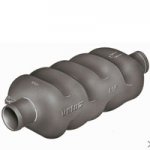
vetus-muffler-1.jpg

I'll be running the engine for hot water and battery charging even on days I'm not using it for propulsion, especially if I'm anchored somewhere... Is the existing fit a good solution, or is there something better I can fit? I'm aware of the existence of something called a waterlock...

Thanks!
 
Since I'm upgrading the engine I figured I may as well pay some attention to the ancillaries. I'm comfortable with the raw water and fuel systems but I don't know much about marine exhausts.

The current install has two of these vetus mufflers in the hose:

View attachment 47260

I'll be running the engine for hot water and battery charging even on days I'm not using it for propulsion, especially if I'm anchored somewhere... Is the existing fit a good solution, or is there something better I can fit? I'm aware of the existence of something called a waterlock...

Thanks!

A waterlock is a good idea, although whether one is essential will depend on your particular layout, most importantly the volume of the exhaust from the top of the gooseneck (assuming you have one) to the the exhaust elbow. The waterlock is intended safely to catch water draining back when the engine is stopped (rather than its draining into the cylinders). The Vetus site has a section which will help you calculate the relevant volumes.

Re running engine for hot water/charging: you'll be well advised to do this under load (especially with a new engine). Frequent no-load running can lead to bore varnishing.
 
Since I'm upgrading the engine I figured I may as well pay some attention to the ancillaries. I'm comfortable with the raw water and fuel systems but I don't know much about marine exhausts.

The current install has two of these vetus mufflers in the hose:

View attachment 47260

I'll be running the engine for hot water and battery charging even on days I'm not using it for propulsion, especially if I'm anchored somewhere... Is the existing fit a good solution, or is there something better I can fit? I'm aware of the existence of something called a waterlock...

Thanks!

You may well find one is a waterlock - would be very unusual to fit 2 mufflers. Page 76 of the Vetus catalogue explains exhaust systems. A basic NLP waterlock will be fine. Probably no need to a muffler as well, but as you have one you could incorporate it in your new system. Make sure you have the right size hose to match your exhaust outlet. The Yanmar is 45mm - don't know what your new engine is. an anti syphon valve will be needed if you don't have one already.

BTW not a good idea to run the engine for charging and hot water as you are not putting any load on it. You will find 20 minutes running when you leave your mooring will heat your calorifier and it will keep hot for some time. Battery top up better done through solar panels rather than running engine.
 
Last edited:
And also you may find that you're not very popular in some anchorages if you're going to be running your engine unnecessarily.
 
When I fitted the engine I installed one of those mufflers (as well as a Vetus swan neck at the transom) instead of an actual waterlock. The volume of the muffler was adequate and it was easier to fit. Depending on your requirements you may find the two mufflers are equivalent to the required waterlock (and a whole lot cheaper).
 
Thanks all! Who knew there was so much to consider in an exhaust system! That's given me plenty of thinking to do.

Thanks also for the note of caution of running the engine off-load. Definitely something to think about and make sure it's kept to an absolute minimum.

Also - disturbing anchorages - am very conscious of that. I'm mainly thinking of the cold winter days when I'm running lights and heaters a lot - I doubt there will be many people around then!

But my dinghy racing career taught me that the best sailing days are often short spring, autumn or winter days when other souls don't seem to want to be out on the water... I think Dylan's experience shows the same, though he is a lot more intrepid than I!
 
And also you may find that you're not very popular in some anchorages if you're going to be running your engine unnecessarily.

Not as unpopular as he would be with a portable petrol genny stood on deck or in the cockpit!
 
One thing that is already clear.... the existing exhaust install on the boat was not a great one... hose came off the outlet, down, up in a loop above the engine, then down to the floor and aft, upwards a little via mufflers lying on the locker floor and slightly more up towards the skin fitting.

That nice tall loop was in its favour i guess but no water trap and no anti syphon...
 
One thing that is already clear.... the existing exhaust install on the boat was not a great one... hose came off the outlet, down, up in a loop above the engine, then down to the floor and aft, upwards a little via mufflers lying on the locker floor and slightly more up towards the skin fitting.

That nice tall loop was in its favour i guess but no water trap and no anti syphon...
You only need anti-siphon if the mixing elbow is below or close to the waterplane.
A key element which others don't seem to be mentioning is a swan-neck, non-return flap or other contraption at the transom to stop following seas filling the exhaust. This has claimed the engines of one or two offshore boats....
Again, it's probably in the Vetus catalogue?
 
Thanks all. I think I'm going to go for a Vetus NLP waterlock and a gooseneck, both installed as close as possible to the engine, and I'm going to change the thru-hull for one with a flap on it. I'll probably re-use one of the existing mufflers too (new and old systems both 45mm). Given waterline proximity I'll also put an anti-syphon device somewhere around the heat exchanger. That should produce a safe and quiet enough system I hope :)
 
Last edited:
Thanks all. I think I'm going to go for a Vetus NLP waterlock and a gooseneck, both installed as close as possible to the engine, and I'm going to change the thru-hull for one with a flap on it. I'll probably re-use one of the existing mufflers too (new and old systems both 45mm). Given waterline proximity I'll also put an anti-syphon device somewhere around the heat exchanger. That should produce a safe and quiet enough system I hope :)

The NLP waterlock also has significant silencing properties, so even without your old muffler, noise should not be a problem.
Most boats seem to do without a flap on the exhaust, but the wisdom of that would partly depend on the height of the gooseneck and orientation of the exhaust opening on the hull.

Re antisiphon: Vetus produces two designs. They are outwardly similar but one includes an air valve which can become blocked by salt and should be dismantled and cleaned periodically (usually an easy job, but a job, nonetheless); the other has no valve but 'piddles' out exhaust water when the engine is running. This is a useful tell-tale that all is well. Most people construct the system so that the piddle tube runs into a cockpit drain, which is often convenient and has the asset of usually being visible from the helm.

Vetus' guidance on design, layout and dimensions is pretty comprehensive: follow it and you should be OK.
 
The NLP waterlock also has significant silencing properties, so even without your old muffler, noise should not be a problem.
Most boats seem to do without a flap on the exhaust, but the wisdom of that would partly depend on the height of the gooseneck and orientation of the exhaust opening on the hull.

Re antisiphon: Vetus produces two designs. They are outwardly similar but one includes an air valve which can become blocked by salt and should be dismantled and cleaned periodically (usually an easy job, but a job, nonetheless); the other has no valve but 'piddles' out exhaust water when the engine is running. This is a useful tell-tale that all is well. Most people construct the system so that the piddle tube runs into a cockpit drain, which is often convenient and has the asset of usually being visible from the helm.

Vetus' guidance on design, layout and dimensions is pretty comprehensive: follow it and you should be OK.

Thanks Mac. The flap on the exhaust is just a belt and braces thing, I like to have a little redundancy in any critical system.. Thanks for the info on the anti-syphons - I think I'll go for one with the "piddle" tube type, always nice to have a visual tell tale, especially if the view of the exhaust is obscured by a flap... I'll re-use the hole left by the old engine stop lever which was positioned at the aft of the cockpit near the drain. Based on Vetus's guidance and given the short hose runs I need, cross fingers the system should be fine and a massive improvement on what was there :)
 
Last edited:
>the "piddle" tube type, always nice to have a visual tell tale, especially if the view of the exhaust is obscured by a flap... I'll re-use the hole left by the old engine stop lever which was positioned at the aft of the cockpit near the drain

I have this vision of some hapless new crew member sitting in the cockpit and looking for a non-existent dog because their shoes suddenly came over all wet and warm. Or perhaps more amusingly, a visiting customs official.
 
>the "piddle" tube type, always nice to have a visual tell tale, especially if the view of the exhaust is obscured by a flap... I'll re-use the hole left by the old engine stop lever which was positioned at the aft of the cockpit near the drain

I have this vision of some hapless new crew member sitting in the cockpit and looking for a non-existent dog because their shoes suddenly came over all wet and warm. Or perhaps more amusingly, a visiting customs official.

One can but hope!

It looks like Vetus do a thing called an NLPG - an NLP waterlock built into a gooseneck... That saves some money!
 
Top