Engine Idle Changing Rates

Seatrout

Well-Known Member
Joined
20 Jan 2012
Messages
310
Location
Tha mi a' fuireach Inbhir Chluaidh
Visit site
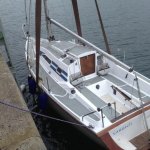
The propulsion unit in my super-yacht is the much coveted and sought after Volvo Penta 2001.

After an alternator diode problem/replacement recently, I'm nervous to cause any other elect/mechanical issues.

I noticed while the engine was on idle and out of gear on a pontoon that when I had inadvertently turned off the batteries, the engine revs increased. Batteries on again and revs reduced.

The assumption I made is that the alternator was no longer charging batts and therefore the load on engine was reduced. Is this the case? Is there damage to alternator or other components that can occur by running engine in this mode?

I'm thinking less running load on engine = more speed through water?

Any advice in terms that an imbecile can understand will be appreciated!
 
Switching the battery isolators off with the engine running can blow the alternator.
Do not run the engine with the isolator switches off.
 
Switching the battery isolators off with the engine running can blow the alternator.
Do not run the engine with the isolator switches off.

Totally agree. Switching off battery switch whilst engine is running is a definite "No, No". It sounds as if you've got away with it so far which may be because you've done it only with the engine idling when alternator output is low. Always stop the engine before isolating the battery.
 
I noticed while the engine was on idle and out of gear on a pontoon that when I had inadvertently turned off the batteries, the engine revs increased. Batteries on again and revs reduced.

The assumption I made is that the alternator was no longer charging batts and therefore the load on engine was reduced. Is this the case?

Yes. You get nothing for free and an engine has to work to produce electricity. IIRC an alternator at full chat uses 2 or 3 HP or thereabouts but that will go down when the batteries are charged and your electric gizmo's are all switched off.

You could get more power to the prop by switching off the alternator but, as others have said, it's best not to try unless you know what you are doing. In any event the prop/engine/alternator combination are hopefully matched up properly and simply putting more power into the existing prop may not do much. If the engine RPM when underway are OK at present there probably isn't much to be gained.
 
Right: alternators take power. Sometimes can take more than 1 hp of available engine power. Running off load will make a little more power available at the props. This was quite noticeable in the early days when people tried putting big alternators on their 4 - 5hp Stuart Turners. In heavy load conditions it could drop available engine power by as much as 20%

Wrong: simply switching off. as explained above, this is very likely to damage the diodes and voltage controller in the alternator. Connected, it is generating power which is fed to the batteries. Interrupt that connection the power has to go somewhere, and causes a voltage spike before the controller can adjust to the no load condition. This destroys it.

So either you take the alternator off, and make some other arrangement for keeping your batteries charged (expensive), or live with it.

If its really an issue, perhaps you need a bigger engine?
 
Just to add a bit on how much power is required from the engine. A 100amp alternator at full chat (and producing say 15 volts at the terminals) will requiire 15 x 100 = 1500 watts not incuding losses in the mechanical drive. One horse power is 746 watts so the engine will need to supply at least 2 HP.

Abraxas is fitted with a smart regulator which switches at intervals to prevent the batteries out gassing. I can tell when it switches by the change in engine note... then again that's with two alternators with a total of 185 amps.
 
Count yourself lucky this time, I recon you've just lost one of your nine lives. As oldharry says, a definite no no!

Thank you, I realise now that it could have been a cluster-F. Was aboard the 'super-yacht' today and went to the engine room to note that at rest the volt meter reads 12+V and on running 14V.
In consideration of the 2-position power switch's location (in the companionway/grand entrance staircase), I have fashioned a piece of 8" timber to be placed under the switch so that it cannot be moved south without intentional effort.
 
Note that the calculations given are for 100 amp alternator at full chat. A very unlikely scenario in practice. If you had an amp meter and observed you might get a high charge current but not for very long. One might imagine that if you need full horsepower then you will have been motoring for some time so charge current and lost horsepower will be very small.
Not so when idling at the dock. Probably just started the engine so battery taking a lot of charge.
But really at idle speed an engine is set to have enough air and fuel simply to counteract internal friction so maintain a very low engine speed. So very low horsepower developed. A fine balance. Hence any additional load from alternator makes a big difference to total load so slows the engine markedly. However when you are out there at full throttle against a fierce wind the alternator load compared to total engine load will be very small.
So don't even think about disconnecting alternator unless you can open the field current circuit. Even then I don't think you will notice any difference.
Note most boats will not be able to use max horse power in calm conditions as hull speed and prop pitch (high engine revs)will limit
actual boat speed. Going into a strong wind and big seas may make a difference however such that more horsepower would be useful. good luck olewill
 
To pre-empt an accidential alternator "off" senario, you could drill & thread a locking pin into the battery 1-both-2 selector switch.

Should you want to divert all available horsepower to the prop, it's just a matter of slippling off the alternater v-belt before firing up. I countered the Rhone currents like this.

Perfectly normal to get a change in running engine tone when switching between battery banks; I consider it a reassuring check that the alternator is working.

(You didn't post a picture of the super yacth btw!)
 
Last edited:
...Should you want to divert all available horsepower to the prop, it's just a matter of slippling off the alternater v-belt before firing up....
This would stop the waterpump on my Yanmar!

All I need to do for temporary increase in power is turn off the ignition switch which cuts the power to the alternator. You also lose all power to the instruments and warning lights but the engine runs at full power.
 
Note that the calculations given are for 100 amp alternator at full chat. A very unlikely scenario in practice.

That's certainly true and I alluded to that in my earlier post. Don't forget though that if you've got fridges, radar etc etc runnning that the alternator will be churning out power for those at the same time. But I agree that it's unlikely to be working flat out for very long so the loss of HP at the prop will be reduced.
 
Just to add a bit on how much power is required from the engine. A 100amp alternator at full chat (and producing say 15 volts at the terminals) will requiire 15 x 100 = 1500 watts not incuding losses in the mechanical drive. One horse power is 746 watts so the engine will need to supply at least 2 HP.

Abraxas is fitted with a smart regulator which switches at intervals to prevent the batteries out gassing. I can tell when it switches by the change in engine note... then again that's with two alternators with a total of 185 amps.

There weren't so many 100a alts around in the days when we were trying to cope with 4hp Stuart auxiliaries in 25 + footers (25ft+ was reckoned 'big' in those days!) ! But thanks for the calculation. With a max speed of perhaps <4 kts in still water, losing even half a HP made a big difference!
 
Top