
Emulsified oil dripping out of a seagull's leg

armchairsailor

Well-Known Member
Joined
17 Sep 2009
Messages
1,144
Location
back aground in Blighty
Visit site
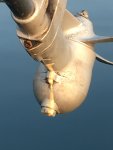
I've just acquired a Century 40 plus long shaft which now appears to be dripping emulsified oil from the leg/ gearbox housing. I know nothing about these machines (they're a thing from my youth, and so haven't inspected them in anger). I've seen it running once, ran it myself later in the day on the dinghy and then it failed to start again. I put that down to my inexperience with the engines, and haven't had the opportunity to try it again since. Does the panel think that I am facing an issue?

It has been sitting on its back for a week after I removed it from the dinghy transom, so I assume that's when the oil and water were allowed to mix.
 

Attachments

  • IMG_0977.jpg
    IMG_0977.jpg
    399.6 KB · Views: 2
I’m sure the experts will be along shortly, but I’ve heard that Seagull gearboxes are designed to work with an oil/water emulsion rather than the more normal approach of keeping all trace of water out.

Pete
 
I’m sure the experts will be along shortly, but I’ve heard that Seagull gearboxes are designed to work with an oil/water emulsion rather than the more normal approach of keeping all trace of water out.

Pete

Quite normal. There are no seals on the gearbox shaft so the oil slowly oozes out and water oozes in. You need heavy hypoid oil - used to be SAE 190 from memory. Just take the plug out of the back, pour any water out and top up with the heaviest oil you can find.

Good information on all things Seagull on www.saving-old-seagulls.co.uk
 
I’m sure the experts will be along shortly, but I’ve heard that Seagull gearboxes are designed to work with an oil/water emulsion rather than the more normal approach of keeping all trace of water out.

Pete

That is correct, according to Saving Old Seagulls. I'd bookmark that site - it is an invaluable resource for all Seagull owners!
 
"Then it failed to start again"
Also quite normal for Seagulls in my experience.��

Not normal and I suspect the difficulty in starting in this case is because he is using a long shaft on a dinghy. This creates excessive back pressure which leads to difficult and inconsistent starting.
 
Not normal and I suspect the difficulty in starting in this case is because he is using a long shaft on a dinghy. This creates excessive back pressure which leads to difficult and inconsistent starting.

Agreed, Seagulls are a bit sensitive to backpressure, but another possibility is that this engine has one of those dreadful suppressors in the HT cable and it could be breaking down. Someone gave me an almost unused Seagull which they gave up on because they could never start it. I got rid of the suppressor fitted an unsuppressed HT lead and it has never failed since. Checked the suppressor and it was virtually open circuit.
 
The only time a Seagull let me down was plug failure. In fact, going to look at a couple of freebies on Sunday, one a Featherweight, not sure about the other. If anybody is interested, I have Silver Century LS with clutch in the shed. For spares, as it has a cracked block.
 
That’s a good point. If there is an unexplained black encapsulated lump on the HT lead, suspect it!

Us insiders are fortunate enough to own ones that have the best of all bits (older powerhead, down tube, exhaust and fuel tank but newer (post 1980!) gearbox and electronic ignition plus recoil starter. Specially built as a leaving present when I was made redundant!
 
The oil you want in EP 140. Go to any tractor dealer with an empty milk bottle and get a couple of litres. From the picture the gear box may have been overfilled and then topped up in the normal Seagull manner by water getting in passed the seals. If you let the engine stand for a few days you can then undo the nylon drain bung and drain out the water, although I would be tempted to drain the lot and then, with the engine in an upright position, ie as though you were going to start it refill the box until it reaches the drain bung level. Give it time to level out, it’s thick oil, even in the summer, and top it up again.
 
Last edited:
That’s a good point. If there is an unexplained black encapsulated lump on the HT lead, suspect it!

Some were brown but do the same lose it.

I remember reading (possibly on this forum) that you can always tell a car that was driven by a Seagull owner, look at the carpet in the boot, on one side will be a damp patch of two stroke and on the other a patch of emulsified oil.
Having said that I wonder how many other two stroke engines from the period are still running and can be easily repaired?
 
Last edited:
"Yellow matter custard, dripping from a dead dog's eye"

Dunno whether that problem was solved, but it sounds suspiciously similar to me.

"Emulsified oil dripping out of a seagull's leg" (Sorry - I couldn't help myself.)
 
Top