Electrical system design small yacht

Spindrift68

New Member
Joined
19 Jan 2025
Messages
6
Visit site
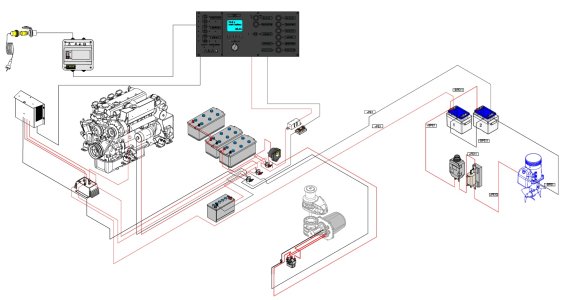
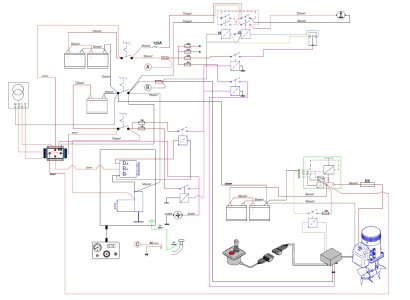
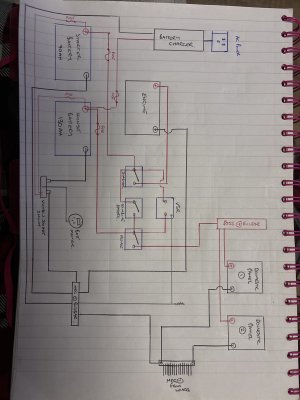
Hello all, new to this forum so be gentle with me. Just after some advice if possible, I am in the process of upgrading a old and tired electrical system and have made a start on it, please see attached where I’ve got to so far, please could anyone check it over and point me in the right direction of any mistakes/issues. Thankyou
 

Attachments

  • image.jpg
    image.jpg
    1.6 MB · Views: 80
What is the difference between your engine battery and starter battery?

Any provision for windlass, solar, inverter?
Only difference is that engine battery is high cranking and lower ah and the house is slightly higher ah agm. Not planning for windlass or inverter right now, may add a little solar at some point
 
Last edited:
I hope you don't mind me rehosting your pic at Imgur, @Spindrift68. I also cropped it a bit and adjusted the colour. I think it's easier to read this way.

zgDDm2y.jpeg
 
Hello all, new to this forum so be gentle with me. Just after some advice if possible, I am in the process of upgrading a old and tired electrical system and have made a start on it, please see attached where I’ve got to so far, please could anyone check it over and point me in the right direction of any mistakes/issues. Thankyou
Looks mostly correct, except :

1) Connect the combine switch to the load side of the isolator switches, that way you can isolate a dead/faulty battery and use the combine switch to get you home on the good battery.

2) Domestic wiring/fusing. You need to use start sized cable from the battery to the isolator and to the combine switch, or you can't start the engine. This needs to be fused the same as the engine battery fuse, to protect the wiring, but still enable enough current to start the engine. This fuse will be rated far too high for the VSR and domestic panels. The fuse for the VSR needs to be rated for the max current of the VSR, as does the cables going to it. You'll need to add fuses for the domestic panels, these need to be rated for the cable, which needs to be rated for the combined loads of the panel, don't skimp here or you'll get voltage drop issues.
 
Looks mostly correct, except :

1) Connect the combine switch to the load side of the isolator switches, that way you can isolate a dead/faulty battery and use the combine switch to get you home on the good battery.

2) Domestic wiring/fusing. You need to use start sized cable from the battery to the isolator and to the combine switch, or you can't start the engine. This needs to be fused the same as the engine battery fuse, to protect the wiring, but still enable enough current to start the engine. This fuse will be rated far too high for the VSR and domestic panels. The fuse for the VSR needs to be rated for the max current of the VSR, as does the cables going to it. You'll need to add fuses for the domestic panels, these need to be rated for the cable, which needs to be rated for the combined loads of the panel, don't skimp here or you'll get voltage drop issues.
Paul,
1) understood I think, is that load side on both switches, basically the two cables move to the other sides?
2) when you say start size cable, will 35mm 240amp be sufficient? Or larger?
I have put in fuses after the battery connections, do I need to put fuses in the cables between the isolators and the combiner on both sides?
VSR is 140amp, again do I need a fuse either side of the VSR?
Yes both panels will be fused and will add that on
Thanks in advance
 
Paul,
1) understood I think, is that load side on both switches, basically the two cables move to the other sides?
Yes
2) when you say start size cable, will 35mm 240amp be sufficient? Or larger?
Depends on the engine, if you use 35mm from the engine battery to the engine, it'll be good to the domestic isolator.
I have put in fuses after the battery connections, do I need to put fuses in the cables between the isolators and the combiner on both sides?
VSR is 140amp, again do I need a fuse either side of the VSR?
Yes both panels will be fused and will add that on
Thanks in advance
From the domestic battery to the isolator, same size fuse as o the engine battery. From the isolator to the VSR you would need 25mm cable to carry the full 140A, fused accordingly. If you don't enable the start assist function (no need with the combine switch) you can downrate that to suit your alternator output, for instance, if you have a 60A alternator use 10mm cable and 60A fuses (this assumes no charging sources or loads exceeding 60A). You must fuse one side to protect the VSR from overload, if the other side can possibly short, you must fuse that too.
 
Yes

Depends on the engine, if you use 35mm from the engine battery to the engine, it'll be good to the domestic isolator.

From the domestic battery to the isolator, same size fuse as o the engine battery. From the isolator to the VSR you would need 25mm cable to carry the full 140A, fused accordingly. If you don't enable the start assist function (no need with the combine switch) you can downrate that to suit your alternator output, for instance, if you have a 60A alternator use 10mm cable and 60A fuses (this assumes no charging sources or loads exceeding 60A). You must fuse one side to protect the VSR from overload, if the other side can possibly short, you must fuse that too.
Thank you massive help
 
Yes

Depends on the engine, if you use 35mm from the engine battery to the engine, it'll be good to the domestic isolator.

From the domestic battery to the isolator, same size fuse as o the engine battery. From the isolator to the VSR you would need 25mm cable to carry the full 140A, fused accordingly. If you don't enable the start assist function (no need with the combine switch) you can downrate that to suit your alternator output, for instance, if you have a 60A alternator use 10mm cable and 60A fuses (this assumes no charging sources or loads exceeding 60A). You must fuse one side to protect the VSR from overload, if the other side can possibly short, you must fuse that too.
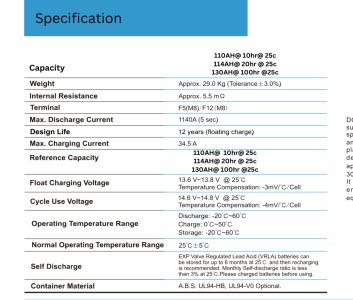
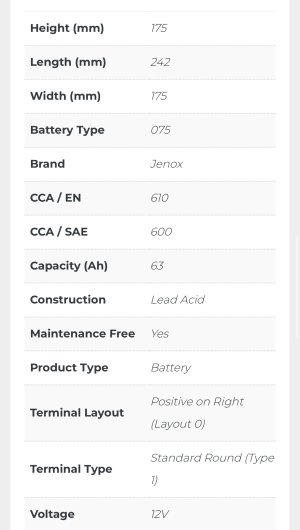
Hi Paul, sorry if I sound dumb but just wanted to check ref ruse sizes, i have the specs of the two batteries I’ve got (attached pictures) what would you recommend as the fuse sizes for them? I was thinking 150amp?
For ref as well the alternator is 50a
Thank you
 

Attachments

  • IMG_2457.jpeg
    IMG_2457.jpeg
    535.5 KB · Views: 10
  • IMG_2458.jpeg
    IMG_2458.jpeg
    507.5 KB · Views: 14
Hi Paul, sorry if I sound dumb but just wanted to check ref ruse sizes, i have the specs of the two batteries I’ve got (attached pictures) what would you recommend as the fuse sizes for them? I was thinking 150amp?
For ref as well the alternator is 50a
Thank you
If you are using 35A cable to the isolators and then to the engine, you can fuse for that, which is usually rated at 240A. So anywhere 200A/240A as these fuses are protecting the cables.
 
Top