Electrical connections

Neeves

Well-Known Member
Joined
20 Nov 2011
Messages
14,081
Location
Sydney, Australia.
Visit site
There have been a couple of threads recently on electrical connectors. These popped up on my screen today from Aliexpress but I'f fairly confident Temuwill have something similar, if not the same product. They don't look overly expensive - if you are making a lot of connections these might be worth a punt. However I expect a rash of criticism from the gurus so don't consider buying until they have had their say.

T-förmige Verdrahtung Terminal Verriegelung Schnell crimp elektrische Kabel Anschluss dose ZK-M306 ZK-M406 elektrische allgemeine Stecker - AliExpress 13

The link appears to be in German - I have no idea why.

Jonathan
 
I'm only going to point out one thing. Several codes require a pressure plate under a screw when used with stranded wire because of the damamge the screw does. Solid wire, no problem, but you can't use stranded wire on a boat (or pretty much anything subject to vibration, including most machinery).

There are screw terminal-type products that have an internal pressure plate. You have to look.
 
I'm only going to point out one thing. Several codes require a pressure plate under a screw when used with stranded wire because of the damamge the screw does. Solid wire, no problem, but you can't use stranded wire on a boat (or pretty much anything subject to vibration, including most machinery).

There are screw terminal-type products that have an internal pressure plate. You have to look.
You mean you cannot use solid wire.

Stranded wire can be/ should be fitted with a ferule if used under a screw,
 
The devices are described as being used with...

'Crimp Electrical Wire'

The pictures do not show stranded wire but either a very beefy single strand or the end of some sort of crimp connector - the pictures may be subject to some enhancement as all the wires (and the ends of the ferrules) look extraordinarily similar if not identical).

I'm just the messenger but I have not noted any reference to the applications, whether marine or terrestrial - but I hope it is not beyond the wit of man (or members here) to use a ferrule, as per accepted norms - if my glance at the pictures is wrong.


Oddly I don't see many wires in chocolate blocks with ferrules nor pressure plates

Jonathan
 
The devices are described as being used with...

'Crimp Electrical Wire'

The pictures do not show stranded wire but either a very beefy single strand or the end of some sort of crimp connector - the pictures may be subject to some enhancement as all the wires (and the ends of the ferrules) look extraordinarily similar if not identical).

I'm just the messenger but I have not noted any reference to the applications, whether marine or terrestrial - but I hope it is not beyond the wit of man (or members here) to use a ferrule, as per accepted norms - if my glance at the pictures is wrong.


Oddly I don't see many wires in chocolate blocks with ferrules nor pressure plates

Jonathan
Some of the pictures show stranded wire.

Either way, these are not suitable for boats. The screw chewing the stranded cable has been well covered. They are mild steel with a plating that will not last long at all if it gets even slightly damp, especially with damp salty air. Ferrules would stop the screws chewing the cables, but why mess around when you can just strip the wires and push them in a Wago connector, if you need that style of connection (removable) ?
 
I understand that Wago is the new fad and I do like them for many things. I have bags of all sorts in my electrical job box. But ...
  • They have only a fraction of the pull-out strength of a terminal block or choc block with pressure plates. And pressure plate chock blocks are not rare at least in the US. Even the big box stores (Home Depot and Lowes) carry them. All of the major manufactures make them.
  • An enclosure is not a guarantee of strain relief. If the enclosure is large there is still bouncing. And there is strain when wires are push and tugged inside a box, and when someone works in the box. There have been many cases of the levers being lifted and wires coming loose when wires were pushed into a box (it has happened to me with too many solid wires in a crowded box--some now go as far as to tape the levers closed. Google it. They are not fool proof.
  • Wago connectors can fail too. The destruction of the Key Bridge in Baltimore is a very public example.
  • Unless you go the the added trouble of racks to mount the Wagos they can be disorganized rather than lined-up.
  • A dedicated enclosure is not always convenient and it can crowd things. It depends.
I see the advantages, but I don't think it is all one of the other.
 
I understand that Wago is the new fad and I do like them for many things. I have bags of all sorts in my electrical job box. But ...
  • They have only a fraction of the pull-out strength of a terminal block or choc block with pressure plates. And pressure plate chock blocks are not rare at least in the US. Even the big box stores (Home Depot and Lowes) carry them. All of the major manufactures make them.
  • An enclosure is not a guarantee of strain relief. If the enclosure is large there is still bouncing. And there is strain when wires are push and tugged inside a box, and when someone works in the box. There have been many cases of the levers being lifted and wires coming loose when wires were pushed into a box (it has happened to me with too many solid wires in a crowded box--some now go as far as to tape the levers closed. Google it. They are not fool proof.
  • Wago connectors can fail too. The destruction of the Key Bridge in Baltimore is a very public example.
  • Unless you go the the added trouble of racks to mount the Wagos they can be disorganized rather than lined-up.
  • A dedicated enclosure is not always convenient and it can crowd things. It depends.
I see the advantages, but I don't think it is all one of the other.
Neither do i , which is why i said "in a Wago connector, if you need that style of connection"
 
I see the advantages, but I don't think it is all one of the other.
I agree with your final statement but I have found them much more versatile than choc blocks in that they can join thin data wires up to 4 or 6mm square wire. I wouldn't trust any connection without some form of strain relief from cable ties to cable cleats / clamps.
 
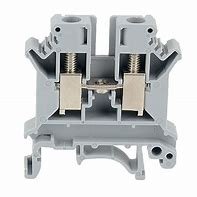
When I wired up my current boat, I used DIN rail mounted terminal connectors that have a flat wire clamping terminal
1738420494656.jpeg

This can be linked but for any negative I would make my own bus bars for negative and multi supply positive like wiring up LED internal lights with crimp ring connectors to make the connection on the bus bar.

The wago connectors make connection quicker so less time in wiring up but can come undone
 
When I wired up my current boat, I used DIN rail mounted terminal connectors that have a flat wire clamping terminal
View attachment 188971

This can be linked but for any negative I would make my own bus bars for negative and multi supply positive like wiring up LED internal lights with crimp ring connectors to make the connection on the bus bar.

The wago connectors make connection quicker so less time in wiring up but can come undone
There are applications when DIN rail connectors make sense. I recently re-wired my lower helm dash, where the engine harnesses went to more than one place, 3 way Wagos would have been very clunky, so i used some of these: https://cpc.farnell.com/wago/2004-1401/terminal-block-din-rail-4way-through/dp/CN24850

After crimping on ferrules the wires just push in very securely. Simple enough to remove them using a small screwdriver to release the clamp.
 
There are applications when DIN rail connectors make sense. I recently re-wired my lower helm dash, where the engine harnesses went to more than one place, 3 way Wagos would have been very clunky, so i used some of these: https://cpc.farnell.com/wago/2004-1401/terminal-block-din-rail-4way-through/dp/CN24850

After crimping on ferrules, the wires just push in very securely. Simple enough to remove them using a small screwdriver to release the clamp.

Interesting

One of the reasons I like din rail is the ease of adding extra terminals on the rail in between existing terminals /

I have also added din mounted octal relay bases and terminal of various sizes.

Each to his own whatever floats your boat

I have seen and used the push in type din terminals which are OK with pin crimps or as you say crimping ferrules.

The ones I tend to use has a flat clamp so even if thin stranded wire is used the terminal will not damage the wire no matter how thin although I have tended to crimp a pin on the wire to hold the wire numbering on even if the wire is removed
 
I agree with your final statement but I have found them much more versatile than choc blocks in that they can join thin data wires up to 4 or 6mm square wire. I wouldn't trust any connection without some form of strain relief from cable ties to cable cleats / clamps.

Wago does have a firm minimum of 24 AG / 0.5 mm. Any smaller and they pull out very easily. Not criticism, just something readers should know.

DIN rail is a great approach when starting from scratch. That is what we use in industry.

I made a comment that Wago-type connectors can come loose. And every screw type connection can come loose as well, so really, we should call that comparable. If there is a problem I have seen with all push-in connectors, for decades, is that they "feel" so easy yet can be done wrong. The installer may nor strip the wire correctly (too much or too little). The spring may not have been relieved/opened correctly before inserting stranded wire, bending strands. They may not have given it a check-tug. Just sayin' that you still need to be just as careful, maybe more so in some details, because hidden screw-ups are impossible to see. Perfect and terrible can look the same, even up-close.
 
Last edited:
Top