oilybilge
Well-Known Member
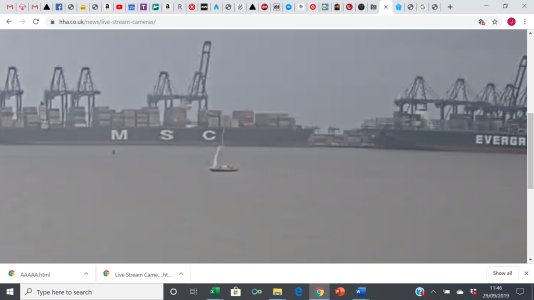
So that's why I went aground on Shotley Spit last summer.
Bloody Russians.
Bloody Russians.


Oh, well… Shotley Spit … a really devious shoal that, in my fifty five years of sailing around and over it, is never where you think it is!So that's why I went aground on Shotley Spit last summer.
Bloody Russians.

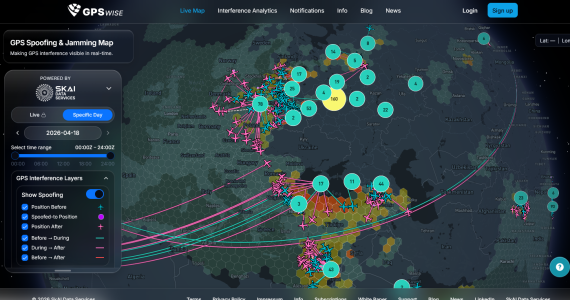
Yes that would be harder. Extremely rare though and not something to really worry about.Finding GNSS jamming devices may be "laughably easy" if the device is transmitting continuously and is not mobile. However if that device is intermittently transmitting while in motion and/or is not otherwise transmitting predictably it becomes less easy to get a fix and by the time the fix is made the transmission source has moved elsewhere or is off. This, of course, becomes an even greater problem when there are several coordinated devices operating randomly and from changing locations.
The point is that if it’s on their territory it cannot be stopped. That is the issue in the Baltic. If it were being done from Finland then the signal would have been found and stopped.It doesn't have to take place on anyone's territory

A ground based system would be exactly as likely to suffer spoofing as a satellite system. The fix for spoofing would be identical too, and is already implemented and available commercially for GNSS solutions - signing the data. If this simple fact wasn't covered in the presentation then you were listening to someone who intends to profit from gullible taxpayers, not to an expert.
 )
)Having experienced spoofing in central London, it's odd, because sometimes it was believable in terms of location, but the timing was way off.I also thought spoofing was a bit of an odd reason to pick. If you're going to spoof you need to target to a specific vessel to give a believable SOG/COG/Position. Hard to imagine anyone targeting a leisure yacht. So I just can't imagine spoofing troubling a leisure sailor beyond a bit of head scratching before he turns the GNSS off. In busy areas the issue would be widely reported too. Expect a transmission from the CG.
Jamming's even more straightforward to spot. Your GNSS just stops working in a very obvious way.
If you wanted to cause havoc then you'd be better off jamming GPS in cities. Few of us carry road atlases these days. Switch off Google maps and many of us would be helpless including most delivery drivers and road atlasses would sell out in 10 minutes, if there are any.. (Count me into that. On a boat it's fairly easy to work out where you are, or at least where you're not, in contrast I'm utterly reliant on Google Maps in the car.)
Of all the applications that require functioning GNSS these days cruising sailing is pretty low down the list. For most of us it's a nice to have. (Athough, having done P'mth to Poole without GNSS a few years back it felt a bit weird not knowing where I was to the metre for the first time since 1994. Had to keep reminding myself that I didn't need to know *exactly* where I was. Soon got used to it again.)
Loran is pretty cool though and never went away in some parts of the world. Great that Britain is getting it. (They should call it Decca though, because that's how we roll.
In London it may very well have been an urban canyon issue rather than spoofing. Spoofing is extremely rare in the UK. They look the same to the user. GPS is notoriously bad in any heavily built up area, especially with flat reflective surfaces like buildings. AGPS solves some of this to an extent by using wifi and other signals as a hint to real location.Having experienced spoofing in central London, it's odd, because sometimes it was believable in terms of location, but the timing was way off.


Thank goodness it's impossible to spoof a transmission on a given frequency with modern electronicsSo, if only we had a clever new system available to overcome this problem?

But this doesn’t prepare for that whatsoever, it has the exact same problems. This is a pure cash grab from the public purse, nothing more.Until it happens, and then everyone looks around and wonders why it wasn't prepared for.

This is false. As a matter of physics, LORAN is vastly more difficult to disrupt than GNSS, to the point of being impractically difficult. Someone went to the trouble of explaining this in detail, and you apparently didn't read it.But this doesn’t prepare for that whatsoever, it has the exact same problems. This is a pure cash grab from the public purse, nothing more.
GNSS disruption is not such an existential threat to yachtsmen who have basic navigation skills, so many will not bother, I'm sure. I've experienced GNSS jamming AND spoofing. Once North of Gotland for several hours (hundreds of miles from Russian territory!). It's not a big deal if you can do DR.I suppose the other issue is will many people in the UK buy another box and another antenna to receive it?
I got the distinct impression that the MCA are expecting people who go to sea to fish and people who go to sea for fun to do exactly this, and if the box and the antenna for the GPS go the same way as the RDF set and the Decca receiver then so far so normal.I suppose the other issue is will many people in the UK buy another box and another antenna to receive it?
I did read it. Lots of waffle about power output but ignored that that power is needed for range. Locally it doesn’t take much power to disrupt.This is false. As a matter of physics, LORAN is vastly more difficult to disrupt than GNSS, to the point of being impractically difficult. Someone went to the trouble of explaining this in detail, and you apparently didn't read it.
Whereas GNSS is trivially easy to disrupt, and is, in fact, being disrupted all over the world every day. You apparently still think that GNSS disruption only occurs "in line of sight from Russia", which is also false.
My chart says about 150 to the north side. Not sure I’d call that hundreds.hundreds of miles from Russian territory!).
I did read it. Lots of waffle about power output but ignored that that power is needed for range. Locally it doesn’t take much power to disrupt.
I said line of sight of Russian territory in the Baltic, which is a documented fact.