Ducting for blown air heating

Thanks for all the helpful suggestions Owen. I'll start to troubleshoot by removing main duct. I don't get through diesel that quick because my engine and heater are very economical so might then try jerry can test. 6 week shelf life is rubbish! Didn't know that. Might fit a dedicated tank for heater if that turns out to be problem. Red diesel then?

I'm venting inlet air from cockpit to optimise dehumidification and eliminate risk of CO if exhaust was ever to fail. I'm on Windermere so no salty air. ?
 
Thanks for all the helpful suggestions Owen. I'll start to troubleshoot by removing main duct. I don't get through diesel that quick because my engine and heater are very economical so might then try jerry can test.

I'm venting inlet air from cockpit to optimise dehumidification and eliminate risk of CO if exhaust was ever to fail. I'm on Windermere so no salty air. ?

What do you mean by this ?
 
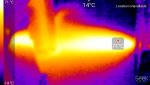
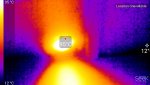
I have a 10mm thick silicon elbow on my heater outlet then into a T with two vents forward and two to the rear. 100c is often achieved at the outlet and the floor 2ft away reaches up to 75c.. No it does not take your skin off if you place your foot right next to the vent outlet but does make you move rather quickly..
I have solid aluminium tube as my ducting as the corrugated stuff must really ruin the airflow?
The heater itself according to the display runs at 195C on full power and around 140c on low power..
 

Attachments

  • heater outlet.jpg
    heater outlet.jpg
    72.9 KB · Views: 3
  • floor.jpg
    floor.jpg
    69.6 KB · Views: 3
I have a 10mm thick silicon elbow on my heater outlet then into a T with two vents forward and two to the rear. 100c is often achieved at the outlet and the floor 2ft away reaches up to 75c.. No it does not take your skin off if you place your foot right next to the vent outlet but does make you move rather quickly..
I have solid aluminium tube as my ducting as the corrugated stuff must really ruin the airflow?
The heater itself according to the display runs at 195C on full power and around 140c on low power..
Im not sure what you mean by “it runs at 195C on full power and around 140C on low power.” Which reading is showing this? Perhaps send a photo. There should be no reading on the display anything like this hot. The heat exchanger and exhaust temperature sensor readings are not able to be viewed on the display so if you see this there is something definitely wrong. Perhaps hot air is short circuiting back to the heater? We need a sketch of the layout ideally. But its sounds like a ducting problem to me. Aluminium ducting in my experience is a really bad idea. Heat leaks out from it and it makes everything around it exceedingly hot. It may even be this causing the problem. The ducting all the manufacturers supply is what they are all designed to use and it was designed that way for a reason. It does not increase the resistance beyond what the heater can easily cope with. I recommend replacing it with the correct ducting. The elbow may well be causing too much restriction though. There should be as far as possible a 1m straight length before and bends of significance in teh ducting after the heater. A 90 degree elbow immediately after the heater will most likely cause problems of overheating. Your readings at the vents sound very high which would make total sense with this elbow restricting the flow.
 
Thanks for all the helpful suggestions Owen. I'll start to troubleshoot by removing main duct. I don't get through diesel that quick because my engine and heater are very economical so might then try jerry can test. 6 week shelf life is rubbish! Didn't know that. Might fit a dedicated tank for heater if that turns out to be problem. Red diesel then?

I'm venting inlet air from cockpit to optimise dehumidification and eliminate risk of CO if exhaust was ever to fail. I'm on Windermere so no salty air. ?
I understand your points but I still prefer the heater to work as designed and draw in recirculated air so that it can control better and actually warm the boat up. Cold moist air will still be drawn into the heater which is not a good idea. Red diesel is fine for the heaters but it does go off its best quickly.
 
Which reading is showing this
It's the reading of the sensor on the combustion chamber. I've looked at other heaters and they run similar temps (chinese).. Yes you can get that info on the display along with the hz ,fan speed etc, which can all be changed.
The aluminium ducting is very well insulated.
I do agree the bend at heater outlet is not ideal but it's all smooth bore so the airflow is good and never had a problem in over 3 years of use.
The temp drop from the heater outlet and the vent outlets once warmed up is not much.
I would say the reason the corrugated pipe is used is because it's very rare to be able to get straight runs therefore a flexible pipe is needed.
 
It's the reading of the sensor on the combustion chamber. I've looked at other heaters and they run similar temps (chinese).. Yes you can get that info on the display along with the hz ,fan speed etc, which can all be changed.
The aluminium ducting is very well insulated.
I do agree the bend at heater outlet is not ideal but it's all smooth bore so the airflow is good and never had a problem in over 3 years of use.
The temp drop from the heater outlet and the vent outlets once warmed up is not much.
I would say the reason the corrugated pipe is used is because it's very rare to be able to get straight runs therefore a flexible pipe is needed.
Ok, so yours is not an Autoterm heater then because these are not available on an autoterm heater unless you connect the USB diagnostics. It must be a chinese heater. Chinese heaters also run heat exchanger temperatures higher than all the branded ones which I have never liked. Thats why yours is so hot I suspect. The corrugated ducting is also very well insulated so does not transmit anything like as much heat to the surroundings. Much better if you want hot air out of the grille rather than the lockers that the ducting is fitted in. I use 60mm ducting to insulate exhaust pipes and you can hold them with your hand when the pipe is inside it running flat out.
 
I understand your points but I still prefer the heater to work as designed and draw in recirculated air so that it can control better and actually warm the boat up. Cold moist air will still be drawn into the heater which is not a good idea.

sorry - included the wrong diagram before.

I'm puzzled. The Autoterm installation guide says "Fresh air from outside or recirculated air from rooms can be taken for heating." but then there is a warning "Air intake from outside can lead to loss of heating capacity, increase of fuel and electrical power consumption."

and the note for intake of air from inner rooms: "The advantage of such option is fast heating due to better use of heat. However, this operation does not lower humidity, and the air in the heated spaces is not renewed. "

but it doesn't indicate that it will cause heater shutdown...? Guidance from Websasto and Eber installation manuals clearly shows external air as an option but can Planar heaters not cope with temperature regulation using the "Temperature at Panel" setting?
 
sorry - included the wrong diagram before.

I'm puzzled. The Autoterm installation guide says "Fresh air from outside or recirculated air from rooms can be taken for heating." but then there is a warning "Air intake from outside can lead to loss of heating capacity, increase of fuel and electrical power consumption."

and the note for intake of air from inner rooms: "The advantage of such option is fast heating due to better use of heat. However, this operation does not lower humidity, and the air in the heated spaces is not renewed. "

but it doesn't indicate that it will cause heater shutdown...? Guidance from Websasto and Eber installation manuals clearly shows external air as an option but can Planar heaters not cope with temperature regulation using the "Temperature at Panel" setting?
Hi, as i said before, i recommend recirculating the air as i find it controls better and warms up faster. If you need ventilation just open the hatch a bit. At least you know it will then do the job when you really need it and you are keeping the air into the heater nice and dry and no risk of dragging in your own exhaust fumes from the outlet. Autoterm heaters can control perfectly well from the temperature at panel setting but drawing in fresh air will always make it harder to control. It wont cause any shut down I just prefer to see recirculating air. It’s not like a yacht is completely hermetically sealed with the companionway hatch there. They usually have a vent panel in them. The manuals are aimed at vehicle installs mostly but the general feeling of all the distributors in europe have is that we don’t recommend drawing air from outside, it just causes more problems than it solves. There is no direct reason why not to and its not restricted as such so you can do it but as you are asking for advice I thought i would advise on that too. You may disregard it of you wish.
 
I use 60mm ducting to insulate exhaust pipes
Would you have a link to that ? I used the sock type which was quite effective for what it is but wanted it cooler. Added something else over it then something else but it still seems the same temp as sock alone..
 
Would you have a link to that ? I used the sock type which was quite effective for what it is but wanted it cooler. Added something else over it then something else but it still seems the same temp as sock alone..
Hi, for the page rules I cannot post any links to our shop but its just standard 60mm air ducting and over the top of the standard sock lagging it works well. Just google autoterm in uk and we should be at the top.
 
Top